By now you have heard the silly joke: Why should Facebook sink in $19 Billion for WhatsApp when it can be downloaded for free? Well, it’s all in the numbers and the numbers are not making sense. Founded in 2009, WhatsApp has grown to a 450 million user app and is well headed for the 1 billion user mark in the next year or so. Under the current WhatsApp business model of charging $.099 a year (first year free) that means a $450 m revenues a year for the company. So why did Facebook pay a dizzying $19b for a mere $450 m enterprise?
Well, how about paying so much to change the world. According to recode.net the $19b acquisition of WhatsApp was a step closer to Facebook founder’s, Mark Zuckerberg, dream to bring internet closer to everyone in the planet. Zuckerberg’s project called the internet.org is joint initiative among Facebook, Telecommunication carriers and mobile hardware makers and aims to lower the cost of connecting to the web via mobile devices. This initiative targets the 4 billion-plus population in the developing world to gain access to services and opportunities the internet affords.
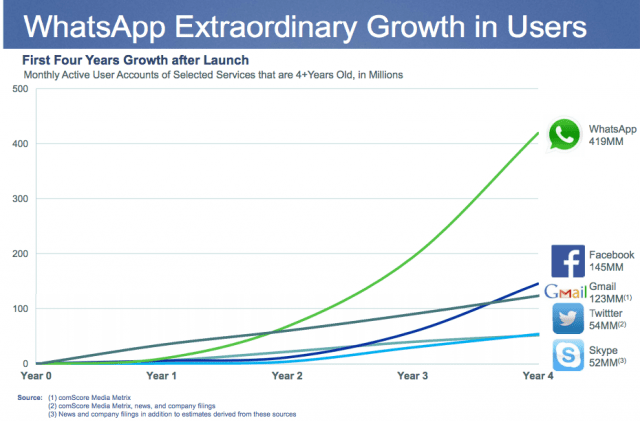 Zuckerberg said buying WhatsApp help’s the internet.org project and its mission to connect provide internet access to two-thirds of the world not yet connected. Coincidentally, WhatsApp is most popular in the developing nations of the world such as Africa, South America and parts of Asia more thanoi North America. This makes WhatsApp a key component of the project’s strategy. Analysts are of the opinion that Facebook paid as much as 16 billion and further 3 billion over the next 4 years because the acquisition achieved for Facebook a significant number of active users in parts of the world where the mobile market is poised to explode in the coming years.
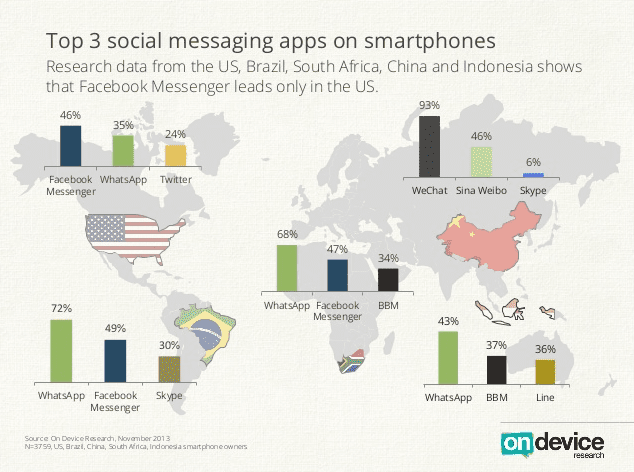
“Everyone has a has stake in mobile. From phone manufacturers to chip makers, they are all targeting [growing mobile phone] markets, desperate to get a piece of the pie as customers in Asia, Africa and South America snap up smartphones. After today, it’s practically guaranteed that almost all of those phones will be running an app owned by Facebook.” said Pete Mashall of Mashable.
WhatsApp has risen in popularity over the past few years for being a lightweight text, voice and video messaging option that works across most smartphones and many feature phones. That includes Android, Nokia’s Asha phone series and the Symbian OS — all of which are ubiquitous, low-cost and highly popular in developing nations.