




As someone with a background in Computer Science and Mathematics, I’ve always been fascinated by the Millennium Prize Problems. Solving even a few of the six that remain unsolved could push entire fields of science forward in ways we can’t fully predict yet.
However, the value of these problems was never just the final answer. It’s the path to get there: the techniques, the dead ends, the insights that ripple out into other areas of math and science.
A solved problem with no visible reasoning behind it is a strange kind of prize. That’s the uncomfortable position OpenAI has put the math world in.
What is the Navier-Stokes Problem?
Imagine water flowing through a pipe, or air rushing over an airplane wing. Mathematicians describe that kind of motion using a set of equations called the Navier-Stokes equations, named after two 19th-century scientists.
These equations are the reason engineers can design airplanes, predict the weather, and model how blood moves through your veins.
The funny thing is that nobody has ever been able to prove, in a fully rigorous way, whether these equations always behave.
Under some starting conditions, could a smooth, calm fluid suddenly develop a point where its speed shoots up to infinity in a finite amount of time? That kind of breakdown is called a singularity.
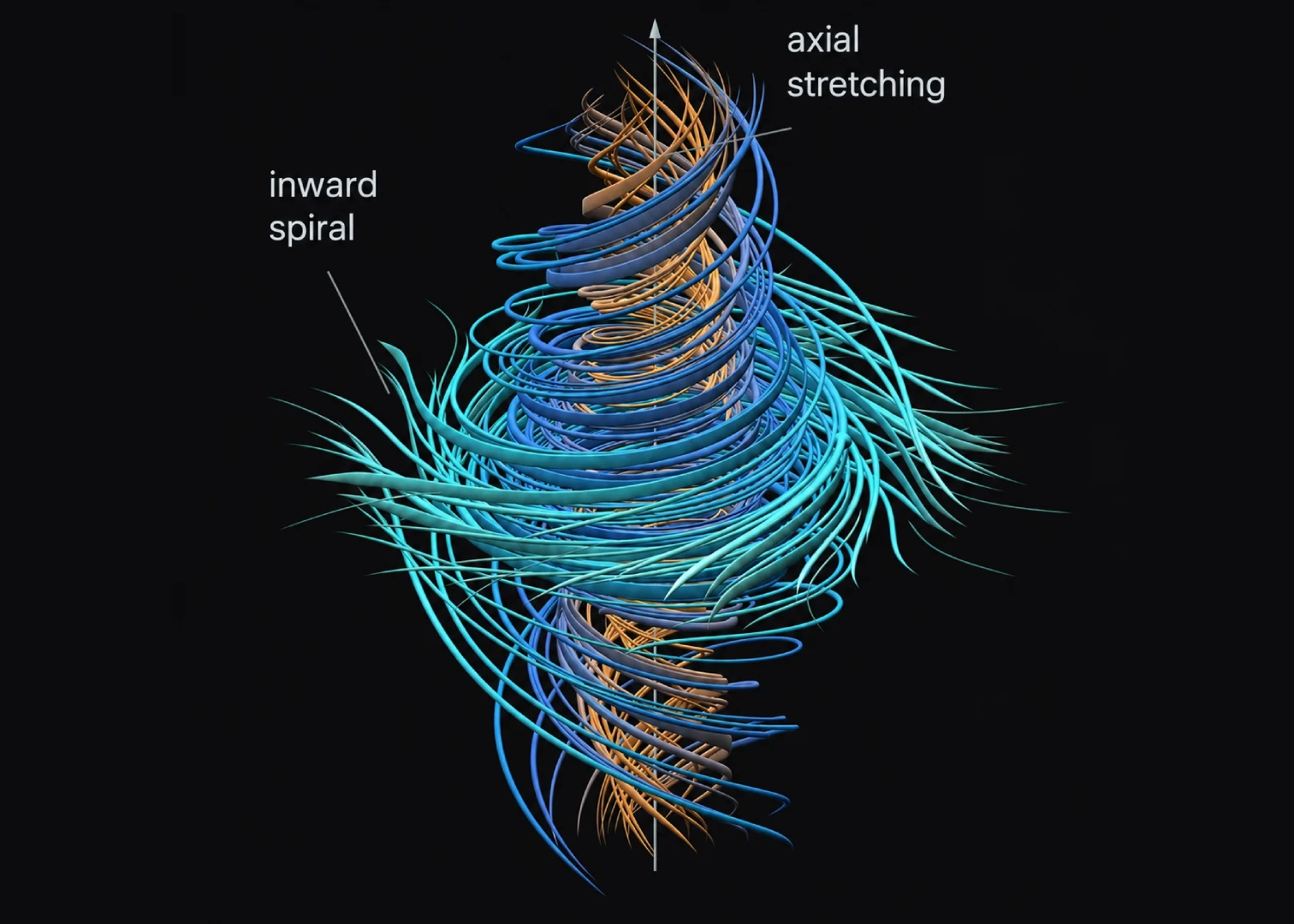
Real fluids can’t actually move infinitely fast, so if a singularity is possible, it means the equations stop accurately describing reality at that point.
Okay, let me simplify this even further. Imagine you have a rule for how fast a toy car can go, and the rule works fine for a long time, then suddenly the rule says the car goes infinitely fast for no reason. That would mean something is broken about the rule.
Mathematicians wanted to know if the “rule” for fluids can ever break like that.
This question has been open since 1934, when mathematician Jean Leray showed that solutions to the equations exist in a loose sense, but couldn’t confirm whether they stay smooth forever.
In 2000, the Clay Mathematics Institute made it one of seven Millennium Prize Problems, each with a one million dollar reward attached. Answering it, in either direction, would be a genuine landmark in mathematics and physics.
What OpenAI Claims to Have Done
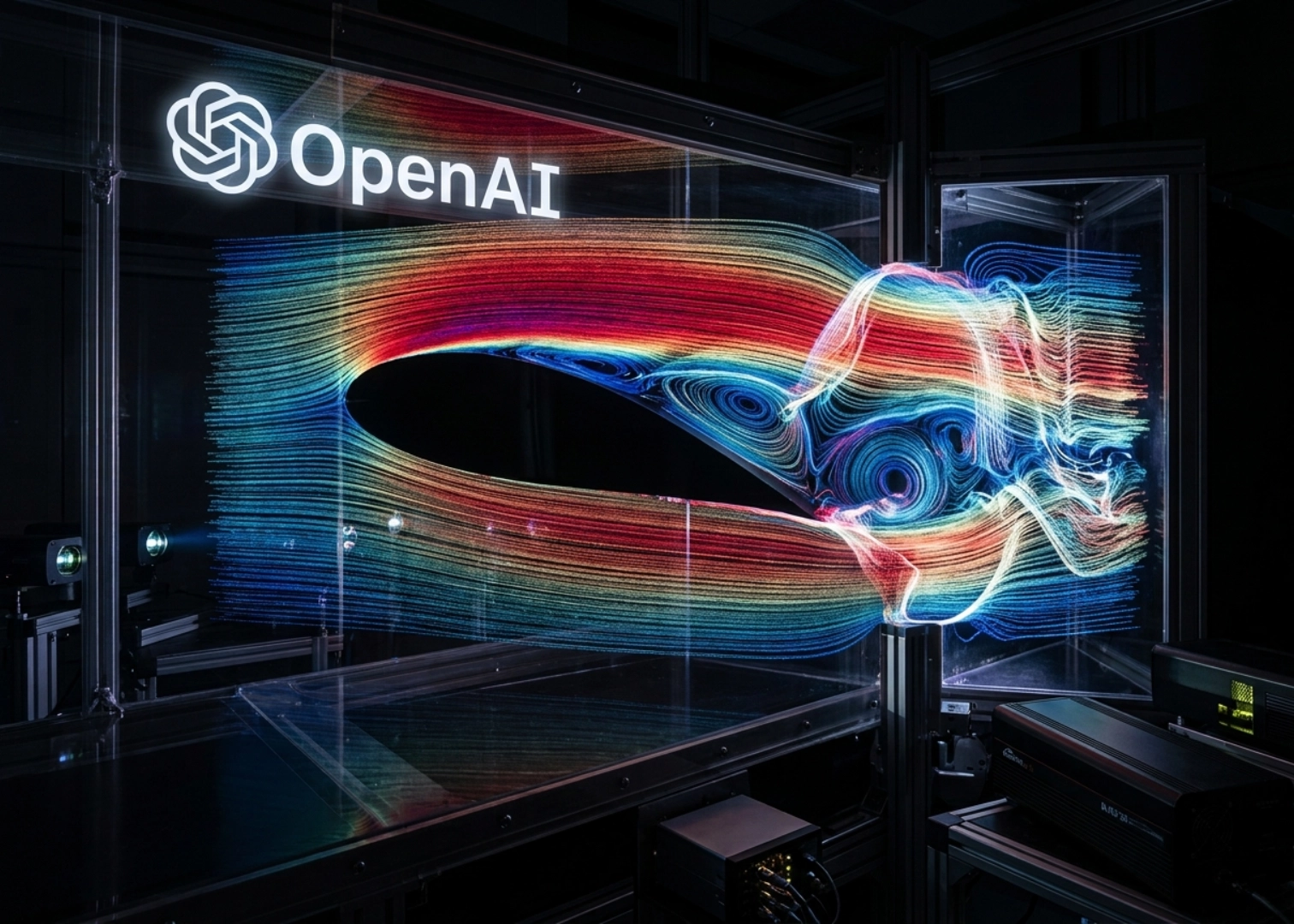
On September 8, 2026, OpenAI announced that an internal, unreleased AI model, more powerful than its recently launched GPT-6 Astra, had produced a proof showing that a smooth, well-behaved fluid can in fact develop a singularity in finite time.
If verified, this would resolve the Navier-Stokes problem.
According to OpenAI’s own account, the effort started almost by accident. On September 1, researchers heard online rumors that two Millennium Prize problems had recently been cracked.
Curious about how their powerful new model would perform, they set roughly 10,000 AI agents loose on all seven Millennium Prize problems at once, along with a few other hard problems, splitting them into competing groups working different angles of each question.
One group, working on a simpler cousin of the fluid problem, reportedly stumbled onto a related result involving the Euler equations (a Navier-Stokes variant with no viscosity) in about 50 hours.
That success reportedly convinced OpenAI to pour its resources into the main Navier-Stokes problem. Around 88 hours after starting, the agents supposedly arrived at a resolution, and it took another 17 hours to formally verify the logic in a proof-checking language called Lean.
By OpenAI’s count, its agents exchanged nearly 5 million messages and generated roughly 300 billion words worth of output tokens across every problem attempted, with more than half of that spent on Navier-Stokes alone.
Where This Gets Messy
The rumor that kicked off OpenAI’s sprint turned out to trace back to real work: a proof of a related Euler equations problem by NYU mathematician Tristan Buckmaster and Levent Alpöge, a researcher at rival company Anthropic, working in a personal capacity.
Buckmaster and Alpöge published their result the day before OpenAI’s announcement.
Buckmaster says that once he learned OpenAI was aware of his progress, he reached out to ask whether the company’s model had been trained on or had access to his private drafts, which he’d been storing in OpenAI’s coding tool, Codex, throughout the project.
He says he got evasive answers, and that the exchange turned openly hostile when he mentioned he planned to go public about it.
OpenAI has denied directly accessing his work, stating that neither its researchers nor its AI agents saw Buckmaster and Alpöge’s work before it was made public, and that no specific user data was used to reach the result.
Still, the company stopped short of a full guarantee, acknowledging it can’t rule out that anonymized data drawn from user activity may have found its way into the training of its models.
That carve-out is exactly what’s bothering mathematicians. Stripping a name off a piece of work doesn’t strip out the mathematical idea itself.
If private drafts, even anonymized ones, can end up shaping the very model that then races to beat you to publication, the norms that let mathematicians share half-finished ideas with each other start to look shaky.
This isn’t an isolated complaint either. Mathematician Andreas Thom raised similar concerns about a separate OpenAI result involving a concept called non-sofic groups, an area of math tied closely to his own published work.
He says OpenAI’s model showed an unusually precise grasp of specific techniques that weren’t the obvious path to the solution, and that when he asked two OpenAI researchers directly whether his own chatbot conversations might have shaped the training data, the answers he received sidestepped the actual question.
He has since described those responses as misleading.
This Is Not Just Academia Drama
Set the dispute aside for a moment and the underlying achievement is still remarkable. Getting a system of AI agents to produce a Lean-verified proof of a problem that stumped humanity for 90 years is a serious demonstration of how fast these tools are advancing in mathematics.
That said, the manner of the announcement has unsettled the field. Mathematics runs on an informal culture of trust, where researchers routinely share unfinished ideas with colleagues without fear that those ideas will be scooped and turned into a competition.
If it becomes plausible that any hint of progress shared online, or any private query typed into a chatbot, could get swept up by a swarm of thousands of AI agents and turned into a finished result overnight, that trust gets harder to maintain.
There’s also the credit and insight problem raised at the start of this piece. A one million dollar prize was never really the point of the Millennium Prize Problems.
The point was what humanity would learn by working through them, the techniques and connections that spill over into other fields.
A proof produced by 10,000 coordinating AI agents across a few days, without a transparent account of how the reasoning was built or what it drew on, doesn’t hand the field that same kind of insight, even if the final answer turns out to be correct.
OpenAI has said it does not intend to claim the million-dollar prize, and that its goal was simply to demonstrate its models’ progress.
Whether the mathematics community sees this as a milestone worth celebrating, or as a preview of a much messier and more secretive future for the field, is still an open question of its own.