






The people who helped build social media are now trying to fix it. Biz Stone, co-founder of Twitter, and Evan Sharp, co-founder of Pinterest, created Tangle through their company West Co.
The pitch is a direct critique of the platforms they helped shape to offer less outrage, less addiction, fewer algorithmic rabbit holes, and none of the metrics-chasing that turned social media into what it currently is.
Whether two founders with that kind of history can actually deliver on that promise is the question the internet will be watching closely. The early product, though, is genuinely intriguing.
Tangle is built around two ideas that do not usually appear in the same app.
The first is intentional living, where a morning prompt asking “What is your intention today?” invites users to set a personal goal or focus for the day, and an evening reflection captures how it actually went.
This concept sits closer to a journaling habit than a social feed, shared with a small circle of friends rather than broadcast to an audience.
The second idea is more unusual and harder to describe until you have used it.
A Phone Call for Texting
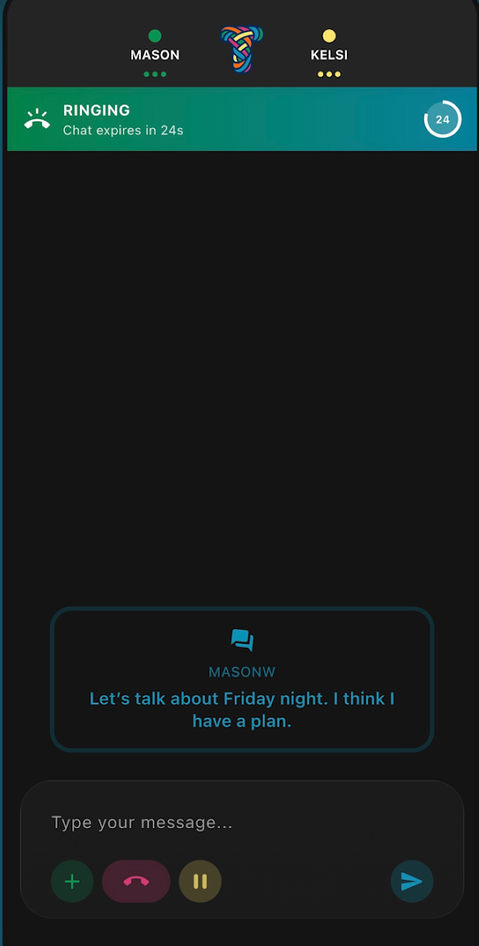
The core mechanic is that you ring someone the way you would a phone call, they answer, and then the two of you text back and forth in real time, knowing the other person is actually there on the other end.
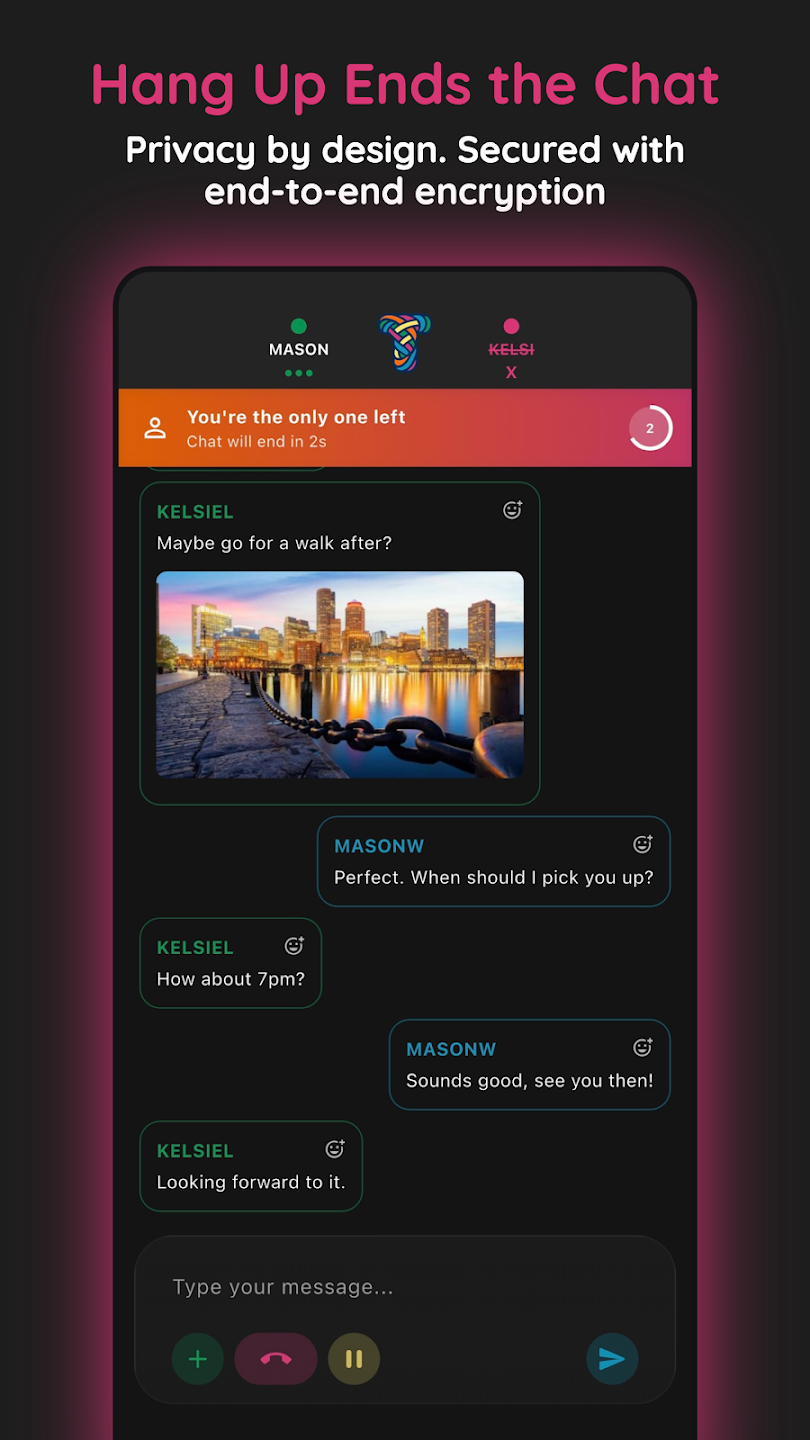
When the conversation ends, either person can hit hang up, closing the chat for everyone. The messages then disappear, leaving no thread to scroll through, no screenshots to worry about, and no conversation history stored on a server.
It feels like texting with the immediacy of a phone call while giving the conversation a clear end.
For anyone who has sent a message and then watched the “read” receipt sit there while the other person said nothing, the appeal of knowing someone is actively in the chat with you is immediate.
There is no ambiguity about whether the message landed, and no slow-burn anxiety about a message sitting unread. You are either in the chat together or you are not.
Scheduled Chats and Planning Conversations
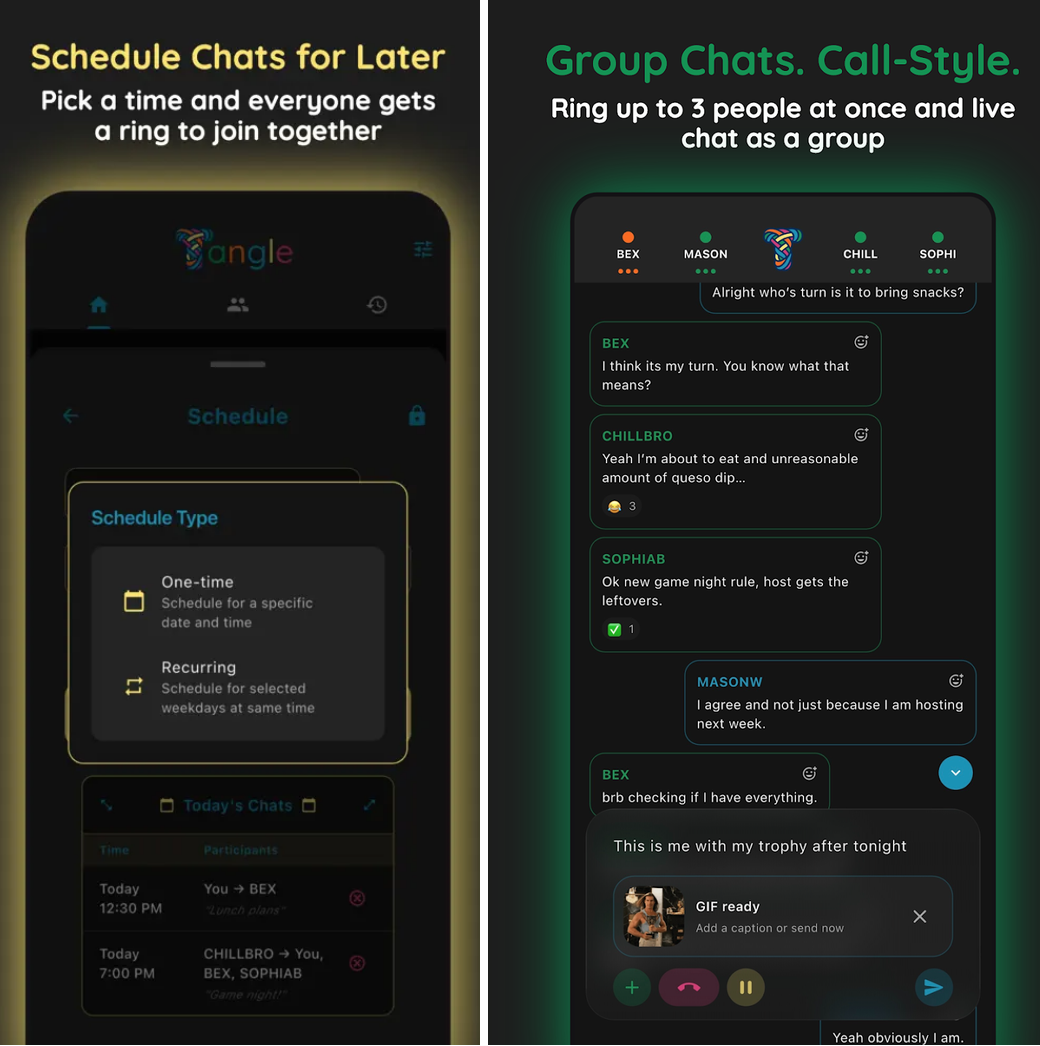
One feature that has already found a practical use case is scheduled chats, which let a group set a recurring time to connect.
A planning session for the weekend, for instance, becomes an actual event rather than a hope that the group chat will eventually reach a consensus.
Everyone arrives at the same time, the conversation happens, and it closes. What would normally be an all-day text chain that somebody always responds to hours late gets resolved in ten minutes.
Privacy by Design
Messages disappearing at the end of a session is not a setting to toggle on. It is how the app works by default, and everything inside it is encrypted.
For users who have grown tired of apps that treat privacy as an optional extra, Tangle’s approach is notable not because it is unprecedented but because it is built into the structure of the product rather than bolted on afterward.
What the Numbers Say
Tangle holds a perfect 5.0 rating on the App Store from 19 ratings, while on the Play Store, it has crossed 50 downloads.
Both figures reflect how new the app is rather than how good it is, though a 5.0 from early users suggests the people who have found it are genuinely sold on it. The real test of those numbers comes as the user base grows beyond the early adopter crowd.
Who It Is For
Tangle makes the most sense for people who are already intentional about how they start their day and want a small, accountable circle to share that routine with. It also suits anyone tired of text threads where people rarely feel fully present.
If you can get one friend to try it alongside you, the live texting mechanic makes sense immediately. If you cannot, most of what makes the app interesting disappears with it.