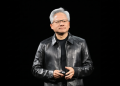




Nvidia is in one of the most serious leadership and national security crises in its history. On 12 November 2026, Jensen Huang resigned as president, CEO, and board member with immediate effect, and the company named Chief Financial Officer Colette Kress interim CEO and Harvey C. Jones its first chair of the board.
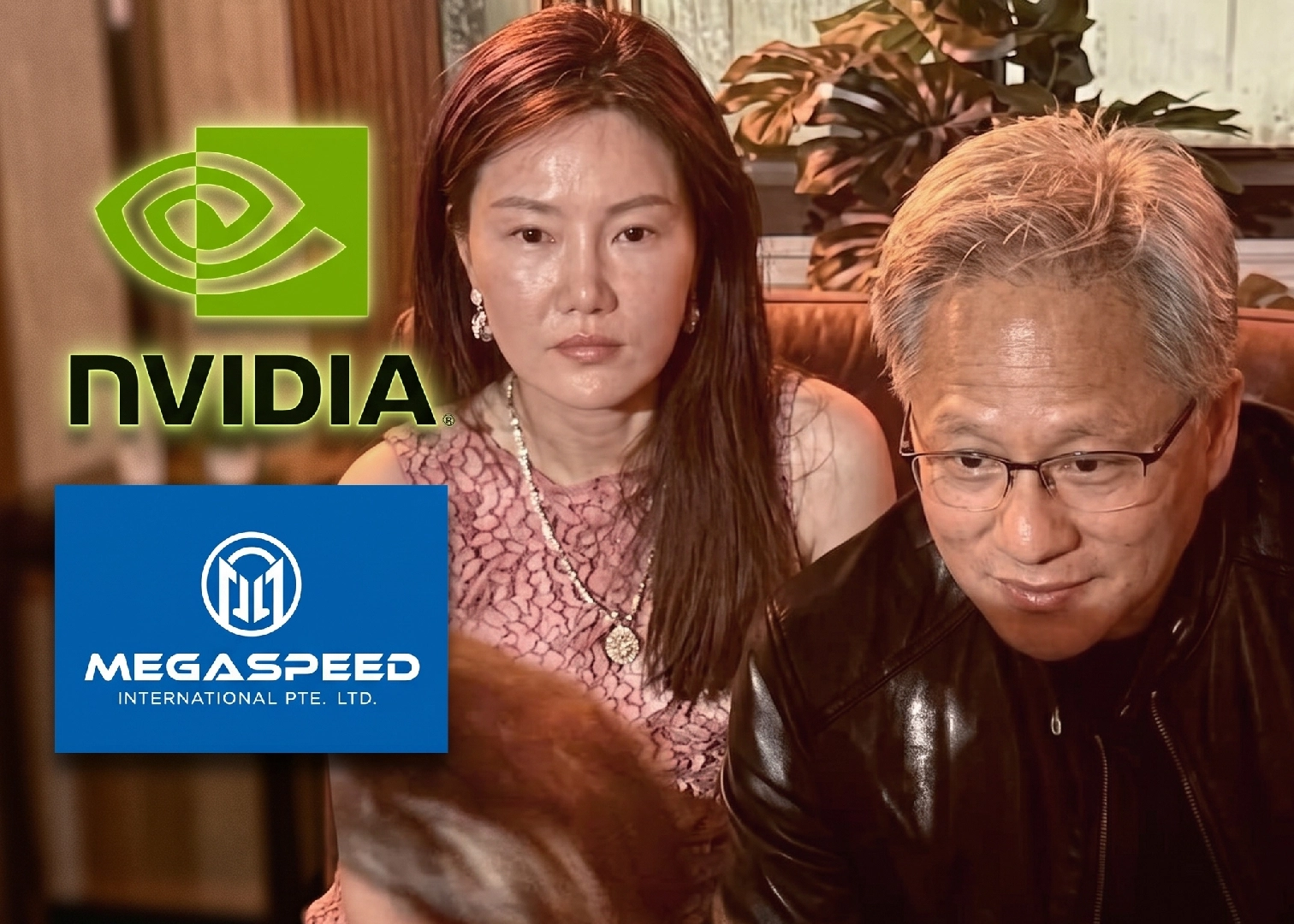
The resignation followed reports about Huang’s relationship with Alice Huang, a Chinese businesswoman formerly associated with Megaspeed International, a Singapore-based cloud-computing company and Nvidia cloud partner.
US authorities have been examining whether Megaspeed helped Chinese customers obtain advanced Nvidia chips through Southeast Asia, potentially circumventing American export restrictions. Intelligence agencies, on the other hand, have looked into whether Alice Huang was connected to Chinese intelligence and used her access to Huang for an influence or information-gathering operation.
US Attorney General Todd Blanche said the Justice Department had reached no conclusion on whether she worked for China, and CNN reported disagreement among American officials, saying the intelligence gathered so far did not prove she knowingly acted as a Beijing-directed agent.
The affair is therefore three overlapping but separate issues: a personal relationship involving a powerful chief executive, an export-control investigation into a strategically important Nvidia customer, and a counterintelligence allegation that remains unresolved.
Alice Huang and How Megaspeed Grew
Alice Huang, also known as Huang Le, built her career across Chinese media, finance, and technology investment.
Reuters reported that she worked as a television journalist in China before taking senior roles at Shanghai Hexi Investment Management, including deputy general manager, executive director, and member of its investment decision committee, and she has also been linked to private banking and securities businesses in Hong Kong and mainland China.
Her connection to Megaspeed began in 2023. The company was incorporated in 2015 as 7Road International and renamed in March 2023, around the time Alice Huang became a controlling shareholder and managing director, a role she held for about eight months.

Megaspeed was later wholly owned by another Singapore-registered company, Swiftdata, whose ultimate controlling interests were not immediately clear from public records.
Megaspeed described itself as an Nvidia cloud partner in Asia-Pacific. Instead of simply selling chips, a cloud partner buys large quantities of Nvidia hardware and rents remote access to the computing power.
That model is lawful in principle, but it carries an obvious enforcement problem, because a data centre outside China can give Chinese customers access to computing resources that could not legally be exported to them directly.
Megaspeed’s rise drew attention, with reports putting its assets at roughly $33 million in 2023 and $3 billion in 2024, with revenue climbing from zero to $294 million even as the company posted a loss of about $20 million.
The New York Times noted that its Malaysian subsidiary, Speedmatrix, received more than 200 shipments of restricted Nvidia technology between June 2024 and June 2025, among them a California-based supplier, Aivres Systems, consignment of servers with Nvidia H800 modules valued at around $25.4 million.
None of this proves illegal diversion on its own, since a shipment to Malaysia is not automatically a shipment to China.
The decisive questions are who ultimately owned the buyer, where the systems were installed, who used them, whether Chinese customers reached them remotely, and whether the parties knew the equipment would be moved or used in breach of US rules.
When Huang Met Huang
According to reporting, the connection began through Kang Wei, a Chinese businessman and investor who is Alice Huang’s husband and who had known Jensen Huang through business dealings dating back to Nvidia’s earlier focus on gaming chips.

Kang was also Alice’s business partner. The couple were associated with Shanghai Hexi and took part in investments spanning technology, pharmaceuticals, and cloud computing.
China’s securities regulator later found that Kang had concealed a coordinated-action relationship in a listed-company acquisition and had been deeply involved in running the company.
In 2025, it ordered corrective action, issued warnings, and fined him. So, when does the ‘espionage’ come into play?
Espionage: What’s the Evidence
The spy allegation rests on a mix of intelligence reporting, her access to Huang, her background in Chinese finance and media, and Megaspeed’s activities.
US officials have reportedly examined whether information from someone close to Nvidia reached Chinese intelligence channels, and some have viewed her career and access as highly suspicious, given that Nvidia sits at the center of the global AI race and its chips are export-controlled to limit China’s military and advanced-computing capabilities.
Citing Meta’s collapsed $2 billion acquisition of Singapore-based Manus is useful, if limited. Chinese authorities reviewed that deal after the China-founded AI company moved its headquarters to Singapore, reportedly treating the transfer of China-developed technology as subject to Beijing’s technology transfer and national security controls.
The episode shows how a Singapore registration may not sever a company’s China links in Beijing’s eyes, even as the same links can lead Washington to treat the company as a possible conduit for restricted technology.
For Washington, a Singapore registration does not erase a company’s China links, and the Manus case shows Beijing taking the same view from the other side, with both governments treating an offshore headquarters as a label rather than a break.
For Alice Huang specifically, her Singapore base does not erase her China ties, and her background in Chinese media and finance, her husband’s business network, and her access to Jensen Huang explain why Washington is suspicious. Those are warning signs, not proof, because a counterintelligence finding needs evidence of tasking, payment, direction, or information transfer, and the public record does not reach that level.

Other governments have acted without making that finding. Singapore found insufficient evidence she had committed domestic offenses over server purchases and transfers but accused her of providing inaccurate information and downplaying her Megaspeed role, then returned her passport and barred her from re-entering. Taiwan revoked her entry permit after confirming she had entered on a Hong Kong passport and had visited repeatedly.
Neither step is a public finding that she was a Chinese intelligence officer, though together they deepen suspicion.
Megaspeed Matches Diversion Red Flags
The export-control worries stand on firmer ground than the espionage claim.
US Commerce Department guidance names third-country data centers, unclear ownership, empty or unsuitable facilities, unknown end users, and infrastructure-as-a-service providers unable to verify their customers as red flags for diversion, and several reported features of the Megaspeed case line up with those warnings.
That supports the view that the company was a serious compliance risk, though it stops short of showing that Megaspeed completed an illegal transfer of any specific number of chips to China.
Verdict
The Alice Huang, Megaspeed, and Nvidia affair should not be reduced to a celebrity-style scandal or to a confirmed spy story. The evidence points to a strategically important Nvidia customer with opaque corporate structures, fast procurement of advanced computing systems, and ties to a China-connected business network.
It also shows that Jensen Huang’s personal relationship with Alice Huang became a serious governance and counterintelligence vulnerability.
The spy allegations are still unproven, though good spies rarely leave evidence in plain sight.
READ: Apple Overtakes Nvidia as the World’s Most Valuable Company After a 12% Share Slide
Alice Huang has not been publicly proven to be a Chinese spy, and Jensen Huang’s resignation does not prove he knowingly passed on secrets or took part in export-control violations.
The most defensible conclusion is narrower and more serious: Megaspeed exposed weaknesses in the global system for controlling advanced AI infrastructure, while Nvidia’s founder-led governance model failed to stop a personal relationship from becoming entangled with national security risk.