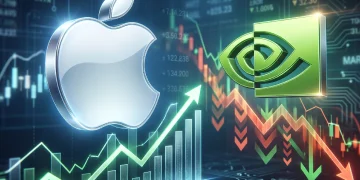




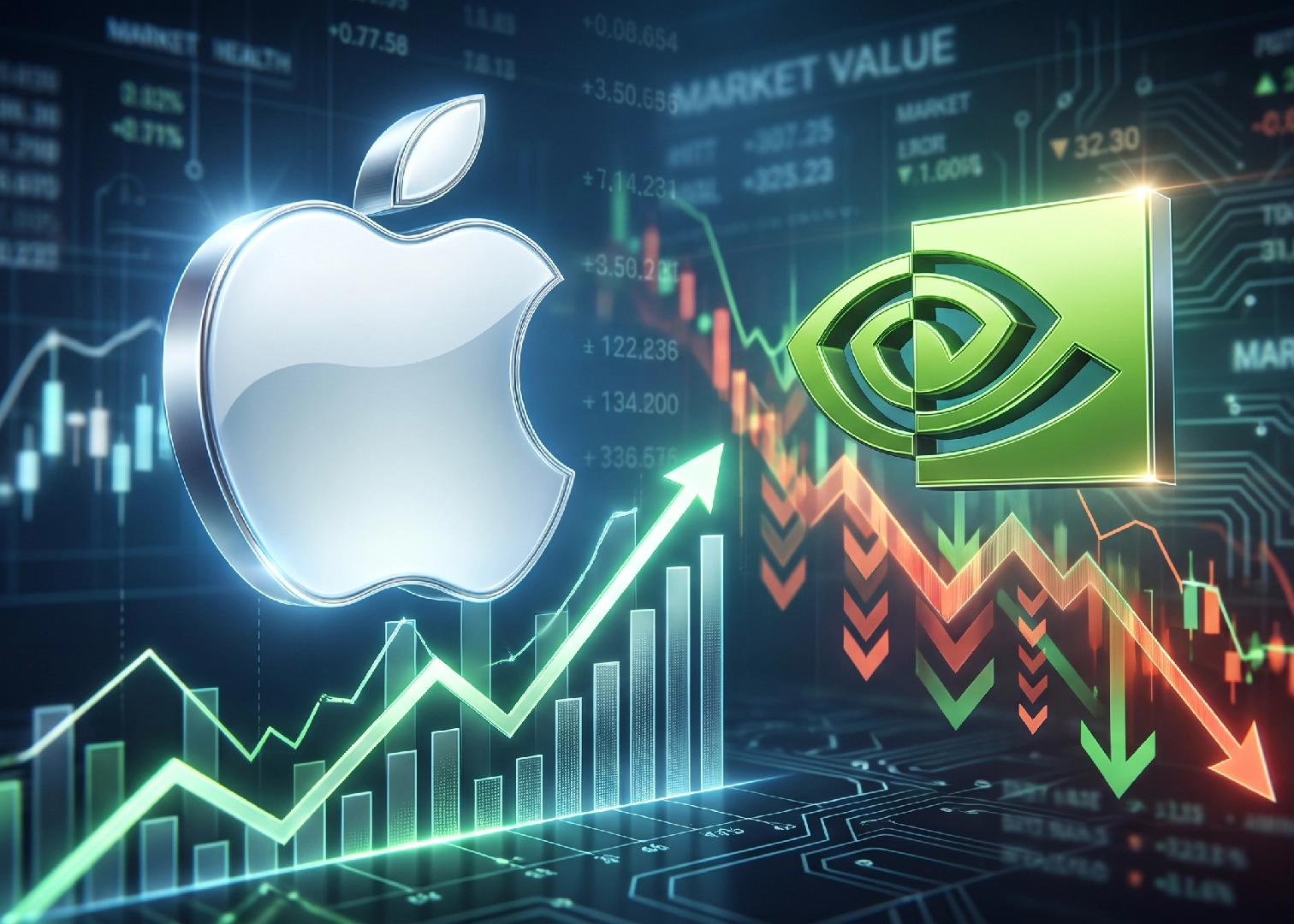
Apple is once again the world’s most valuable company, overtaking Nvidia after a rough stretch for technology stocks.
The move says as much about how investors now see the AI boom as it does about the two companies, with doubts over the payoff from AI spending, steady confidence in Apple’s consumer business, and fresh questions around Nvidia chief executive Jensen Huang all arriving at the same time.
Apple did not get there simply because Nvidia stumbled.
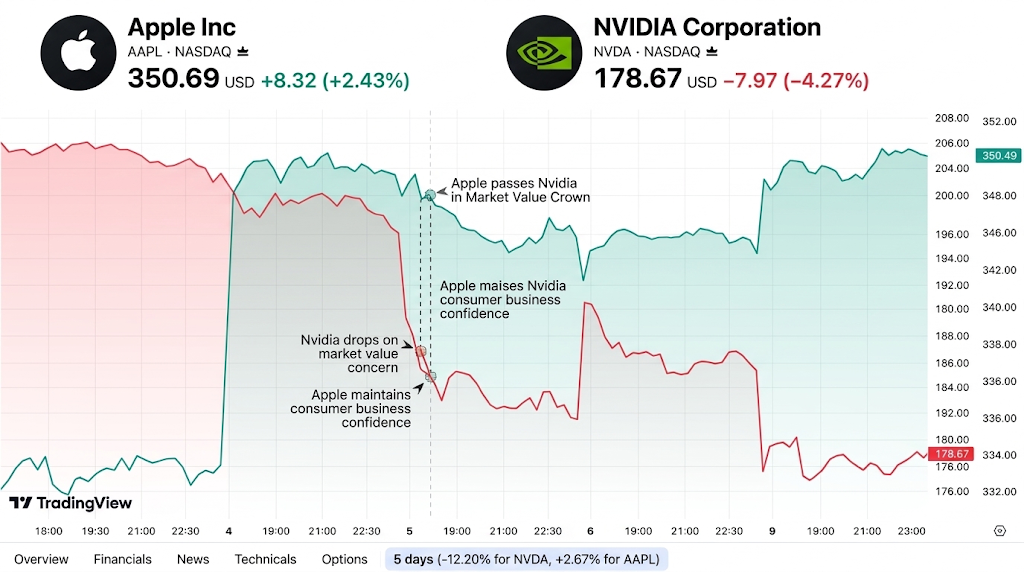
The two had been trading the top spot since July, and Nvidia’s 9.26% fall to $181.60 on November 5 left it worth $4.39 trillion, with Apple ahead by about $615 billion.
Nvidia’s AI Momentum Meets Investor Skepticism
Nvidia’s share price slid from about $206.69 on November 3 to $181.60 on November 5, a drop of roughly 12% that was more than enough to erase its lead over Apple. The sell-off was not a reaction to Nvidia’s business going wrong, since its chips still sit at the center of the AI industry.
What investors began questioning was whether the returns from AI will justify the enormous spending needed to keep the industry running.
Microsoft, Google, Amazon, and others are pouring billions into data centers, specialized chips, and electricity supply, increasingly paid for with borrowed money, while the revenue from AI products is taking longer to show up than many hoped.
The nerves spread well beyond Nvidia, with Intel losing more than 45% of its value in October, its biggest one-month drop in over 40 years of Bloomberg data.
Politics added to the unease, as Democratic gains in the US midterms raised worries about data center building, power demand, and chip export rules.
Apple Benefits From the Shift
Apple’s climb also rests on its results.
Its fiscal fourth quarter brought revenue of $114.5 billion, up 12% from a year earlier, with earnings per share up 14%, a record September-quarter iPhone result and an all-time high for Services.
Higher memory costs and spending on its Siri overhaul are squeezing margins, yet the hardware and services businesses give it a solid base.
Apple has also avoided matching the infrastructure spending of its big tech rivals, which has made it a way for investors to hold a large technology company without carrying as much direct AI risk.
By the close on November 4, Apple was already valued at about $5.08 trillion against Nvidia’s $4.82 trillion, and the November 5 drop widened the gap.
Jensen Huang’s Controversy
Nvidia’s troubles have also taken on a personal side.
CEO Jensen Huang is at the center of an independent board investigation after reports that he had a relationship with Alice Huang, a former executive at Nvidia customer Megaspeed whom US officials suspect was recruited by Chinese intelligence. Huang has admitted being unfaithful to his wife and issued a public apology.
China has dismissed the espionage claims as groundless speculation, and they remain unproven.
Nvidia’s board says it has “no reason to believe that the company’s secrets or national security were compromised,” and Huang has promised to cooperate fully.
He remains in his role, but three Republican House committee chairs have asked him to explain the reported links in a closed-door session.
The investigation became public after the November 5 sell-off, so it did not cause the drop. Its effect is on what follows, because Huang is closely tied to Nvidia’s technology direction, customer relationships, and standing in Washington, and any doubt over his position brings governance and succession questions that investors will weigh when they price the shares.

What Apple’s Return Means
Apple’s return to the top reflects changing investor priorities more than any collapse in Nvidia’s business.
The market is less willing to pay almost any price for AI-linked growth and wants evidence that heavy spending can turn into lasting returns, along with a handle on political and governance risk.
READ: Apple Unveils $1,999 iPhone Duo With 7.6-Inch Foldable Display
Nvidia remains central to the AI industry, but its valuation leans heavily on expectations of continued infrastructure spending. Apple offers steady cash generation and recurring revenue, and for now investors are rewarding that over the faster, riskier growth story.