




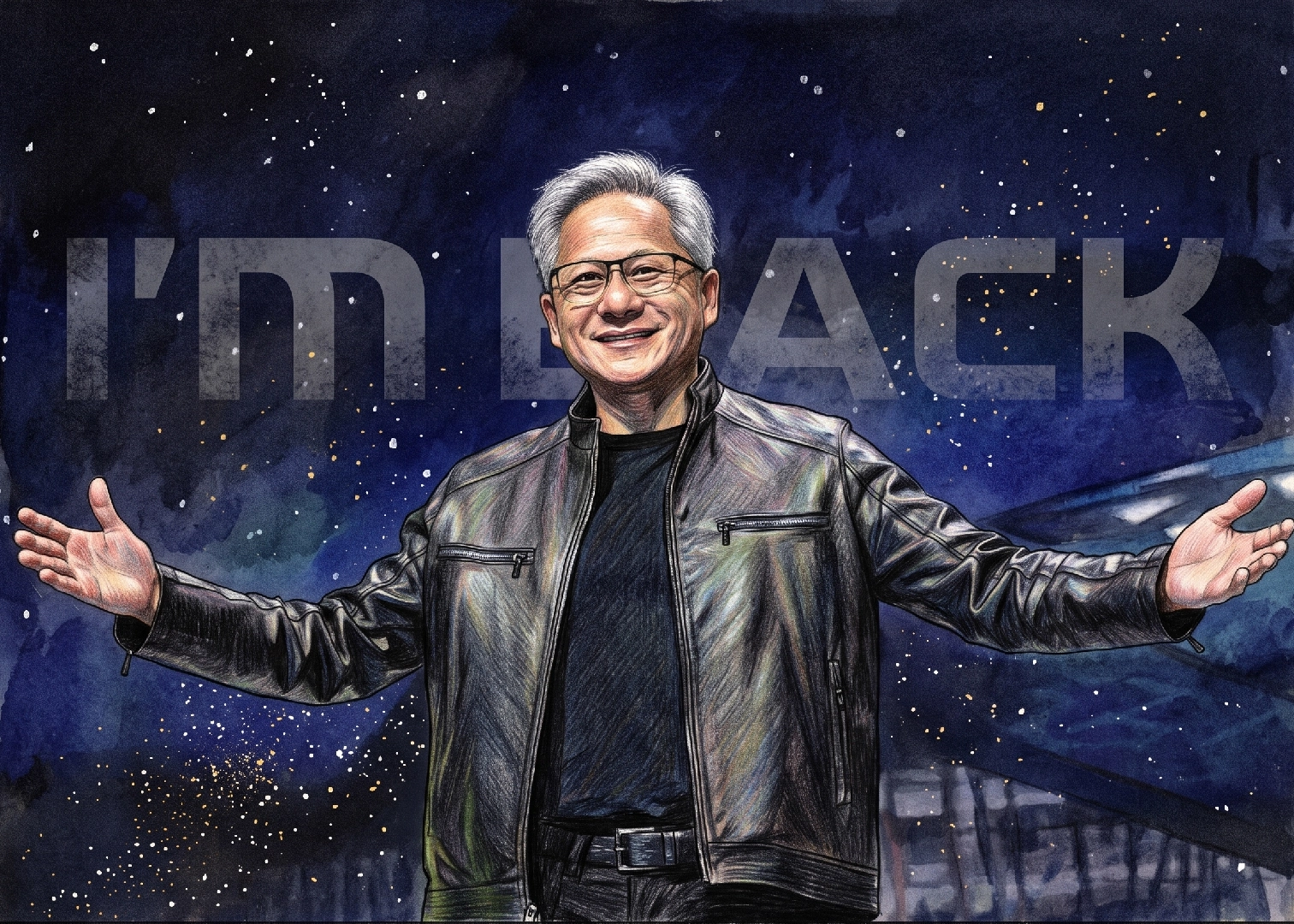
Jensen Huang is back in charge of NVIDIA, just 11 days after stepping down as president and CEO amid a controversy involving his personal conduct and alleged Chinese intelligence links.
The company’s board unanimously reinstated him on November 23, restoring him as president, CEO and a board director. It is a remarkable turnaround for a leader whose departure had appeared to signal the beginning of a major leadership transition at the world’s most valuable AI chipmaker.
So, what happened? And more importantly, what made NVIDIA change its mind so quickly?
The short answer is that NVIDIA discovered that finding someone to replace Huang was considerably easier said than done.
How Jensen Went From CEO to Former CEO and Back
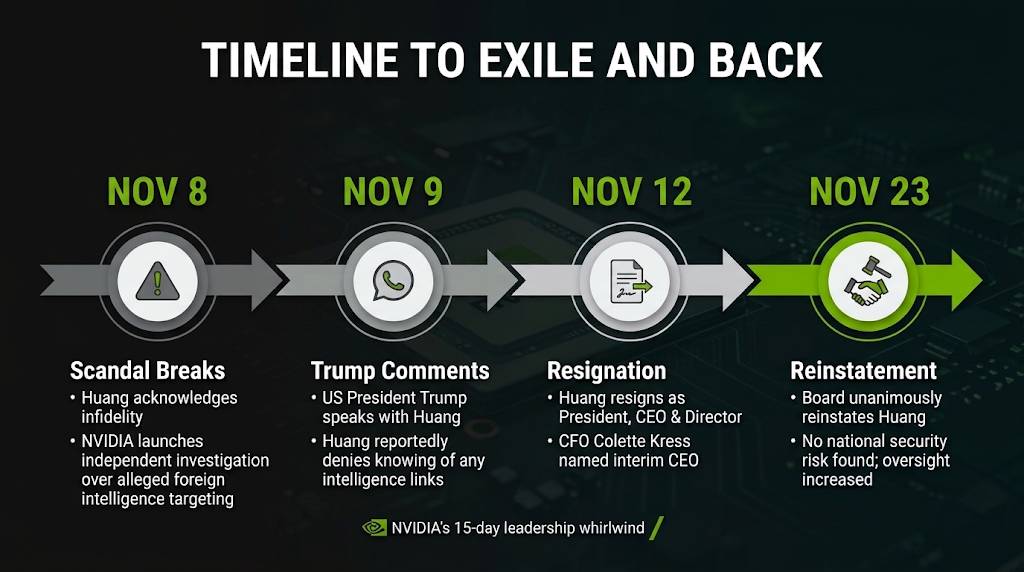
The controversy began on November 8, when Huang acknowledged to NVIDIA employees that he had been unfaithful to his wife and accepted responsibility.
On the same day, the board announced an independent investigation following reports that Huang had been targeted by a foreign intelligence operation.
The woman allegedly connected to the effort was reported to have links to Chinese intelligence, raising concerns about possible exposure of sensitive company information.
The issue quickly attracted political attention. US President Donald Trump confirmed on November 9 that he had spoken with Huang, who reportedly said he did not know about the woman’s alleged intelligence connections.
Further reports involving another relationship with a senior NVIDIA executive emerged on November 11. The following day, Huang resigned as president, CEO and board director.
CFO Colette Kress became interim CEO as NVIDIA began considering internal and external candidates for a permanent replacement.
The Problem With Replacing Jensen
NVIDIA initially appeared ready to move on, despite a campaign for Huang’s return that reportedly attracted more than 180,000 signatures and support from prominent technology figures.
The company had demonstrated that its operations could continue without him, reporting $115.8 billion in fiscal third-quarter revenue, up 103% year over year, and forecasting $130 billion for the next quarter.
READ: Nvidia’s Best Tech Employer Ranking Faces Review as Calls for Huang’s Return Grow
However, Huang’s value extends beyond running the business. He has spent decades building relationships with chip suppliers, cloud providers, AI developers and governments.
Finding someone who could match his technical vision, commercial influence and ability to secure strategic partnerships during the AI boom was always going to be difficult.
What Made the Board Change Its Mind?
The turning point appears to have been the board’s reassessment of the national security concerns.
Chair Harvey C. Jones said further discussions with Huang, alongside input from senior US government officials, gave directors confidence that his return posed no national security risk.
However, the reinstatement does not amount to a full clearance. The independent investigation remains ongoing, with Huang agreeing to cooperate.
NVIDIA is also strengthening its oversight through a new board committee focused on national security and export controls, alongside plans to appoint a chief compliance officer. His return therefore comes with greater scrutiny of the company’s leadership and compliance practices.
Jensen Is Back, but NVIDIA’s Succession Question Remains
Huang’s return restores stability at a critical time for NVIDIA, whose chips and infrastructure have become central to the global AI boom. However, the episode has exposed just how much of the company’s strategic direction, industry relationships and public influence rests on its founder.
By bringing him back under tighter board oversight, NVIDIA has bought itself continuity, but not necessarily a long-term solution to its leadership challenge. The board must still address why its succession plans could not withstand Huang’s sudden departure and build a leadership team capable of carrying the business forward without depending on his presence.
For now, Jensen is back. But the bigger test is whether NVIDIA can build a company that is bigger than the person who built it.