



Royal Media Services (RMS) has started charging viewers KES 350 a month to stream Citizen TV, Inooro TV and Ramogi TV live on YouTube, at a time when Kenyans are walking away from paid television, which leaves an obvious question about why anyone should pay for something that was free last week.
The Communications Authority’s latest figures put active broadcasting subscriptions at 1.55 million in June 2026, up 4.9% from a year earlier but down 1.8% in the quarter, a dip the regulator blames on customers moving to internet-based IPTV and on pricier decoders after global chipset costs rose.
DStv bucked the trend with 259,047 subscriptions, up 37.2% over the year, yet the pay-TV market remains small in a country of 53.3 million people, and the shift to online video that the report describes is the one Citizen is now trying to charge for.
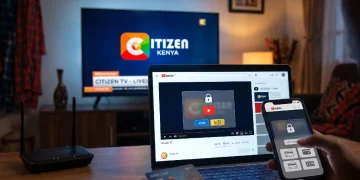
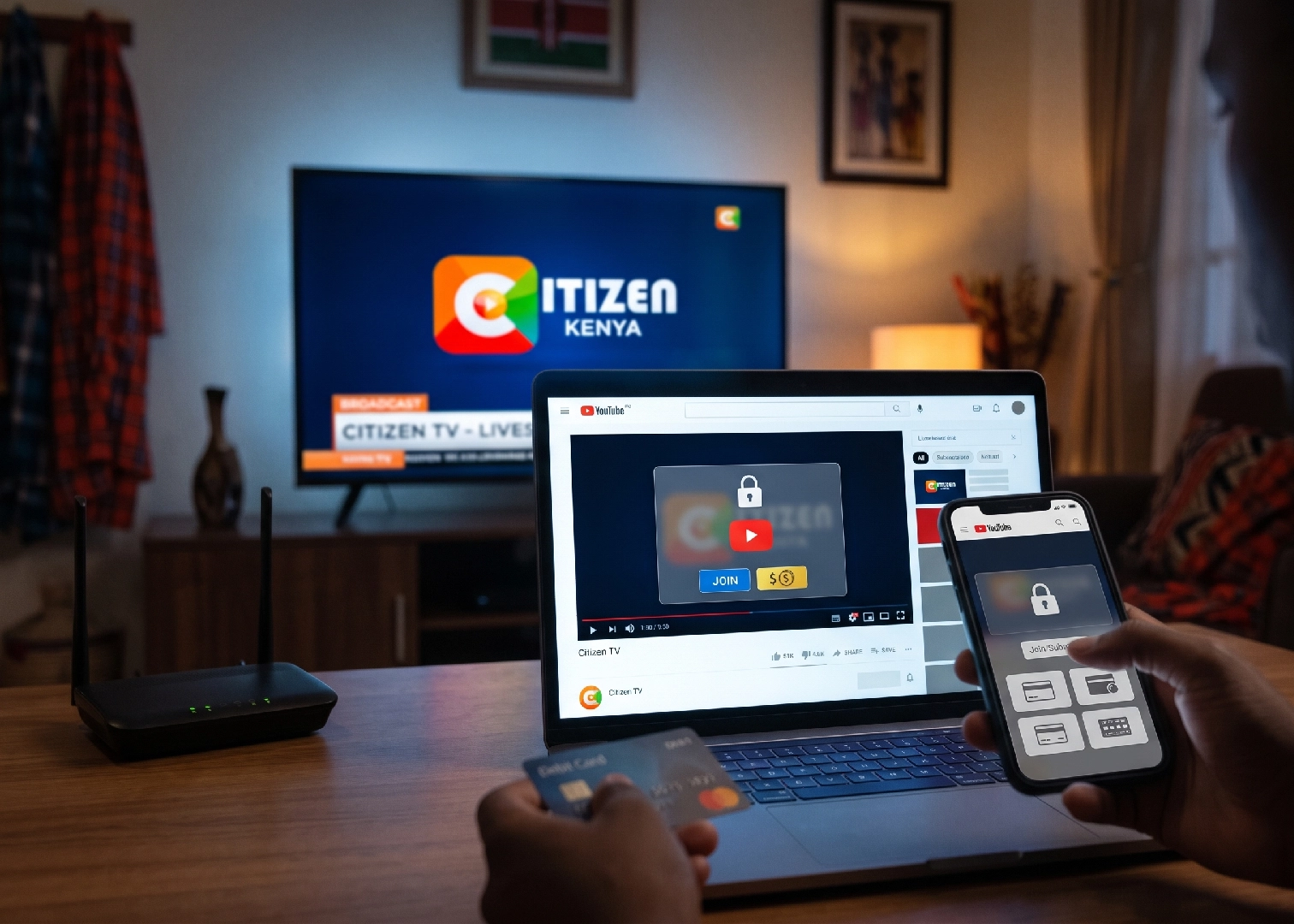
The package opens all three live streams through one membership, activated with the Join button and paid by bank, debit, credit or virtual card. The subscription arrived shortly after the stations’ livestreams stopped being free.

RMS promotes it as a YouTube Premium package, although it appears to be a channel membership and not the full YouTube Premium service, and spot checks showed an uneven rollout, with the Inooro and Ramogi channels still streaming without a prompt.
Why Royal Media Is Willing to Take the Risk
The logic starts with the audience, as the Communications Authority estimates 24.3 million average daily TV viewers, about 51% of the population, against roughly 19 million internet users, with 36% of respondents streaming video online every day.
Despite television holding a 25% share of weekly media consumption (and 57% daily reach), Royal Media’s Citizen, Inooro, and Ramogi already dominate the mass market, led by Citizen TV at 56% of total TV viewership, according to the Media Council of Kenya’s 2025 survey.
RMS is therefore targeting viewers who already split their time between TV and online, hoping that a small share of its loyal audience will pay to watch on a phone or laptop instead of a television.
Modest take-up could be enough, since at KES 350, 10,000 members would bring in KES 3.5 million a month, only 0.04% of daily TV viewers, while 1%, about 243,000 accounts, would mean roughly KES 85 million a month before YouTube’s share, taxes and support costs.
A YouTube account is not the same as a viewer, so these are illustrations and not forecasts, yet YouTube supplies the hosting and payments, which lets RMS test pricing and cancellations cheaply. Reach is proven, while willingness to pay remains to be shown.
READ: DStv Cuts Subscription Prices in Kenya by Up to KES 4,400
A Free Product Is Hard to Sell
Many viewers will not see KES 350 as the total cost. They already pay for the internet connection or mobile data needed to carry the stream. The charge may therefore feel like being asked to pay twice. The objection is even stronger because Citizen has long been available free-to-air. To many viewers, the livestream is simply another way of accessing something that previously cost nothing.
The sudden change could also damage goodwill. A card-based checkout may exclude viewers who prefer M-Pesa, while buffering or dropped streams could persuade subscribers to cancel after one month.
The KES 350 membership unlocks all three stations, rather than allowing viewers to choose and pay for them separately. If a household watches all three, the price works out to an implied KES 117 per channel. But a viewer interested only in Citizen TV still has to pay the full amount because RMS has not announced a single-channel option.
READ: Social Media Overtakes TV as Kenya’s Top News Source in 2025
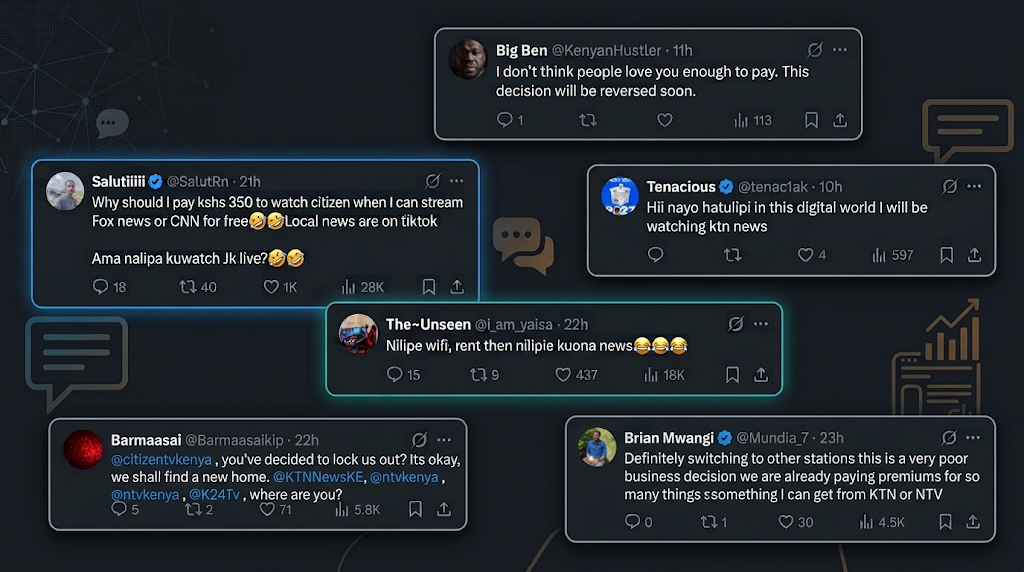
Reaction on social media has been sceptical. Some users mocked the idea of paying for Wi-Fi, rent and then paying again to watch television. Such comments are not a scientific poll, and online criticism is often stronger than actual buying behaviour.
A Loyal Niche Will Pay, but Everyone Else Needs a Reason
The most likely subscribers are loyal RMS followers, Kenyans living abroad, people without reliable access to a television signal and households that watch all three stations. Wider adoption will be difficult if the package offers only a livestream of content that is still available free-to-air.
The KES 350 price may be cheaper than DStv’s current entry-level package at KES 750, but it offers more than 100 channels. DStv also sells a broad television bundle that includes local and international entertainment, movies, children’s programming and selected football. RMS is selling live access to only three local stations.
Viewers who rejected DStv because it was too expensive may still ask why they should pay for any television content when free-to-air channels, social media clips and unofficial streams remain available. The lesson from DStv is that a lower price alone does not guarantee loyalty. Consumers also want clear value and the freedom to stop paying when they are not watching.
READ: Yvonne Okwara Joins Shuga Global After Leaving Citizen TV
Catch-up viewing, programme archives, exclusive interviews, higher-quality streams and convenient M-Pesa payments would offer viewers stronger reasons to subscribe. Keeping selected clips and major news updates free would help RMS maintain its reach and encourage people to sample the content before paying.
RMS has a reasonable case for seeking income beyond advertising. However, the package looks more like a focused test than a proven mass-market product.