




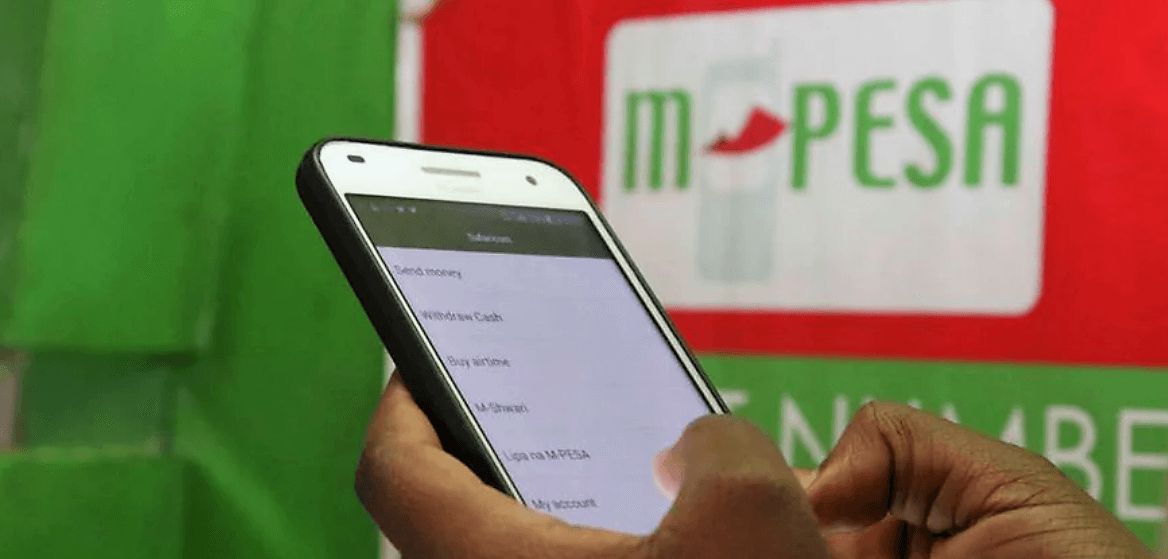
For years, Fuliza has been one of the most recognizable mobile credit facilities in Kenya. A customer can run out of money in their M-Pesa account, attempt a transaction and, if eligible, use Fuliza to cover the shortfall.
But what happens when the person running out of money is not an ordinary M-Pesa customer making personal transactions, but a trader trying to pay a supplier, purchase stock or keep a small business running?
That is where Fuliza ya Pochi, also known as Pochi Fuliza, comes in. Safaricom introduced the facility in October 2026, extending its mobile overdraft services to eligible users of Pochi La Biashara. It is designed to help small-scale traders complete business transactions when their business wallets do not have sufficient funds.
Consider a trader selling groceries in Nairobi.
The trader has KES 500 in their Pochi La Biashara wallet but needs KES 1,500 to pay a supplier. If the trader has an available Pochi Fuliza limit of KES 1,000, the facility can cover the difference.
The transaction can therefore proceed even though the business wallet does not have enough money.
The borrowed amount becomes a debt that must be repaid, rather than additional money deposited into the trader’s account.
What Is the Difference Between Ordinary Fuliza and Pochi Fuliza?
Although both facilities allow eligible customers to transact beyond their available balances, they serve different purposes.
For example, someone using ordinary Fuliza might borrow to complete a personal payment when their M-Pesa balance is insufficient.
A trader using Pochi Fuliza, however, could borrow to pay a supplier or meet a business obligation.
There is also a third facility worth distinguishing: Fuliza ya Biashara. It is a separate merchant overdraft product associated with Lipa na M-Pesa business payment services. It should not be confused with Pochi Fuliza simply because both target businesses.
How to Activate Pochi Fuliza in 2026
Eligible traders can access the facility using their registered Pochi La Biashara number.
The USSD procedure is:
1. Dial *334#.
2. Select option 8 for Pochi La Biashara.
3. Select option 4 for Pochi Fuliza.
4. Select option 1 to join.
5. Read and accept the terms and conditions.
6. Enter your M-Pesa PIN when prompted.
Safaricom then sends a confirmation message indicating the limit assigned to the customer.
The service can also be accessed through the Pochi Mini App on My OneApp.
Do not share your M-Pesa PIN with anyone claiming to help you activate the service or increase your limit.
How Is the Pochi Fuliza Limit Assigned?
This is one of the most important questions because traders may have different borrowing limits even when they have used Pochi for the same length of time.
Safaricom’s published eligibility guidance requires traders to have actively used Pochi La Biashara for at least six months.
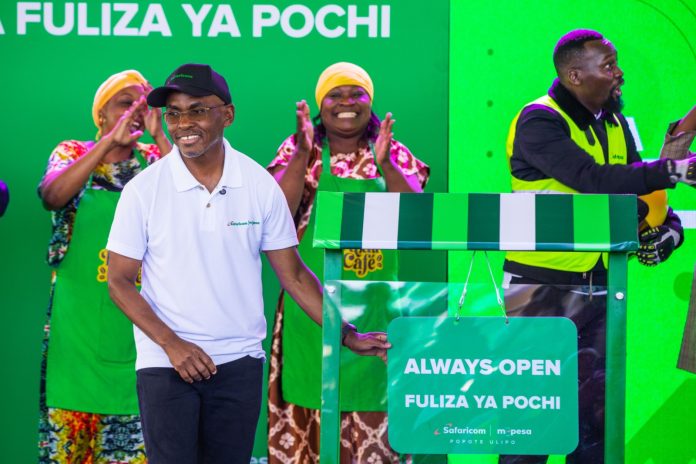
There is also a regular-usage requirement. Safaricom CEO Peter Ndegwa explained that traders should transact through Pochi on approximately 15 days within a 30-day period.
This means simply opening Pochi La Biashara and leaving it dormant for six months does not necessarily make someone eligible.
Instead, the company assesses individual business activity and assigns a credit limit according to its assessment.
The factors that matter include:
Frequency of transactions: A trader who receives customer payments regularly through Pochi demonstrates more consistent platform activity than someone who rarely uses the service.
Transaction volumes: The amount of money passing through the business wallet can help demonstrate the scale of the business. However, high transaction volumes do not guarantee a particular limit.
Account activity: Consistency matters. Regular transactions across the month can help demonstrate that Pochi is being used for genuine commercial purposes.
Repayment behaviour and credit history: The lender’s credit assessment can also consider repayment conduct and relevant M-Pesa transaction history.
Overall credit assessment: The limit is not determined by one factor alone. Safaricom and its financing partners assess the information available when determining the amount of credit to offer.
For instance, two traders may have used Pochi for eight months. One receives customer payments almost daily, while the other only receives a handful of payments every month. Their borrowing limits need not be the same.
The telco is looking for evidence of genuine business activity.
How Much Does Pochi Fuliza Cost?
This is where traders need to pay particular attention.
Pochi Fuliza is not free money. Safaricom’s published terms provide for a one-off charge of 1% on every amount borrowed.
There is also a 48-hour interest-free period before daily maintenance fees begin applying.
For example, borrowing KES 1,000 attracts a one-off charge of KES 10.
If the trader repays within the first 48 hours, the daily maintenance fee does not apply.
After the grace period, the following daily charges apply according to the outstanding balance:
| Outstanding amount | Daily maintenance fee |
| KES 0 – KES 100 | KES 0 |
| KES 101 – KES 500 | KES 3 |
| KES 501 – KES 1,000 | KES 6 |
| KES 1,001 – KES 1,500 | KES 21.60 |
| KES 1,501 – KES 2,500 | KES 24 |
| KES 2,501 – KES 70,000 | KES 30 |
The figures include applicable excise duty.
How Do You Repay Pochi Fuliza?
Repayment is automatic.
When customers send money to a trader’s Pochi La Biashara wallet, the system deducts money towards clearing the outstanding overdraft.
What Happens if You Fail to Repay?
Pochi Fuliza is a credit facility, not a grant.
Failure to repay can affect the trader’s ability to access future credit.
According to the published terms, consequences can include suspension of the facility, reduction or withdrawal of the borrowing limit, debt recovery and possible reporting to Credit Reference Bureaus (CRBs).
The facility makes more sense when the money will support a business activity that can generate sufficient income to repay the overdraft.
How Can You Improve Your Chances of Getting a Pochi Fuliza Limit?
There is no guaranteed formula for increasing a Pochi Fuliza limit, but traders can take practical steps to demonstrate consistent business activity.
- Receive genuine customer payments through Pochi rather than using it occasionally.
- Maintain regular transactions throughout the month.
- Keep the account active, rather than allowing long periods of inactivity.
- Repay borrowed amounts promptly.
- Avoid repeated borrowing that leaves the business dependent on overdrafts.
- Maintain responsible use of other credit facilities.
Remember, the six-month requirement establishes a minimum usage history, not a promise of a particular borrowing amount.
Also, nobody should charge you money to unlock, increase or manually assign a Pochi Fuliza limit. Such offers should be treated as potential scams.
Conclusion
Pochi Fuliza represents another development in Kenya’s mobile-money credit market, extending overdraft access beyond individual M-Pesa users to eligible small-scale businesses.
Its biggest distinction from ordinary Fuliza is the account it serves and the commercial activity it is designed to support.
For traders, the opportunity is not simply receiving another borrowing limit. It is having a financial facility that can help manage short-term business expenses.
But as seen, its access comes with costs, repayment obligations and credit consequences.
A trader should not borrow simply because a limit is available.