



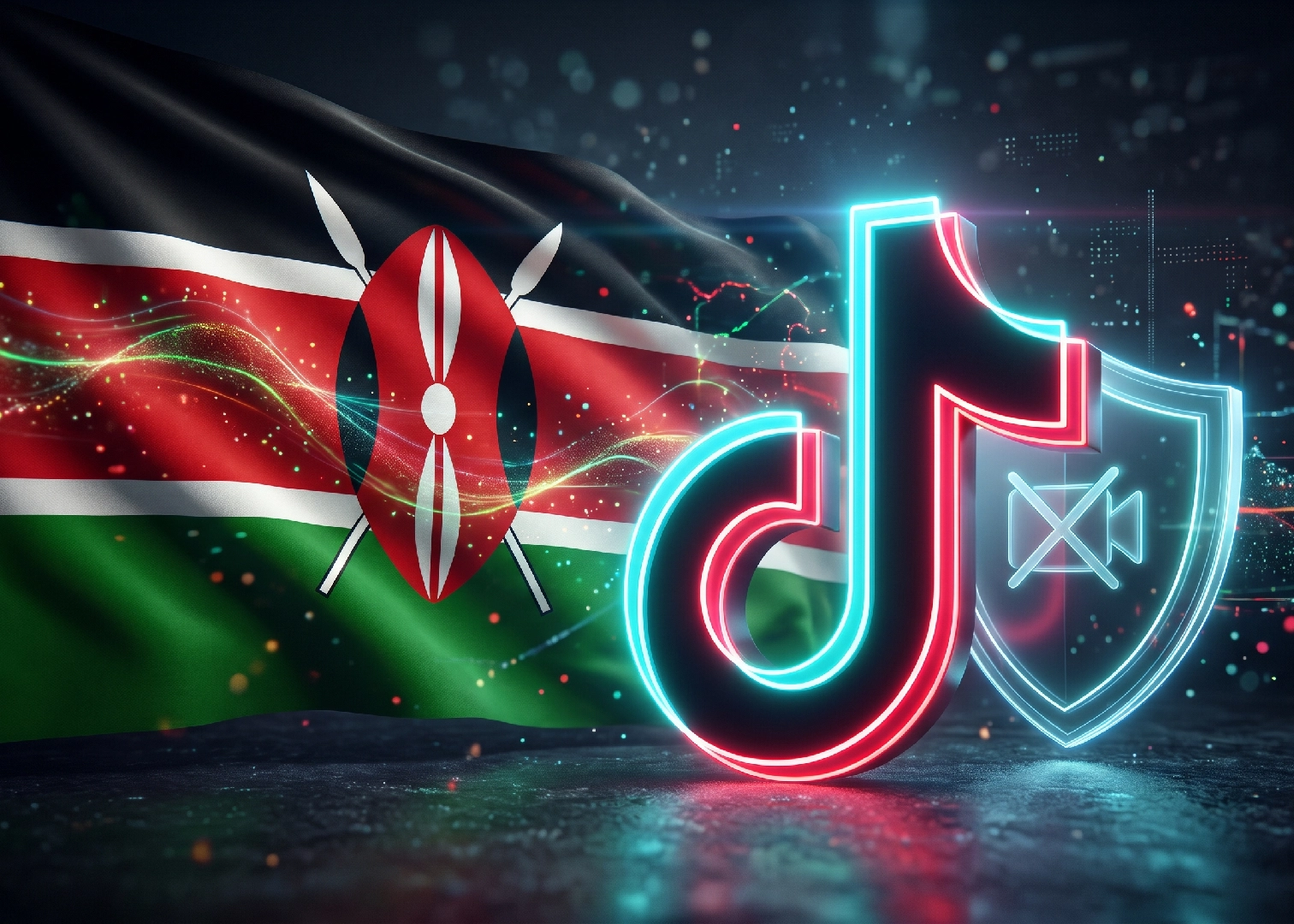
TikTok removed 750,185 videos in Kenya between April and June 2026 for breaking its Community Guidelines, according to its enforcement report released on 9 November, though the policy charts published alongside it reflect worldwide figures and not Kenya’s own.
On speed, the Kenyan numbers are strong, with 99.8% of the videos detected by TikTok’s systems before anyone reported them and 93.8% taken down within 24 hours of posting.
The company also interrupted 80,640 LIVE rooms in the country and removed more than 46,000 accounts it suspects belong to children under 13, while nearly 11,000 Kenyan videos came down under its rules on edited and AI-generated media, about 1.5% of the national total.
Kenya’s share of the global picture is small, since the 750,185 removals equal roughly 0.4% of the 188.3 million videos TikTok removed worldwide out of more than 42.2 billion uploaded. Automated systems accounted for 97.4% of those global removals, the highest share the company has reported, and about 6.3 million videos were reinstated after successful appeals.
What the Policy Data Shows
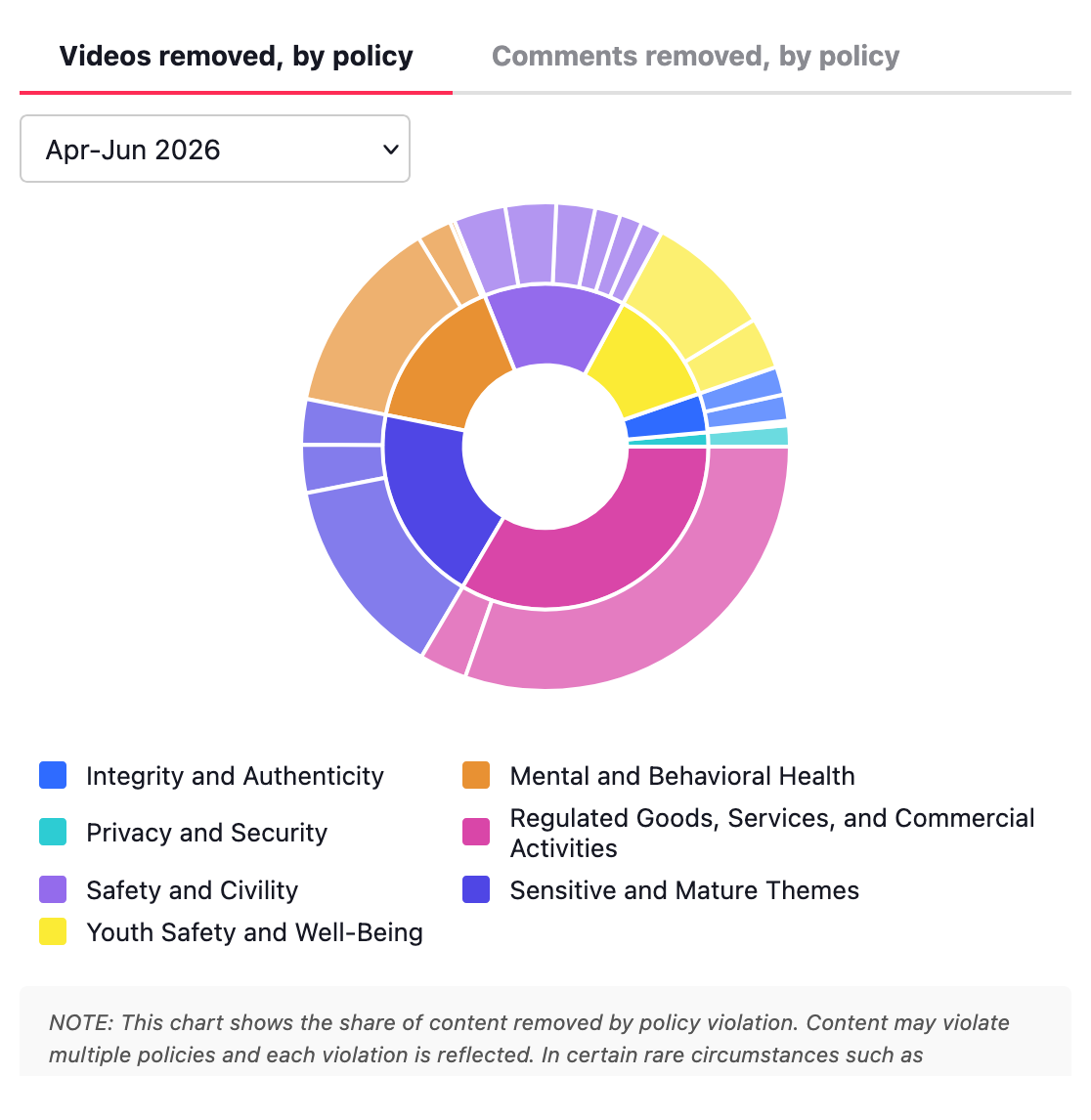
The ranking is lopsided toward physical risk and sexual safety, with dangerous activities and challenges at 95.2%, regulated goods and services at 78.6%, and youth sexual and physical abuse at 75.9%.
Misinformation sits at 58.3%, while civic and election integrity registers just 2.6%, which suggests that most falsehoods being removed have little to do with elections and more to do with health, money, and public safety.
Hate speech (8.5%) and violent and criminal behaviour (7.3%) are among the smallest categories, and because every policy a video breaks is counted, the shares overlap and cannot be added together.
Misinformation is Wider than Elections
Misinformation is tied to 58.3% of removals, yet civic and election integrity accounts for just 2.6%, a gap suggesting the falsehoods being removed span health, money, and public safety as well as politics.
Kenya has seen the political version play out much more recently than the last election cycle, with AI-generated videos falsely showing President William Ruto announcing his resignation circulating on TikTok and Facebook in July 2025, after two weeks of violent anti-government protests.
Amnesty International’s November 2025 report went further, documenting deepfakes, AI-generated images, and networks of fake accounts used to distort political events and target young protesters, with TikTok and X among the platforms carrying the material.
The new data does not say how much of this year’s misinformation was political, a gap that is harder to overlook with the 2027 general election less than a year away.
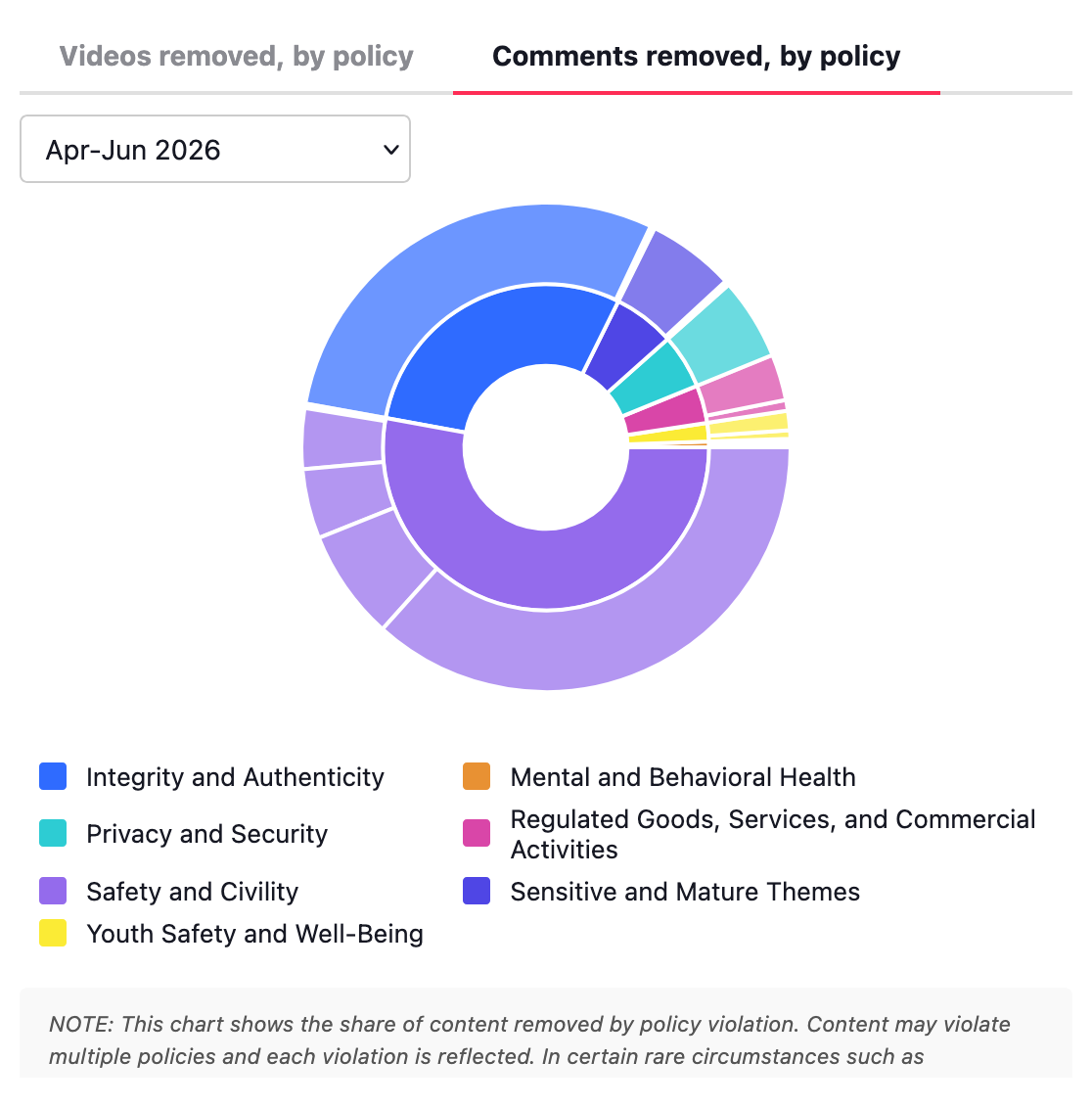
Comment removals lean toward safety and civility, followed by integrity and authenticity, a mix consistent with harassment, hateful remarks, and spam.
Global Data, Local Risks
Kenya’s numbers point to fast, largely automated enforcement but cannot say which kinds of content drove it, so the global rankings may not fully or directly map onto Kenyan feeds.
Kenyan feeds supplied their own examples during the quarter. In late May 2026, posts spreading mainly on TikTok claimed to show two men arrested for trafficking children, with some versions alleging the children were being taken to Tanzania for ritual sacrifice.
Fact-checkers at Africa Check the traced the footage to an incident that circulated in June 2025, nearly a year earlier, a reminder that old videos with a fresh caption can spread alarm without any political motive.
Whether the nearly 11,000 AI-related removals this quarter touched politics, public figures, or tensions between communities is left unanswered, a gap that is harder to overlook with the 2027 general election less than a year away.
LIVE and Under-13 Accounts
TikTok interrupted 80,640 LIVE rooms in Kenya during the quarter, about 22% fewer than the 103,847 it stopped in January to March, though nothing published says whether that reflects better behaviour or fewer violations being caught.
The stakes are higher on LIVE because gifts from viewers convert into cash for creators, and Kenya’s regulator has been here before, with the Communications Authority opening a probe in March 2025 after a BBC investigation reported sexualized livestreams involving teenagers as young as 15, on a feature that is meant to be restricted to users aged 18 and over.
Against that backdrop, the removal of more than 46,000 Kenyan accounts suspected to belong to children under 13 stands out, though TikTok does not say how those accounts were identified or how many were broadcasting.
What is Still Missing
Kenyan appeals, reinstatements and overturned decisions remain unpublished at Kenyan market level.
TikTok’s dataset provides a Kenya-specific enforcement-method breakdown as 74,598 removals attributed to AI Moderation and 671,052 to Automation, together accounting for approximately 99.4% of the 750,185 removals. However, the dataset does not clearly explain how these labels relate to human review, escalation or quality assurance.
Total Kenyan uploads and overall audience exposure are not published, so the figures show how much the company acted rather than how much harmful content Kenyans actually saw.
Those gaps come as Kenya drafts national guidelines on online disinformation and hate speech, and a clearer presentation of mutually exclusive counts, category intersections, appeals and audience exposure would give regulators and researchers firmer ground.