


For years, Kenyans interested in owning shares in companies such as Nvidia, Microsoft and Amazon had to contend with a stock market that appeared distant, expensive and difficult to access.
Thankfully, now, through international brokerage platforms, Kenyans can now access shares in some of the world’s biggest companies using their smartphones.
The opportunity is particularly significant as Nasdaq expands its influence in the global economy, with technology, artificial intelligence, semiconductor and biotechnology companies attracting investors from around the world.
Why Nasdaq has become a global investment destination
Founded on February 8, 1971, Nasdaq changed the way securities were traded by introducing an electronic stock market at a time when traditional exchanges relied heavily on physical trading floors.
Its importance has grown alongside the technology industry today. However, Nasdaq is not the only major American stock exchange. The New York Stock Exchange (NYSE) is another important marketplace, particularly for established companies across finance, energy, consumer goods and industrial sectors.
For Kenyan investors, accessing the exchange is possible through international brokerage arrangements, as said. However, the process requires understanding the regulatory framework, the companies available and the costs involved.
Is Investing in Nasdaq Legal in Kenya?
Yes. Kenyan citizens and residents can invest in foreign securities through eligible international investment companies and firms. Kenya’s foreign exchange system was liberalized following the repeal of exchange controls in 1993, allowing individuals and businesses to transact in foreign currencies.
The original Exchange Control Act was enacted by the colonial legislature in the post-independence period. Its repeal was a legislative decision by Parliament, during the government of President Daniel arap Moi.
The Capital Markets Authority (CMA), established under the Capital Markets Act, provides the country’s regulatory framework for capital market activities. Its responsibilities include licensing and supervising market intermediaries and protecting investors.
The government has not established a special Nasdaq investment programme or guaranteed scheme for Kenyans. Rather, the existing financial and foreign exchange framework allows eligible investors to access international markets through appropriate intermediaries.
There are, however, important regulatory considerations. The US government’s trade guidance on Kenya identifies a requirement for residents’ overseas investments exceeding $500,000 to obtain approval through their facilitating bank from the Central Bank of Kenya (CBK).
For ordinary investors making smaller transactions, the practical requirement is to use legitimate financial channels, comply with applicable identification and anti-money-laundering checks, and retain transaction records.
How to Open an Account and Start Investing
The first step is choosing an international broker that accepts Kenyan citizens and offers access to US-listed securities.
Hisa is one option. Its US securities are provided through Alpaca Securities LLC, a US-registered broker-dealer. Interactive Brokers is another international platform that lists Kenya among the countries whose residents can open accounts.
The registration process generally involves:
- Age and identification: Applicants generally need to be at least 18 years old and provide a valid national identity card or passport.
- Account registration: Complete the online application and provide personal details, residential information and any requested tax identification documents.
- Verification: Submit the required identification documents and complete the broker’s compliance checks.
- Funding: Deposit money through the payment channels supported by the broker. This may involve bank transfers, cards or supported mobile-money arrangements.
- Select a company: Search for the company’s ticker, such as NVDA for Nvidia or ANT for Anthropic.
- Purchase shares: Enter the amount or number of shares, review the exchange rate and transaction charges, then submit the order.
Some brokers support fractional shares, meaning an investor can purchase a portion of an eligible share rather than pay for a complete unit. This makes participation possible without committing large sums.
The CMA also advises investors to deal with licensed entities and avoid unregulated investment operators. Its approved institutions can be checked through its official online register.
Which Companies Can Kenyans Buy on Nasdaq?
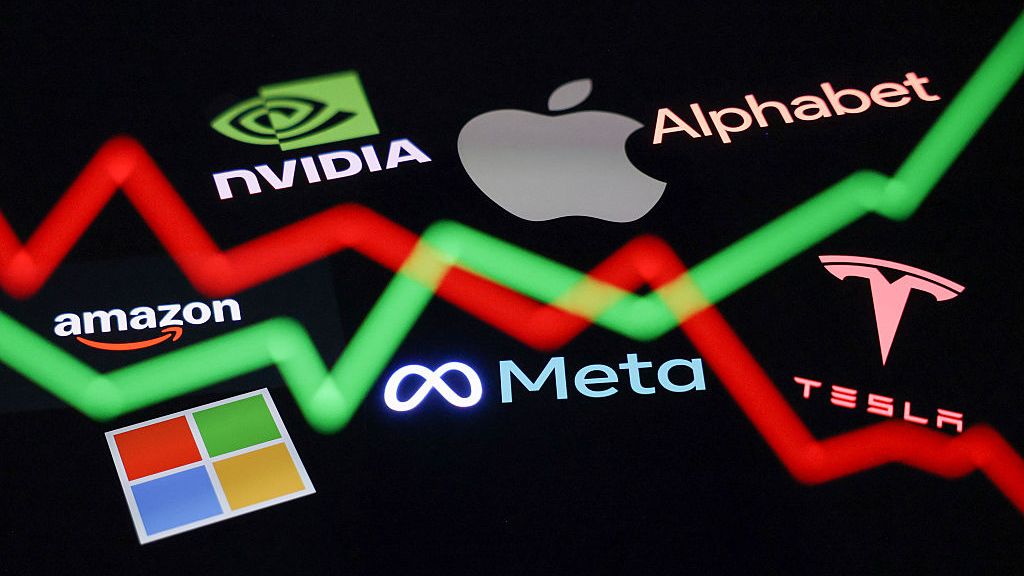
Nasdaq offers exposure to businesses across different industries, although technology remains its most recognisable segment.
Some of the prominent companies listed on the exchange include:
- Nvidia (NVDA), a leading manufacturer of graphics processing units and AI computing infrastructure. KES 20,208 per share on Wednesday, November 24, 2026.
- Apple (AAPL), the manufacturer of iPhones, Mac computers and other consumer electronics. KES 46,050 per share.
- Microsoft (MSFT), the technology giant behind Windows, Azure cloud computing and Microsoft 365. KES 64,526 per share.
- Amazon (AMZN), a global e-commerce and cloud computing company. KES 32,812 per share.
- Alphabet (GOOGL), Google’s parent company, with interests in search, advertising and artificial intelligence. KES 36,287 per share.
- Meta Platforms (META), the owner of Facebook, Instagram and WhatsApp. KES 76,711 per share.
- Tesla (TSLA), a rocket and energy technology company owned by Elon Musk. KES 50,031 per share.
Another notable addition is Anthropic, the artificial intelligence company behind Claude.
Anthropic completed its initial public offering in November 2026, with its Class A shares beginning to trade on Nasdaq on November 19 under the ticker ANT. The company priced its IPO at $83 per share, making it possible for public-market investors to acquire an ownership stake.
Its arrival gives investors another way to participate in the commercial development of artificial intelligence. However, its early trading performance has been volatile. Reuters reported on November 24 that its shares had fallen below the $83 IPO price, highlighting the risks associated with highly valued technology companies.
The Taxes, Charges and Risks
American shares are denominated in US dollars, exposing Kenyan investors to exchange-rate movements when converting shillings into dollars and eventually withdrawing their money.
Other costs may include brokerage commissions, currency-conversion spreads, deposit and withdrawal fees.
Dividends from US paid to foreign investors generally attract 30 per cent withholding tax unless an applicable treaty provides a lower rate.
Foreign investors may be required to complete Form W-8BEN to establish their non-US tax status. The form does not automatically guarantee a reduced withholding rate.
Kenya, meanwhile, operates a source-based taxation system, with certain exceptions for foreign income. KRA advises taxpayers to assess whether particular foreign earnings fall within the categories taxable in Kenya, and seek professional guidance on their individual circumstances rather than assume that every foreign dividend or share sale attracts tax rates.
Note: US markets operate from Monday to Friday, generally between 5.30pm and midnight Kenyan time during American standard time, with opening and closing times shifting by an hour during daylight-saving time.
The CMA cautions investors against borrowing to invest and encourages them to understand the risks before committing money.