



Travelling by road in Africa often means dealing with several bus companies one at a time, confirming routes with each, securing seats separately and arranging connections where one operator’s service ends and another’s begins.
For cross-border journeys, the process stretches across multiple stations and booking arrangements that rarely coordinate with each other.
Kenyan-founded startup Msafiri wants to change that by building a transport marketplace that connects passengers with independent drivers and transport operators.
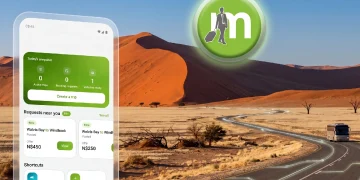
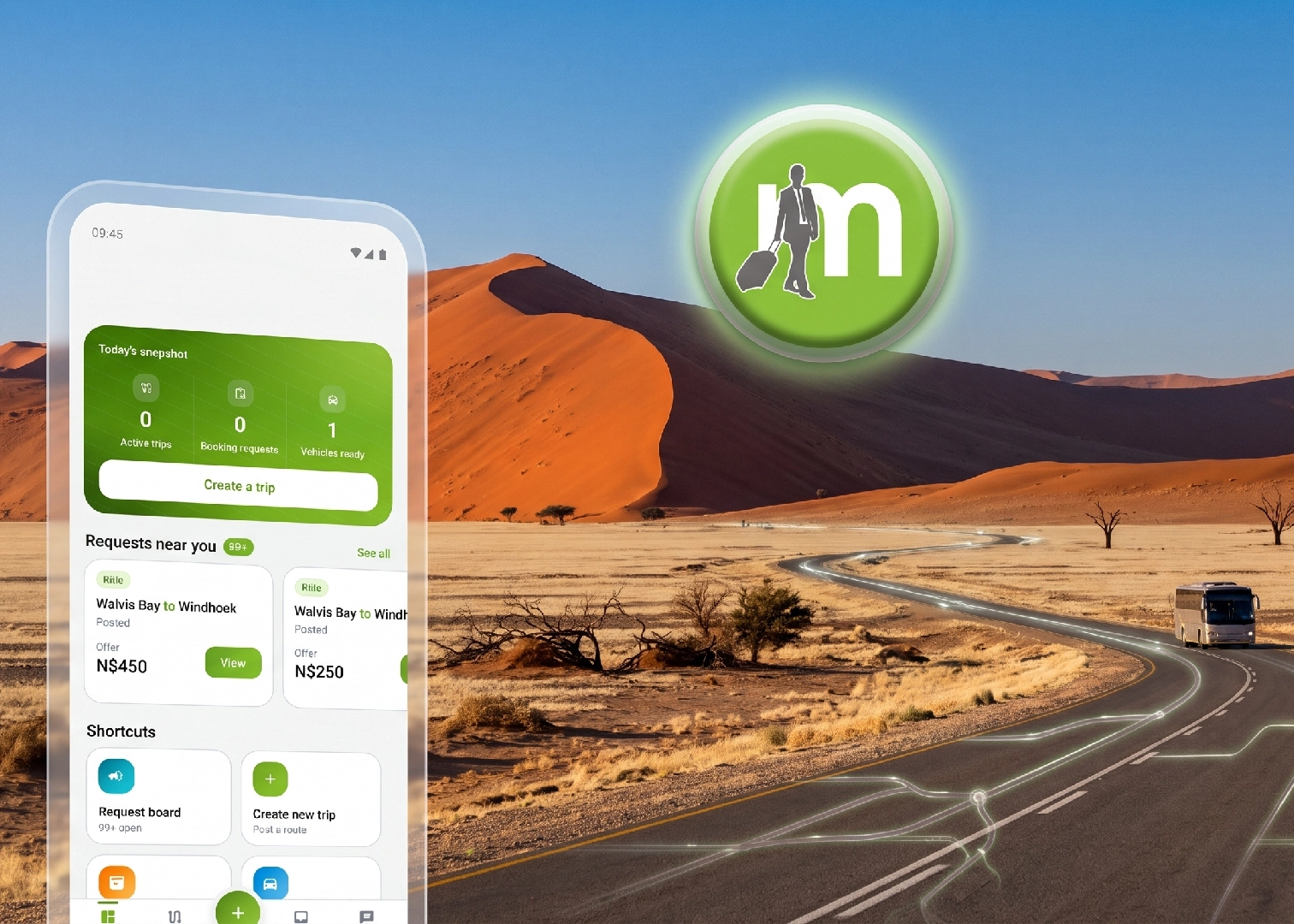
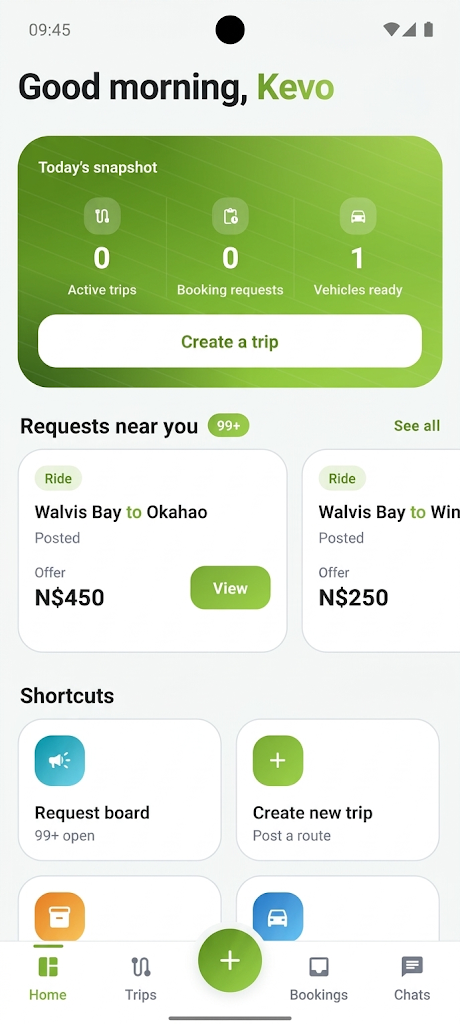
Its operations are currently focused on Namibia, where founder Orina Nyakaru sees room to build a more connected transport ecosystem before taking the idea further across the continent. Passengers and drivers can already use it through the Msafiri Namibia app on Google Play, where trips are booked and drivers create routes and offer seats.
How Msafiri Works
Msafiri does not own vehicles. It works with independent drivers and transport businesses, which lets it bring different providers onto one platform without buying a fleet or running the underlying operations.
Its standout feature lets passengers request a ride when no existing trip suits their plans. A traveller heading to another town on a Friday can post a destination and preferred departure time, and drivers already making that trip with spare seats can pick up the request.
The setup suits markets where transport is not always organised around fixed schedules, and it gives drivers a way to earn from seats that would otherwise go empty.
The company is also moving into e-hailing, following requests from drivers who want an alternative to existing ride-hailing platforms and tools to manage their rides through Msafiri.
READ: Uber Drops Visa Card Payments for Riders in Kenya
Alongside that, it is developing a dashboard for bus operators to manage their services and eventually list their routes on the platform, and it is in talks with Namibian bus operator Silas Ndapuka Transport over a potential pilot.
A Stalled Kenyan Start Pointed to Namibia
Msafiri’s current direction is a departure from its original Kenyan operations.
Nyakaru started building the company in 2017, initially exploring ways to organise transport bookings digitally. However, the business faced financial and operational challenges, including the cost of maintaining the necessary regulatory approvals in Kenya.
A trip to Namibia in 2025 changed the direction. Travelling by bus, he found a market far less organised than he expected, with passengers moving between Namibia, Zambia and Botswana relying on informal networks and individual operators to arrange their journeys.
One of those networks was a WhatsApp community connecting people who needed transport, and Nyakaru teamed up with the people already running it, growing the group to about 15,000 members.
That response encouraged him to build a platform and launch in Namibia. By his account, Msafiri now has a community of roughly 30,000 people and about 1,500 app downloads, figures he says came mostly from referrals and organic engagement rather than paid advertising.
The gap between the two numbers suggests most of the audience still sits on community channels rather than in the app, so turning that following into regular users is the next test. The company has also begun exploring partnerships with transport and tracking businesses, including Londeka, which operates across several Southern African markets.

From Individual Rides to Cross-Border Travel
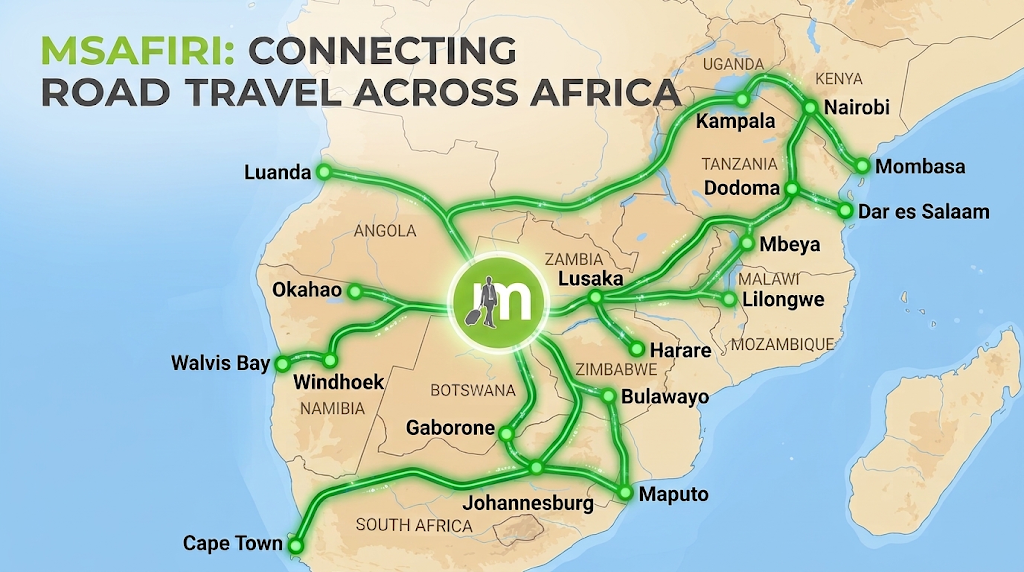
The more interesting part of Msafiri’s proposition is what it could eventually become.
Nyakaru argues that African road transport suffers from poor coordination between operators, particularly on journeys that cross several countries.
His personal trip from Nairobi to Windhoek took five bus connections, one of which had to be replaced after a disruption at a border, and he believes a connected system could cut that to three, since the same operators already run from Tanzania to the Zambian border.
“Transport is very disconnected. If you go by road to any country in Africa, you cannot book a bus in Nairobi and say, ‘I’m going to Cape Town,’ and then there’s a system that does the seamless connections in between. That’s what we’re looking at, and it’s doable.”
This would require more than simply listing available buses. Msafiri would have to onboard transport companies, connect to their booking systems and match routes with departure schedules, and that is where the operator dashboard comes in. Individual drivers can sign up on their own, but larger companies need tools built around how they run their services.
The company is also looking at school transport and corporate carpooling, and Nyakaru describes the long-term goal as something like WeChat for logistics, a single platform where users can reach different transport and logistics services.
Nyakaru describes the longer-term ambition as building something similar to WeChat for logistics, where users can access different transport and logistics services through one platform.
Can the Model Work Beyond Namibia?
Msafiri’s early traction offers an indication of interest in its approach, but turning that into a sustainable transport marketplace will be more difficult.
The platform currently has more passengers than providers, which is the central risk for any new marketplace, since riders will only stay if enough drivers and operators are available to take their bookings.
Nyakaru says the company has turned its attention to the supply side as a result.
“We have more users on our platform than providers. So right now what we’re doing is basically focusing on the service providers, trying to see how we can get them on board.”
Onboarding established bus companies and keeping route information accurate will determine whether travellers come to depend on the service. Nyakaru says decision-makers in Namibia are far easier to reach than in Kenya, where he describes needing repeated attempts to meet a bus company director, which has made the early supply work move faster than it would have at home.
Money is the other constraint. The business is funded largely from Nyakaru’s personal resources, which he says stretches work that should take a week into a month.
Msafiri is looking to raise capital but says it is being selective about investors, and it plans to prove the model in Namibia before looking at neighbouring markets, with any return to East Africa starting from Namibia and working “upward”.
Msafiri is still early and well short of the regional network it describes, but it is targeting a genuine gap in coordinating road transport across Africa, and its success will turn less on new features than on how many providers it brings onto the platform.