



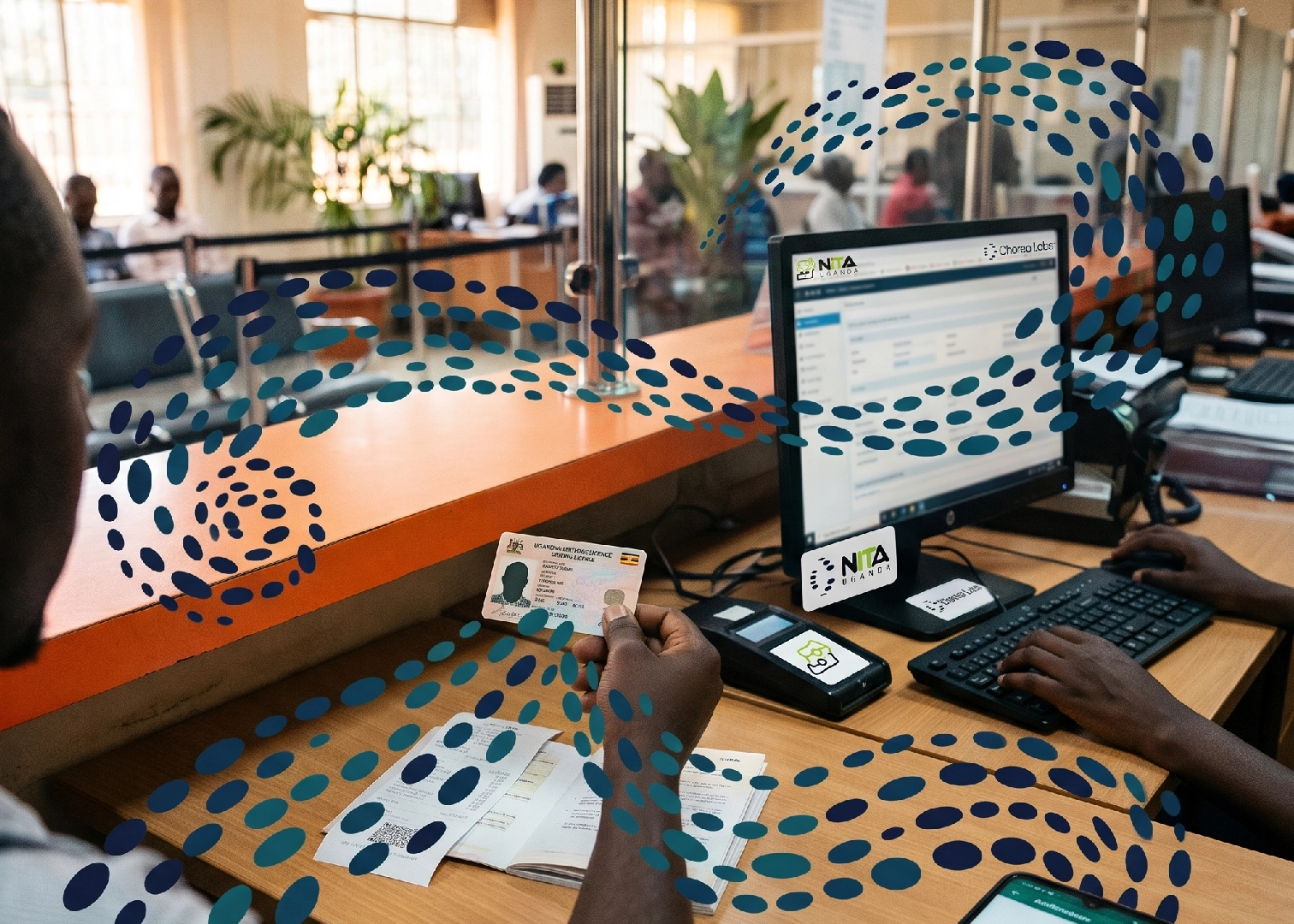
Not long ago, getting a driving licence in Uganda meant waiting several days while one government office confirmed details held by another.
The same licence can now be issued in about 30 minutes, according to Choreo Labs’ account of the project, a gap that owes less to the form or the counter than to the systems behind them finally talking to each other.
That change runs through UGHub, the national integration platform the National Information Technology Authority of Uganda (NITA-U) launched in 2021 on software from Choreo Labs, formerly known as WSO2, after rebranding this month.
The platform now ties together ministries, regulators, banks, utilities and telecom providers, letting them exchange information through one managed route instead of a patchwork of separate links.
Connecting Disconnected Government Systems
Uganda was not starting from scratch, since NITA-U, which was set up in 2009 under the Ministry of ICT to coordinate technology across government, had already built a 4,300 km national fibre backbone, launched a sovereign government cloud and moved more than 300 government applications into a centralised disaster recovery centre.
Before UGHub, Uganda’s ministries, departments and agencies operated largely independent applications and databases. Although many had invested in digital systems, these platforms could not always communicate with one another.
Some institutions relied on legacy applications without modern application programming interfaces (APIs), while others used tools such as Excel to manage information. Connecting two organisations often required custom-built integrations, which were expensive to maintain and difficult to scale.
Where no link existed, information travelled on flash drives, by email and over SMS, without central governance or security oversight, and services that depended on another agency’s records leaned on paper and physical documents.
That was especially limiting in rural areas, where patchy smartphone and internet access already made digital services harder to reach, and it held back banks, insurers and fintech firms that needed fast, reliable access to government data.
A Shared Platform That Leaves Existing Systems in Place
NITA-U chose Choreo Labs for its flexibility, open architecture and strong support for interoperability, qualities that suited a government where agencies differ widely in budget, technology and digital maturity.
Rather than replacing individual government applications, UGHub provides a shared integration layer through which participating organisations can access each other’s services.
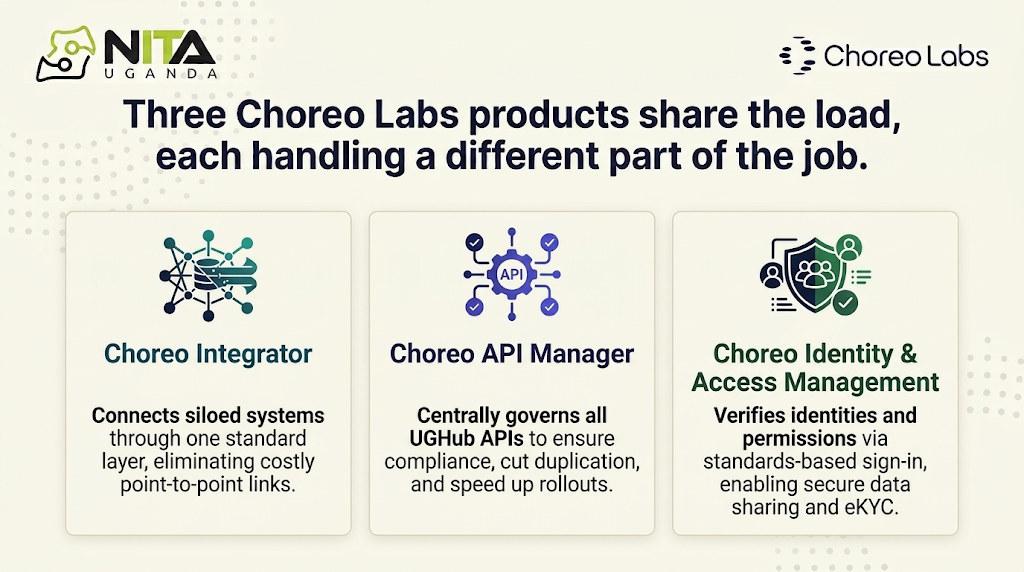
Three Choreo Labs products share the load, each handling a different part of the job.
The platform brings together three main capabilities.
Institutions still running on Excel were not left out, since custom-built APIs brought them into the network without the cost of replacing their systems, allowing the platform to reach agencies at very different stages of modernisation.
What 150 Connected Organisations Look Like In Practice
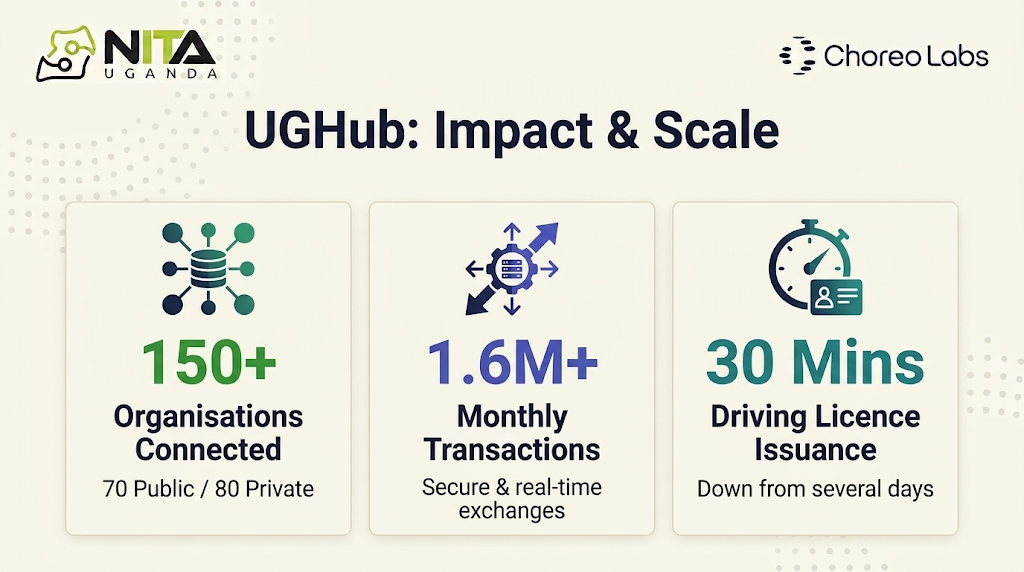
According to Choreo Labs’ (WSO2) account, UGHub connects more than 150 public and private-sector organisations, including ministries, regulators, banks, utilities and telecommunications providers.
Private organisations make up a little over half of that network, which suggests UGHub serves the wider economy rather than only moving data between ministries.
The platform processes more than 1.6 million secure transactions monthly, demonstrating how frequently participating institutions exchange information.
One of its reported benefits is faster electronic Know Your Customer (eKYC) verification. Financial institutions must verify customer identities before providing certain services. Previously, this process could take several days when it depended on manual requests and document checks. Through UGHub, verification can now be completed in seconds.
The customer account also reports that driving licence issuance has been reduced to approximately 30 minutes, compared with several days previously.
These improvements come from allowing institutions to retrieve information directly from authorised sources rather than repeatedly requesting documents from customers or other agencies.
NITA-U identifies faster public-service delivery, improved revenue collection, better decision-making and opportunities for private-sector services among the platform’s benefits.
On the platform’s track record, NITA-U Executive Director Dr Hatwib Mugasa noted:
“For over five years, the WSO2 (Choreo Labs) platform has consistently proven its strength, expanding every day, supporting growing demands, and running without any major incidents. We remain confident that it is strong enough to meet our business requirements and national needs.”
Lessons That Travel Beyond Uganda
Uganda’s experience highlights a challenge facing governments investing in digital services.
Putting individual services online does not necessarily make them connected. Without interoperability, institutions can simply end up with separate digital versions of the same disconnected processes.
UGHub offers three important lessons.
First, governments rarely get to modernise every agency at once, and a shared layer lets institutions improve services now while upgrading their systems over time.
Second, information exchange requires security and accountability. Institutions need to verify who is requesting information, establish what they can access and maintain records of how services are used. This makes identity management and API governance essential parts of digital infrastructure.
Third, interoperability requires coordination beyond technology. It needs agreed standards, onboarding processes and clear responsibility for the services and data each institution shares.
NITA-U’s coordinating role helps establish this framework across institutions with different systems and priorities.
READ: WSO2 Launches Agent Manager to Help Companies Control Their Growing Army of AI Agents
From Connected Services to Governed AI
These requirements will also become more important as governments adopt artificial intelligence. AI-powered applications and agents that interact with public databases will need access to reliable information, verified identities and clearly defined permissions.
This connects with Choreo Labs’ expanded focus following its recent rebrand from WSO2. The company is building on its established integration, API management and identity capabilities to address the governance of AI agents and their interactions with enterprise systems.
Choreo Labs CEO Harry Ault has noted:
“Enterprises won’t put agents into production until they can see, govern, and trust every action those agents take. That is the problem we were built to solve, and our new name says so.”
READ: WSO2 Earns Leader Position in Gartner’s 2026 API Management Report
UGHub illustrates why these underlying capabilities matter. Whether information is requested by a government application, a bank or an AI-powered service, systems must be able to communicate securely and reliably.
For governments pursuing digital transformation, the next step is not simply introducing more applications. It is ensuring that the systems already in place can work together.