



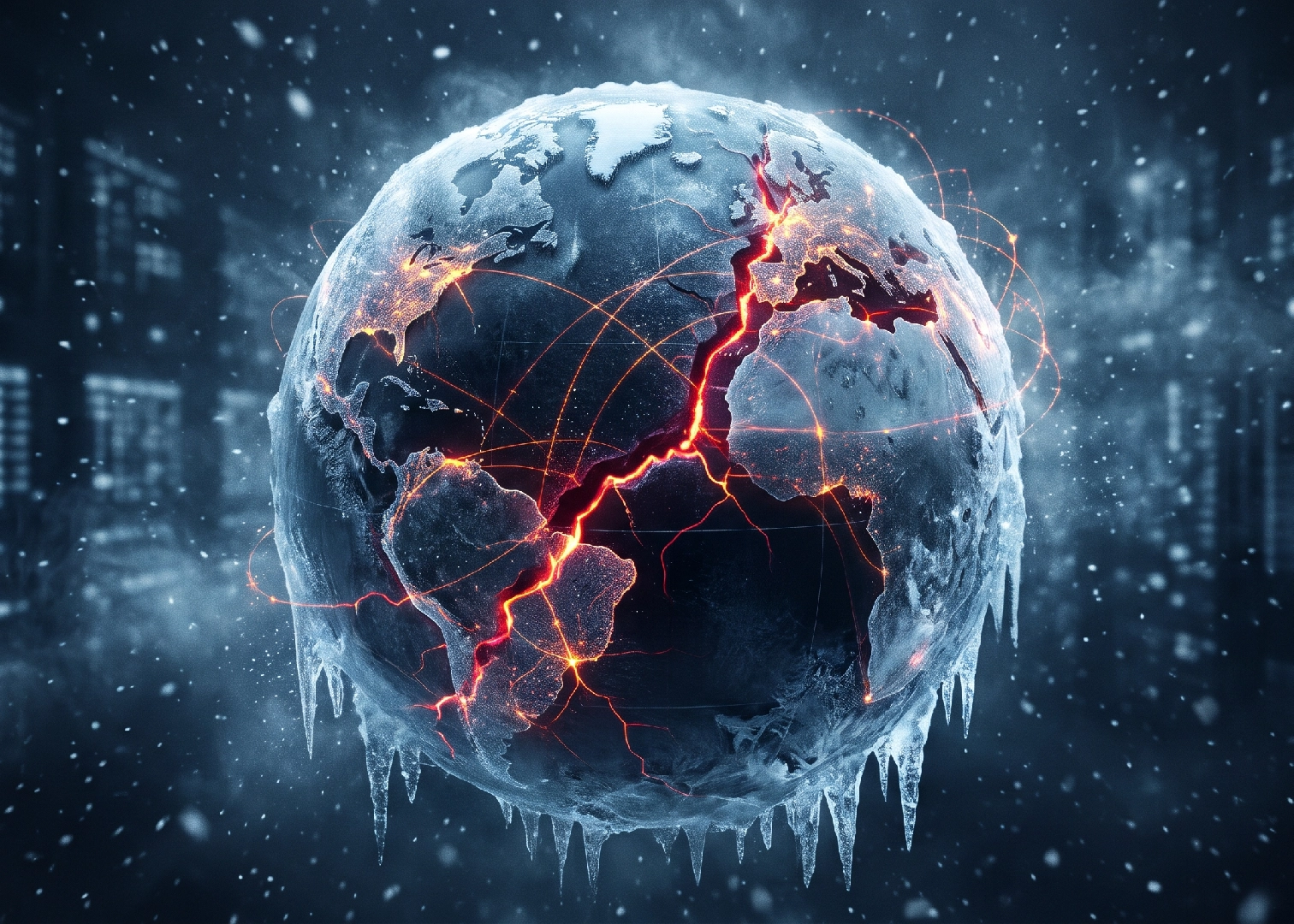
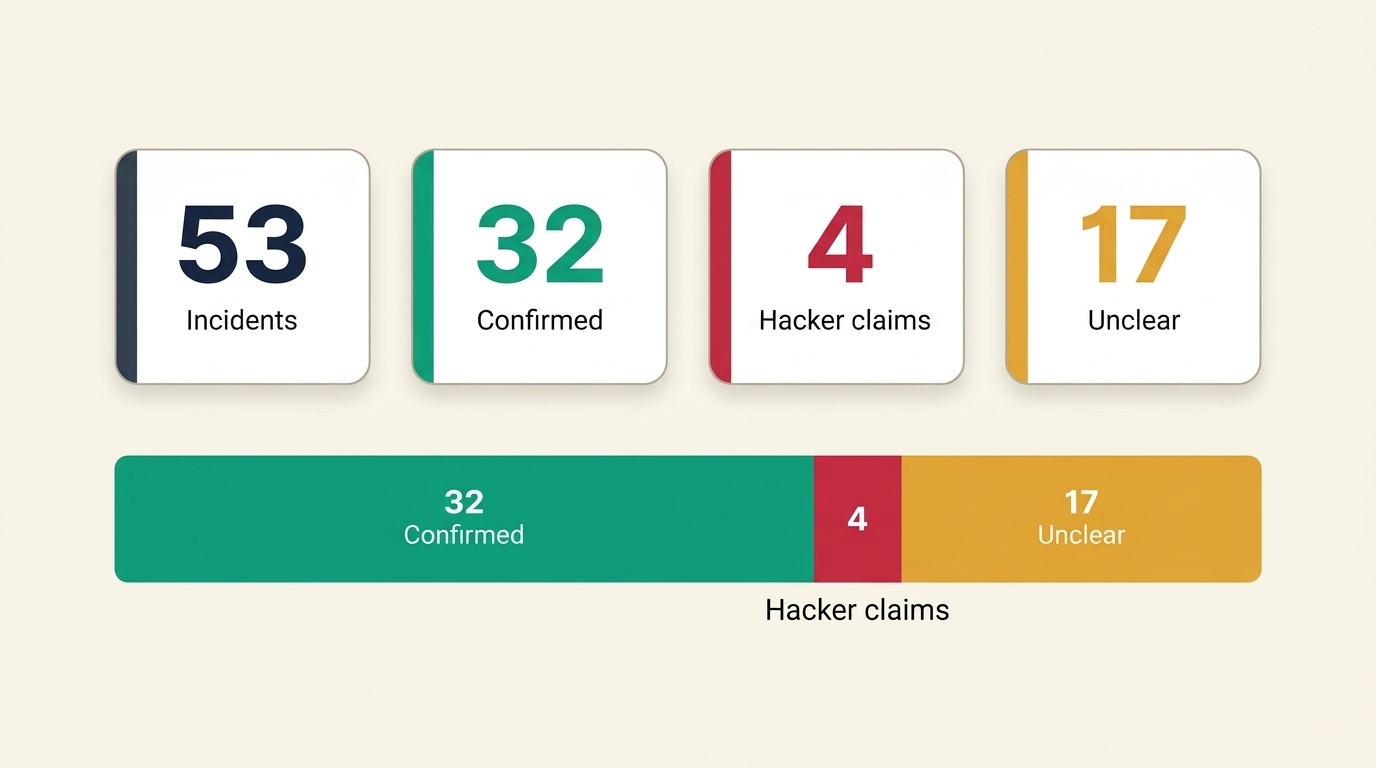
Between September 1 and November 27, 2026, 53 major cybersecurity incidents were publicly reported across healthcare firms, governments, universities, retailers and technology vendors, and the pace showed little sign of easing as the period closed.
The biggest exposures run well into the hundreds of millions of records. Vietnam’s passenger and crew database, left open on a misconfigured cloud server, held about 220 million records, Change Healthcare updated its 2024 attack to cover health data on about 190 million people, and the Pentagon’s Defense Manpower Data Center disclosed that Social Security numbers and job details for roughly 2.76 million living people and 294,000 deceased individuals were exposed.
Beyond data theft, the FortiBleed campaign handed attackers network access to more than 86,000 firewalls and VPN gateways across 194 countries, and SAP confirmed a breach that may have given attackers its source code.
Closer to home, a threat actor calling itself ByteToBreach claims to have taken about 740 GB from Kenya’s eCitizen platform, an allegation the government is investigating while services stay available. This is a simplified read of the full record, listing each case by the date it was reported, and it covers major publicly reported incidents rather than every attack worldwide.
Global Cyberattacks Map
The map below plots where the reported incidents landed, with campaigns that cut across several countries grouped in a separate panel.
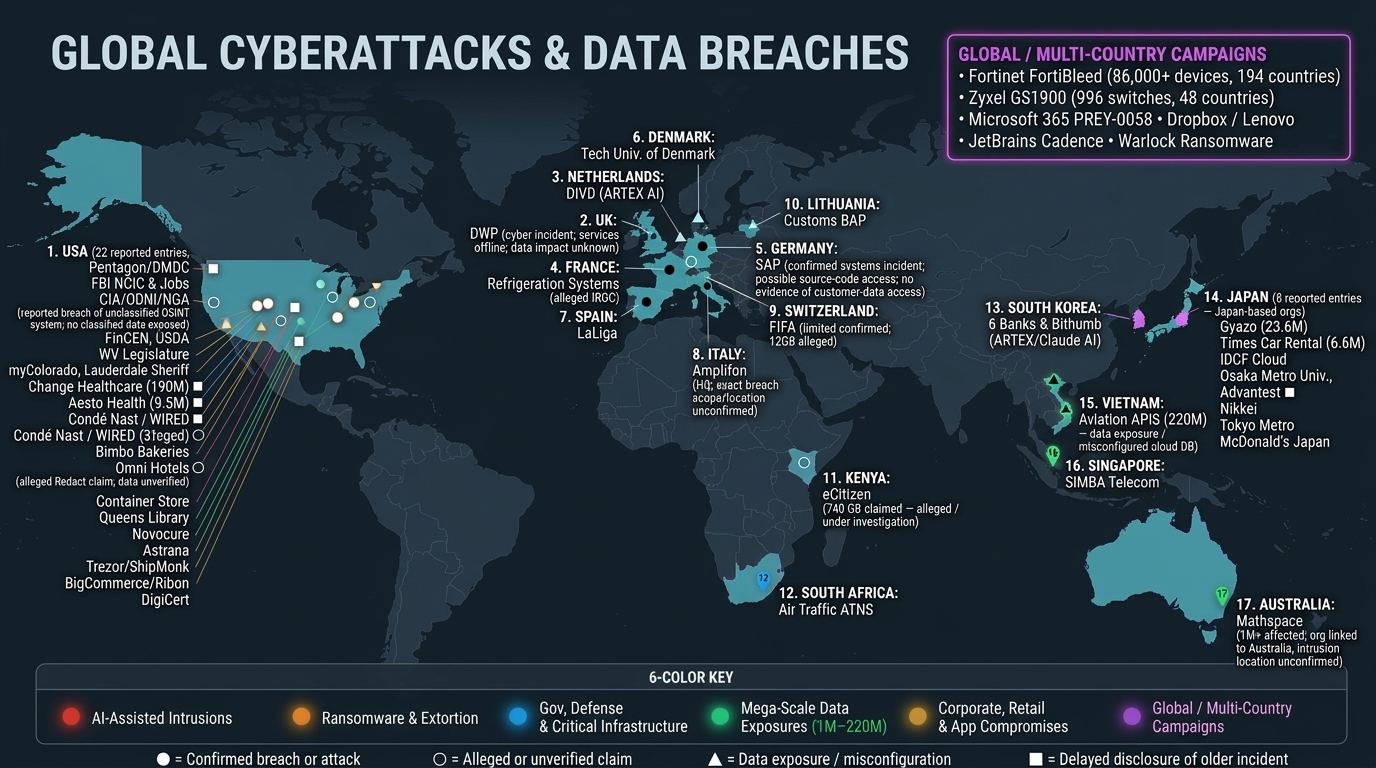
Cyberattacks and Data Breaches Reported between September and November 2026
The following is a roundup of major cyberattacks, data breaches and security incidents reported between September 1 and November 27, 2026. It spans government agencies, financial institutions, healthcare providers, technology companies, universities and critical infrastructure.
Not every incident involved confirmed data theft. Some resulted in unauthorised access, system disruption or exposure, while others remain allegations made by threat actors. The dates below indicate when incidents were publicly reported or disclosed, not necessarily when attackers first gained access. Older attacks disclosed during this period are also included.
Status key: ✅ Confirmed by the victim or investigators | ⚠️ Claimed by hackers, not verified | ❓ Confirmed or reported, but what was taken is still unclearSeptember 2026
September was marked by major breaches involving healthcare, education, travel and technology platforms. The exposure of 220 million passenger records in Vietnam, the 9.54 million Aesto Health breach and the alleged 32.8 million WIRED account leak highlighted the scale of personal information at risk.
| Date | Target | What happened | Data at risk | Status |
| Sep 1 | Aesto Health (US) | Cloud access in Dec 2025, disclosed now | Health, ID and financial data of 9.5M people | ✅ |
| Sep | Novocure | Systems access in mid-August | Patient IDs (1,400+), staff and provider contacts | ✅ |
| Sep | Dropbox users | Lenovo email flaw abused | Files in about 5,000 accounts | ✅ |
| Sep 5 | Trezor (via ShipMonk) | Logistics vendor breach | Contacts and orders of 67,000 customers | ✅ |
| Sep 5 | JetBrains Cadence | Unpatched TeamCity flaw | Possible cloud credentials and backups | ❓ |
| Sep 6 | Bimbo Bakeries USA | Oracle zero-day via vendor | Employee names and Social Security numbers | ✅ |
| Sep 7 | Condé Nast / WIRED | Database offered for sale | Contact details of 32.8M accounts | ⚠️ |
| Sep 7 | Mathspace | Network breach | Data of 1M+ students, staff and parents | ✅ |
| Sep 7 | Microsoft 365 users | Help-desk impersonation, MFA tricks | Logins and cloud files | ✅ |
| Sep 8 | Vietnam passenger database | Misconfigured cloud database | 220M passenger and crew records | ✅ |
| Sep | South Africa ATNS | Ransomware-linked malware | Unspecified, possibly sent out | ❓ |
| Sep | Tokyo Metro (Metpo) | Database access | Emails of up to 59,000 members | ✅ |
| Sep | SIMBA (Singapore) | Customer data breach | IDs and contacts of 23,549 customers | ✅ |
| Sep | Gyazo / Helpfeel | Service access | About 23.6M records, image metadata | ✅ |
| Sep 22 | FBI recruitment site | ShinyHunters claim | Names and addresses, 2 to 3 TB | ⚠️ |
| Sep 22 | BigCommerce merchants | Third-party app credentials | Shopper contacts and addresses | ✅ |
| Sep 24 | Astrana Health | Phone impersonation | Possible patient and staff data | ❓ |
| Sep 30 | Times Car Rental (Japan) | Account breach | 6.6M accounts, 1.6M ID documents | ✅ |
| Sep 30 | Pentagon (DMDC) | Personnel systems breach | Social Security numbers of about 3M people | ✅ |
| Sep | Dutch DIVD | AI-assisted intrusion (ARTEX) | Mailbox data, login tokens | ✅ |
October 2026
October saw attacks targeting universities, financial institutions and network infrastructure. The Change Healthcare disclosure brought the impact of an earlier attack affecting 190 million people back into focus, while campaigns targeting Fortinet devices and South Korean financial institutions highlighted the growing use of stolen credentials and AI-assisted intrusion techniques.
| Date | Target | What happened | Data at risk | Status |
| Oct 2 | Warlock victims (utility, telecom, university) | SharePoint exploit, then ransomware | Credentials, 33 systems encrypted | ✅ |
| Oct 4 | Technical University of Denmark | Identity systems compromised | Data of up to 200,000 people, back to 2003 | ✅ |
| Oct 6 | Osaka Metropolitan University | Suspected ransomware | Possibly 130,000+ people | ✅ |
| Oct 6 to 8 | ASOS | Staff credentials via impersonation | Customer names, addresses, search history | ✅ |
| Oct 7 | Advantest | Ransomware (Feb 2026), late disclosure | ID, medical and financial data | ✅ |
| Oct 7 | Change Healthcare | 2024 attack, updated figures | Health data of about 190M people | ✅ |
| Oct 7 | Nikkei | Two employee cloud accounts | 1,646 contacts, 9,000 phishing emails sent | ✅ |
| Oct 8 | IDCF Cloud (Japan) | Ransomware | 225 databases encrypted (claimed) | ❓ |
| Oct 10 | South Korean banks and brokers | AI-assisted intrusions | Customer and card data, about 100,000 records | ✅ |
| Oct | Fortinet customers | FortiBleed credential campaign | Access to 86,000+ firewalls | ✅ |
| Oct 26 | UNM Health Sciences Center | Ransomware | Claimed patient and staff data | ❓ |
November 2026
November brought a concentration of high-profile incidents involving government agencies, intelligence systems and major corporations. Reports involving the CIA, FinCEN, FBI, European Commission, SAP and FIFA raised concerns about the security of sensitive institutional information.
Kenya’s alleged eCitizen breach also brought the risks of large-scale government digital platforms into sharp focus, although the claims of mass data theft remain unverified.
| Date | Target | What happened | Data at risk | Status |
| Nov 4 | Zyxel switch customers | Zero-day exploit | Configs and credentials from about 996 devices | ✅ |
| Nov 5 | Omni Hotels & Resorts | Listed on Redact leak site | Unverified | ⚠️ |
| Nov 6 | DigiCert | Data breach | Business customer information | ❓ |
| Nov 9 | Amplifon | Data breach | Thousands affected, fields unclear | ❓ |
| Nov 9 | French refrigeration systems | Control-system attacks, some fires | France blames Iran’s IRGC | ❓ |
| Nov 10 | Lithuanian Customs | Portal access | Contacts and ID numbers of several hundred | ✅ |
| Nov 10 (approx.) | Queens Public Library | Ransomware | None disclosed | ❓ |
| Nov 14 to 15 (approx.) | The Container Store | Cyberattack hit orders and sales | No customer finance theft confirmed | ❓ |
| Nov 18 | myColorado app | Cyberattack | Possibly 150,000 people | ❓ |
| Nov 19 | FBI (NCIC database) | Reported unauthorized access | Unknown, not officially confirmed | ❓ |
| Nov 20 | McDonald’s Japan | App database access | Purchase history, device location | ❓ |
| Nov 20 | West Virginia Legislature | IT systems disrupted | Unknown | ❓ |
| Nov 23 | LaLiga | Cyberattack | Fan personal information | ✅ |
| Nov 23 | Lauderdale County Sheriff (MS) | Systems taken offline | Unknown | ❓ |
| Nov 23 | US Dept. of Agriculture | Farmer payment systems offline | Unknown | ❓ |
| Nov 24 | European Commission (EU Academy) | AI-assisted attack | User names and emails | ✅ |
| Nov 24 | CIA, ODNI, NGA | Intrusion into unclassified OSINT system | Unclassified analysis data | ❓ |
| Nov 24 | FinCEN (US Treasury) | Limited systems accessed | Not disclosed | ✅ |
| Nov 24 | Kenya eCitizen | ByteToBreach claim, under investigation | Claimed 740 GB of identity records | ⚠️ |
| Nov 25 | FIFA | Unauthorized access | Limited data confirmed, 12 GB claimed | ✅ |
| Nov 27 | SAP (“Project Granite”) | Breach via employee GitHub tokens | Source code, no customer data found | ✅ |
| Nov 27 | UK Dept. for Work and Pensions | Cyber incident, services offline | None disclosed | ✅ |
What the Incidents Reveal About the Changing Threat Landscape
Three patterns stand out across the incidents. Attackers are reaching targets through vendors, app partners and widely used software, with zero-days behind the Bimbo Bakeries, DIVD and Zyxel cases. Stolen logins and impersonation are doing work once left to technical exploits, as at Microsoft 365, Astrana Health, ASOS and Nikkei.
AI tools such as ARTEX are now named in attacks on DIVD, South Korean financial institutions and the CIA, ODNI and NGA system, while public bodies spent November taking services offline.
The hacker claims, including Omni Hotels, eCitizen and the wider FIFA claim, remain unverified, and Aesto Health, Advantest, Change Healthcare and the Pentagon are older attacks disclosed or updated in this window. With 17 of the 53 entries still unclear, some figures are likely to change as investigations finish.
With the year-end shopping and travel season starting, retailers, airlines and payment platforms are likely to be the next test of how well these defences hold.