









Media Council of Kenya (MCK) has released its State of Media 2025 survey, and the picture it paints is one of an industry mid-transformation.
The survey reached 3,774 people aged 15 and above across all 47 counties between April 15 and 23, 2026, using computer-assisted personal interviews with a margin of error of ±1.7%.
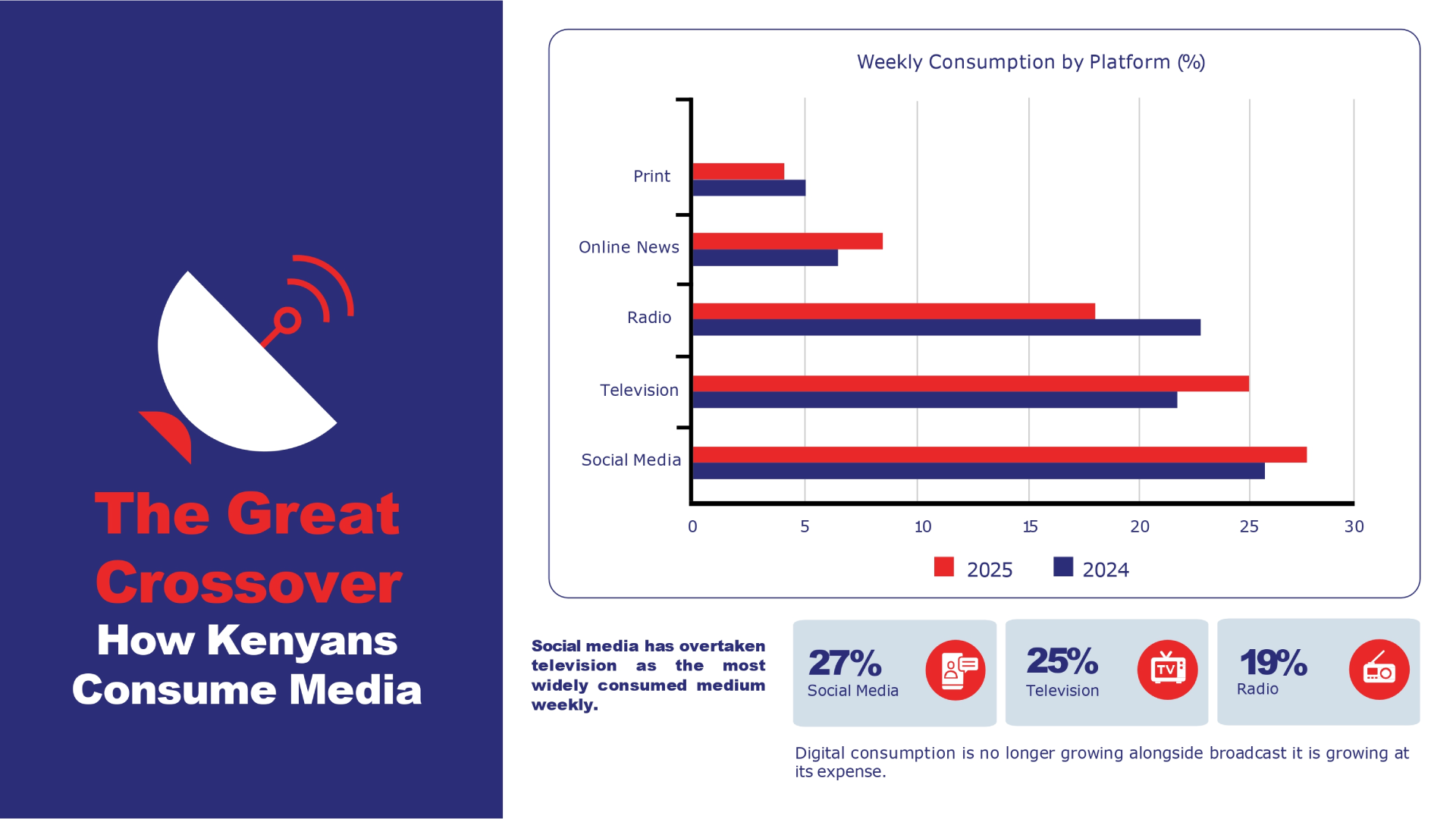
The headline finding is social media has overtaken TV as the most widely consumed medium in the country on a weekly basis. In 2025, 27% of Kenyans consume media primarily through social media, compared to 25% for TV and 19% for radio.
When asked what their main source of news is, 39% of Kenyans now say social media above both TV and radio. WhatsApp leads the platforms at around 20%, followed by Facebook, Instagram, YouTube, TikTok, and Telegram.
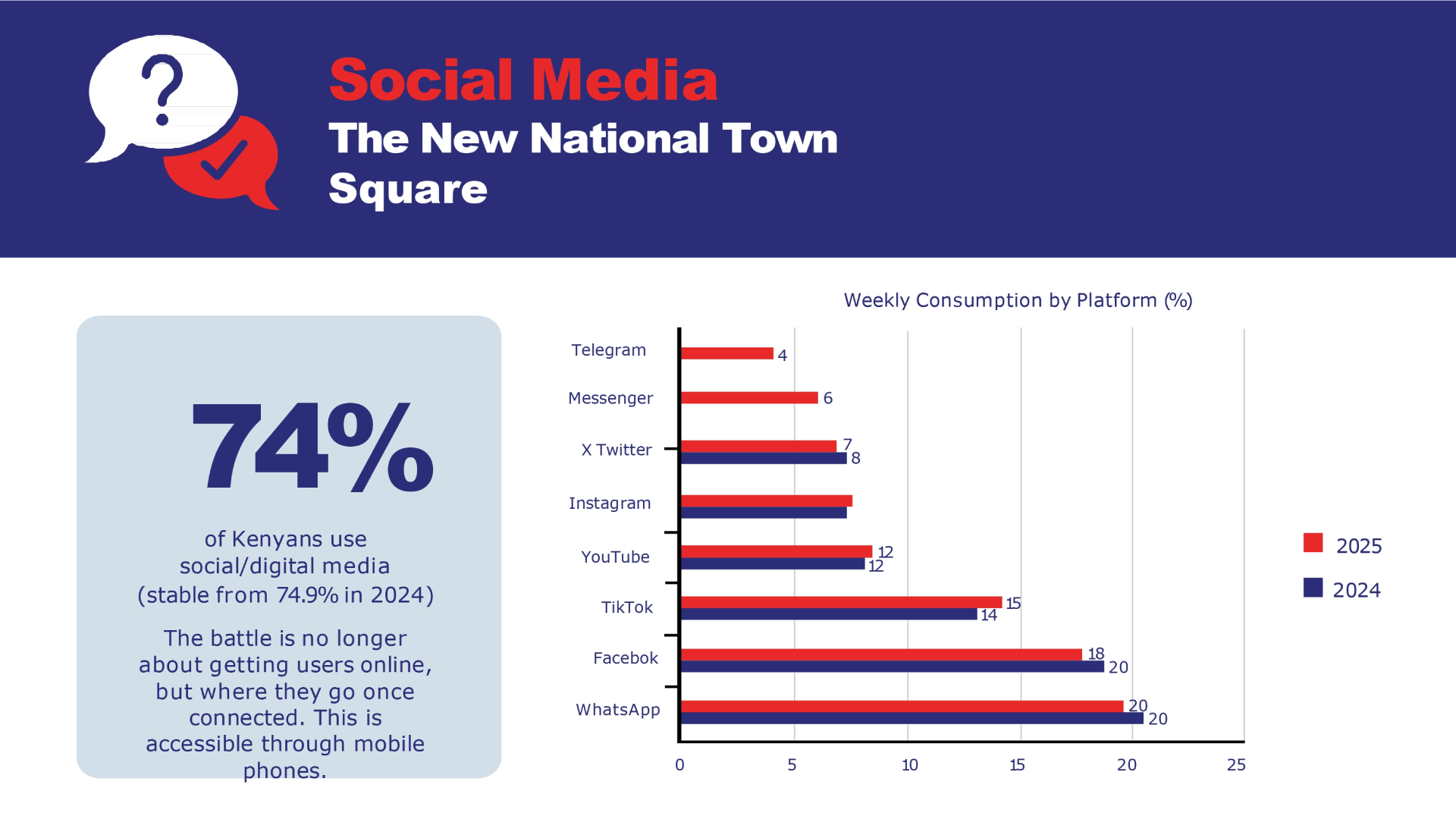
Overall, 74% of Kenyans use social or digital media, a figure essentially unchanged from 74.9% in 2024, meaning the growth phase is over and the battle now is for attention within a saturated digital space.
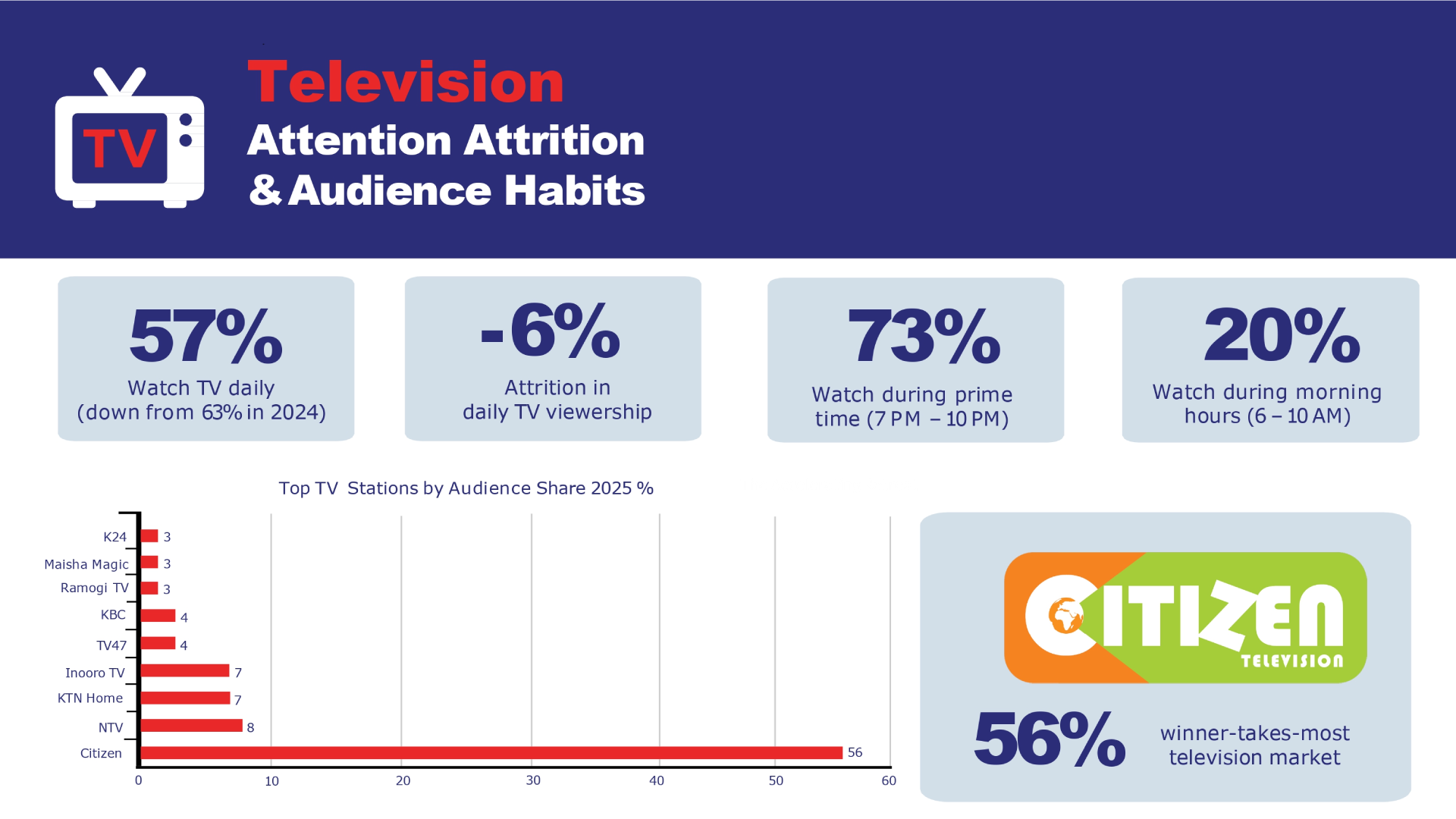
TV is losing ground fast. Daily TV viewership dropped six percentage points in a single year, from 63% in 2024 to 57% in 2025. Nearly half the population is no longer watching linear TV on any given day.
Those who do still watch tend to cluster heavily in prime time, with 73% tuning in between 7 PM and 10 PM and 20% watching in the morning.
Citizen TV continues to dominate the market to a remarkable degree, holding a 56% audience share, which is more than the next eight stations combined. NTV sits at 8%, followed by KTN Home and Inooro TV at 7% each.
The decline of radio is slower but steady. It retains a solid core of heavy users, with 13% of Kenyans listening for more than six hours daily, but its share as a primary news source has slipped to around 22%, down from close to 30% in 2024.
Classic 105, Kass FM, Radio Maisha, and Radio Citizen are the top stations by audience share.
Print is in the most serious trouble. Weekly newspaper readership has fallen from 29% in 2022 to just 13% in 2025, a 16 percentage point collapse in three years.
READ: Radio and TV Still Reach 73% of Kenyans as Digital Media Continues to Rise
The Daily Nation remains the most-read paper, but the majority of its readers now prefer the digital edition over print. The report describes the decline as structural, meaning it’s not expected to reverse.
Online news sites are growing but haven’t yet become a daily habit. 55% of Kenyans did not visit a news website on a typical day in 2025.
Nation Africa, Tuko.co.ke, and Citizen Digital are the most visited sites, but the overall pattern suggests online news browsing is still emerging rather than embedded in most people’s routines.
On the credibility question, things are improving significantly. The share of Kenyans who believe media coverage of the government is unfair dropped from 73.6% in 2024 to 46% in 2025, a 27-point swing in one year.
Overall trust in media also rose as 79% of Kenyans now express some or a lot of trust in the media, up from 74.5% in 2024. The top concerns Kenyans have about the media are misinformation and inadequate coverage (28% each), followed by bias in reporting (17%).
While 59% of Kenyans are aware that AI is being used in media, 63% say they cannot identify AI-generated content when they encounter it. Yet 61% have used AI-powered media platforms, with 27% using them regularly.
What might surprise most is that 48% say AI has enhanced their media experience.
The gap between knowing AI exists in the media ecosystem and being able to spot it is widening, which the report flags as a risk to public information integrity and a clear case for media literacy programs.
54% of the survey respondents are under 35 years, 76% earn less than KES 30,000 per month, and 49% are in informal or unemployed situations.
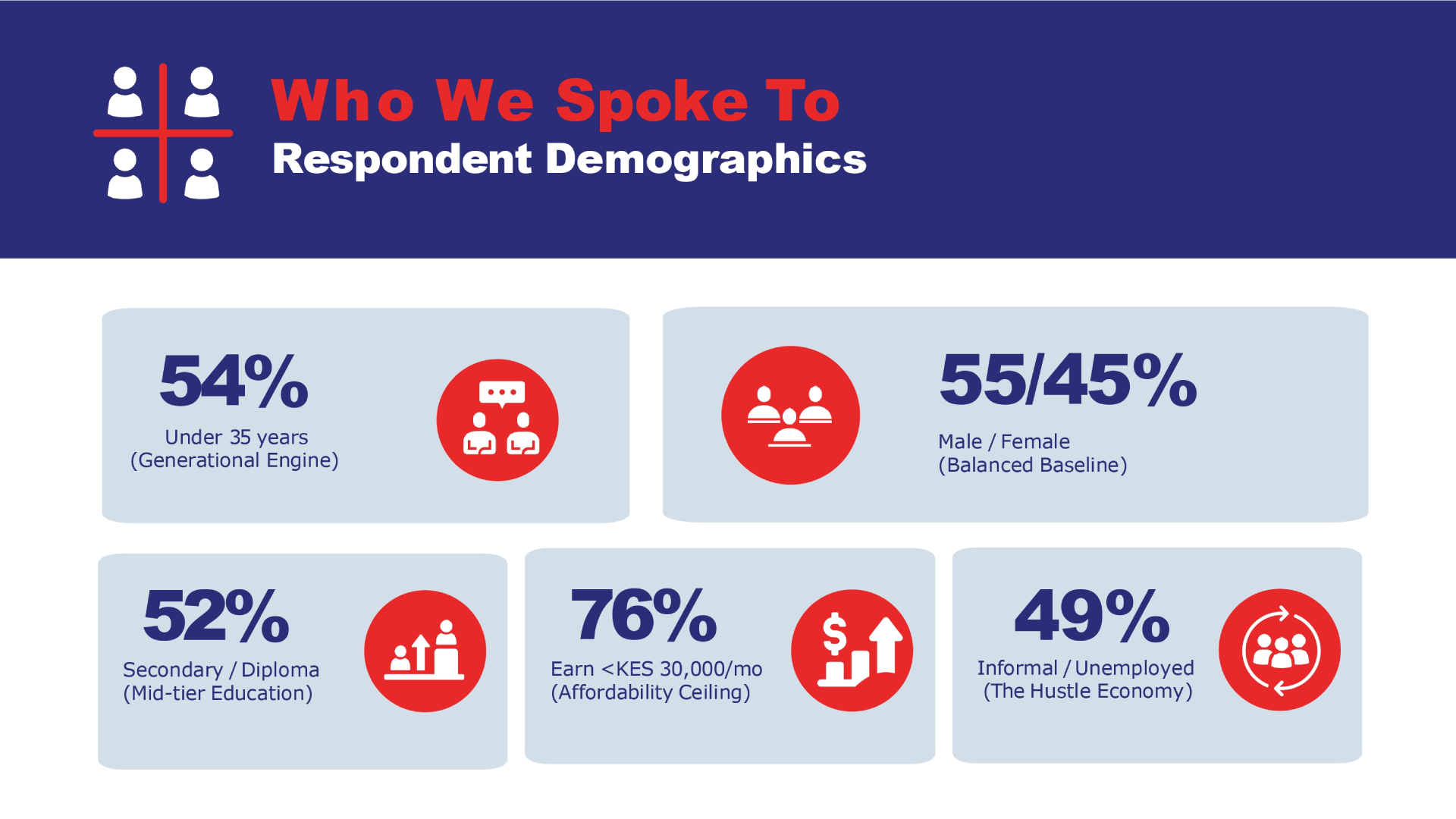
These demographics are important because they shape what media is accessible and affordable, which helps explain both the dominance of mobile-accessed social media and the continued decline of paid print.