






Most couples know, at some level, that small moments matter more than grand gestures. A squeeze of the hand before a difficult conversation, noticing when a partner is overwhelmed without being told, or laughing at something nobody else would find funny.
The Gottman Magic Ratio holds that lasting couples maintain roughly five positive interactions for every negative one. It has long been a staple of couples therapy, but never a daily app. Swooni is built entirely around changing that.
Described by its makers as a relationship fitness app, it is built for couples who want a consistent connection rhythm rather than a crisis intervention, and it positions itself explicitly as neither therapy nor a replacement for professional care.
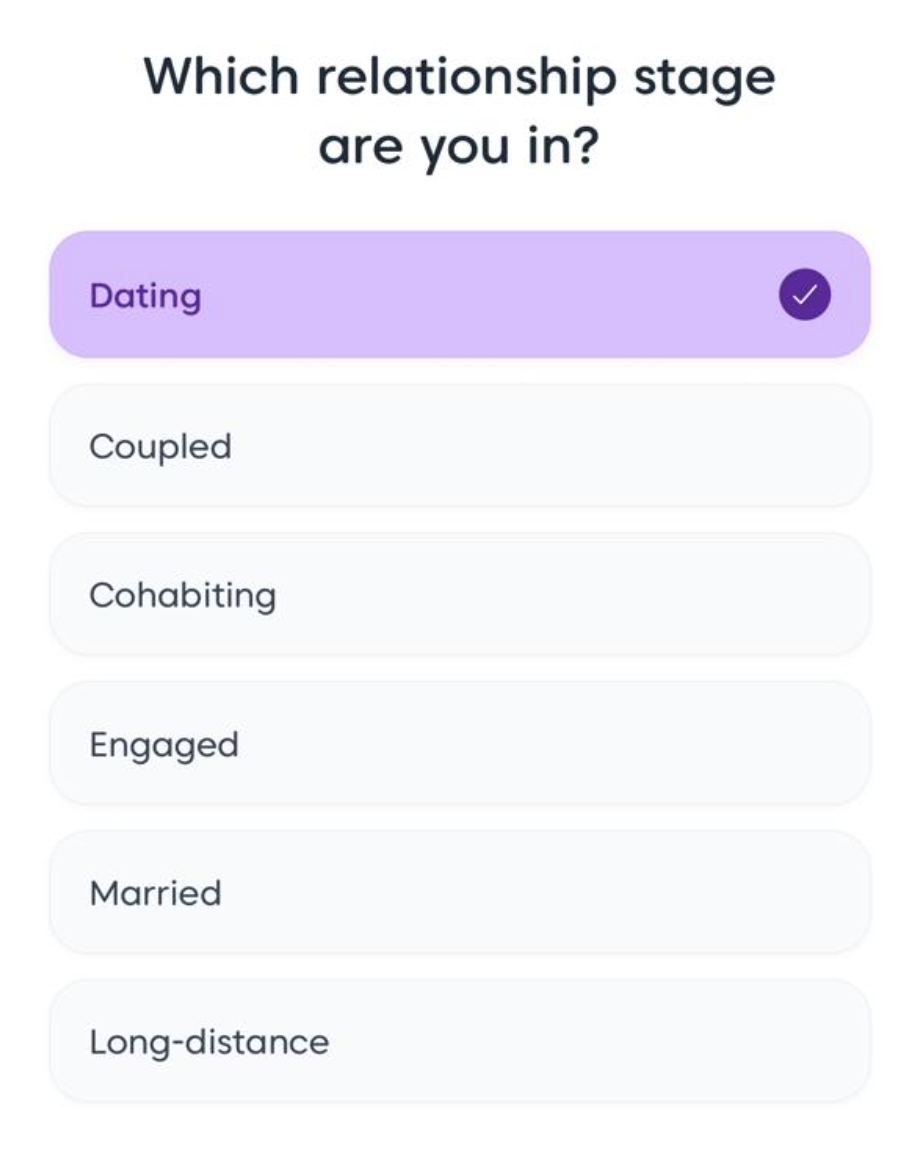
Setup asks which relationship stage a user is in, a small onboarding step that signals the app is not narrowly aimed at one kind of couple.
The comparison that comes to mind is a fitness tracker for a relationship: something that doesn’t make you healthy on its own but makes it harder to ignore when things are slipping.
The One-minute Ritual
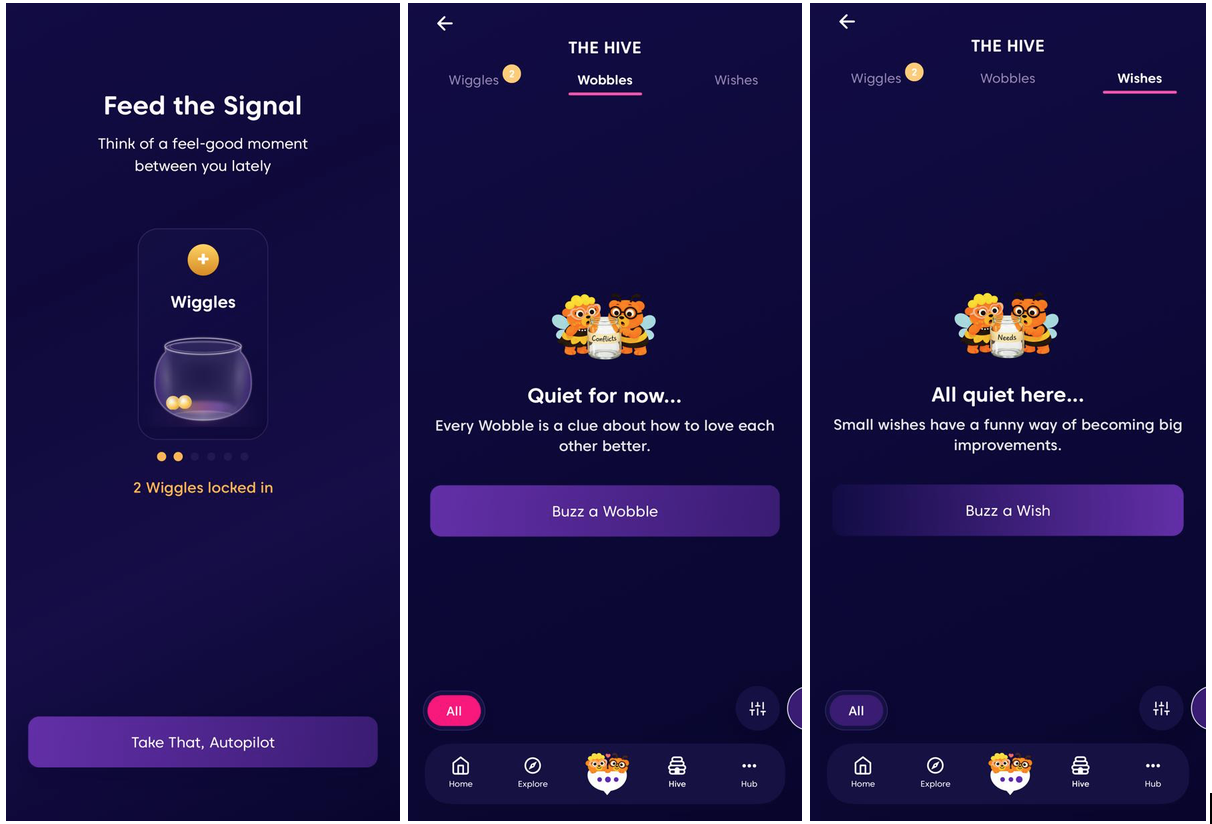
The daily interaction is deliberately short. A user opens the app and logs one small relationship moment under one of three categories: a Wiggle, a Wobble, or a Wish.
A Wiggle captures a positive moment, connection, appreciation, attraction, teamwork, or play. A Wobble marks a moment of friction or disconnection.
A Wish logs something a partner needs or wants more of. Each entry takes a quick note and a single tap to save and can be shared with a paired partner or kept private.
Swooni is not asking couples to sit down for a weekly relationship audit. It is asking for one logged moment a day, with the understanding that those moments compound into something meaningful over time.
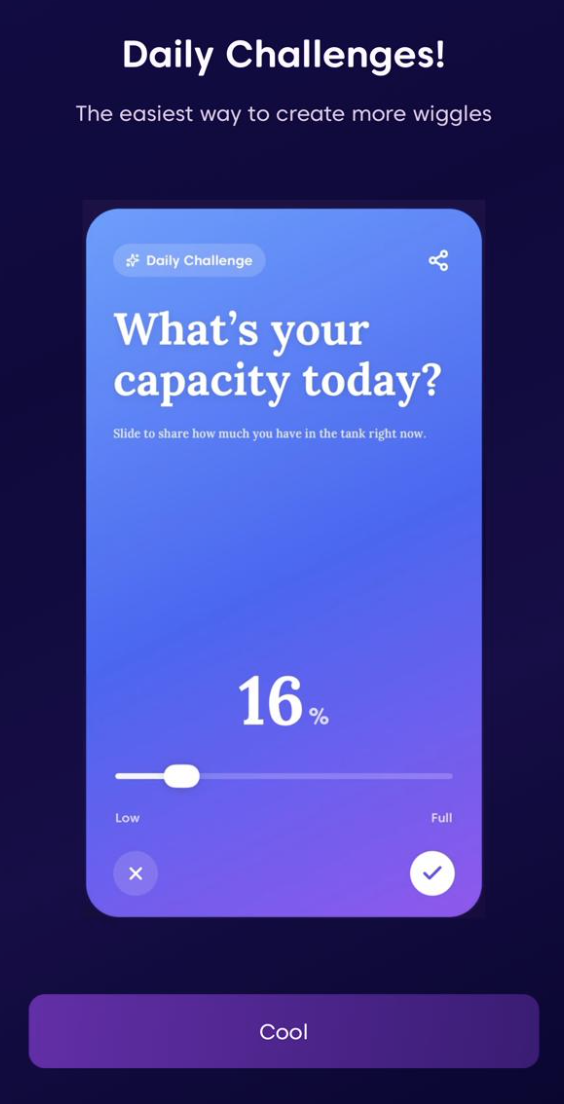
Daily Challenges add another layer to that rhythm, prompting users with questions like “What’s your capacity today?” where a simple slider from Low to Full captures how much a partner has in the tank on any given day, no elaborate journaling required.
A streak counter runs alongside these challenges, visible as a countdown to the next check-in window, borrowing the same low-pressure accountability mechanic that keeps habit apps sticky without making the experience feel like homework.
The Magic Signal
The centerpiece of the app is the Magic Signal, which translates the Gottman Magic Ratio from an abstract theory into something a couple can actually see.
Swooni tracks recent positive and negative relationship moments and converts them into a live indicator showing whether a couple is building connection, drifting apart, actively repairing, or moving toward the ratio associated with lasting love.
It is framed less like therapy data and more like a dashboard, the kind of at-a-glance read that makes a pattern visible before either partner has found the words for it.
Inside the Explore Tab
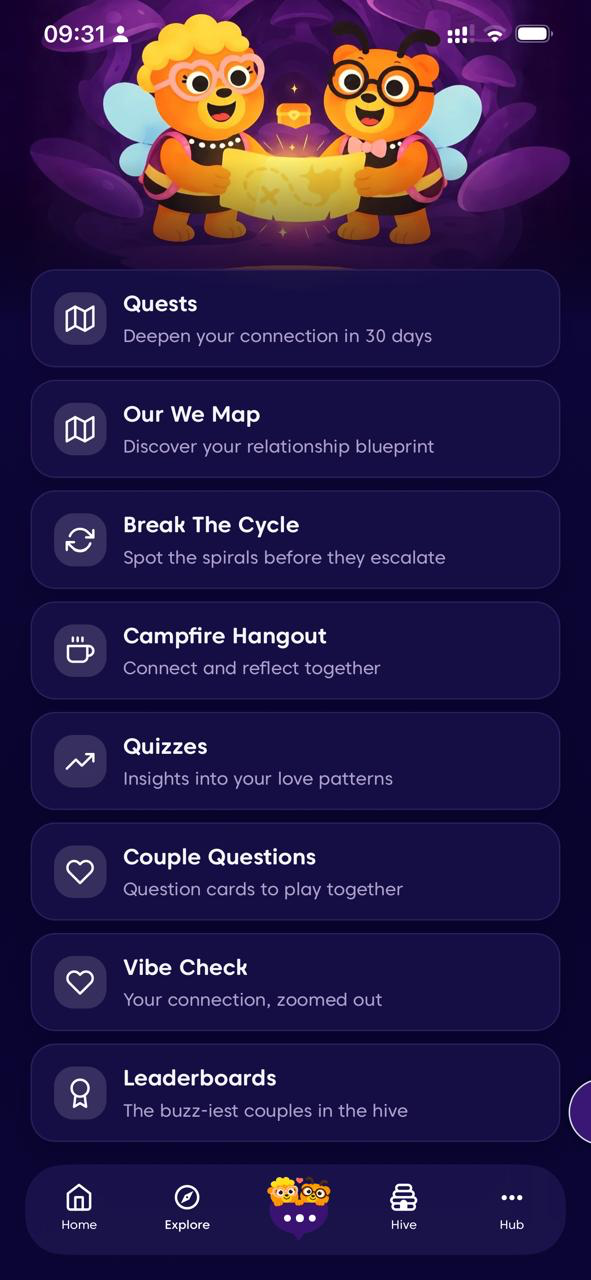
Tap over to Explore, and Swooni starts to feel less like an app and more like a clubhouse.
There’s a 30-day Quest that nudges couples to deepen their connection one small step at a time and something called Our We Map, which promises to sketch out your relationship’s underlying blueprint.
Feeling feisty? Break The Cycle helps couples catch the same old arguments before they spiral again, while Campfire Hangout offers a cozier, slow-down-and-talk kind of moment.
READ: Inside Bumble, the Dating App Where Women Call the Shots
Quizzes and Couple Questions turn the “getting to know you (again)” process into something closer to game night than homework, and a Vibe Check gives a quick, zoomed-out read on how things are going overall.
Then there’s Leaderboards, a cheeky touch that ranks the most engaged couples in Swooni’s wider community, or “hive.” It all adds up to a little ecosystem of bite-sized rituals, each one built to make checking in with your partner feel less like a chore and more like a habit worth keeping.
Pairing and What Happens When One Partner is Less Engaged
Swooni works best with both partners active inside the app, each logging moments and building a shared picture of the relationship. If one partner is slower to engage, the other can still use it independently to notice patterns and bring more clarity to conversations.
The full experience is clearly designed for two, but the app does not become useless when the ratio of engagement is uneven, which reflects a realistic understanding of how couples actually adopt new habits.
Beyond its logging and tracking features, the app’s Hub brings everything together in one place.
It includes account and relationship management, a Couple Chat, quick access to moments and quizzes, a Reward Cabinet where collectible posters are unlocked as you make progress, and a Hive section that connects users to a wider community.

A New App With an Honest Position On Its Numbers
Swooni is still early. There’s no App Store rating yet, and Play Store downloads sit in the earliest bracket the platform tracks, less a verdict than a “just launched” sign.
Instead of numbers, Swooni leads with substance: it’s built on Gottman research that’s shaped couples therapy for three decades, and it backs a no-ads commitment with a clear stance that relationship data is too personal to sell.
The downloads will come, and the philosophy is already fully formed, which is more than most apps in this space can claim on day one.
What It costs
Swooni is free to download with a seven-day free trial. The paid tier costs $33 a year or $16 a month, unlocking ongoing daily check-ins, the Magic Signal, repair tools, full partner features, progress rewards, levels, and the deeper insight layer.
Swooni operates in a category where most apps either charge more or layer ads into an experience built on personal relationship data. Against that backdrop, its pricing sits at a reasonable point.
Who It’s For
Swooni isn’t a crisis app. It’s built for couples who are already doing okay and want to keep it that way, a quieter pitch than most relationship apps make but arguably a more useful one.
It suits partners who’d rather log a small moment daily than sit through a big weekly check-in and who like the idea of habits doing the heavy lifting instead of willpower.
It’s not for anyone wanting deep therapeutic tools or crisis support. Swooni’s daily micro-moments approach, grounded in real research, feels like a genuinely smart fit for couples looking to stay intentional without turning connection into a chore.