



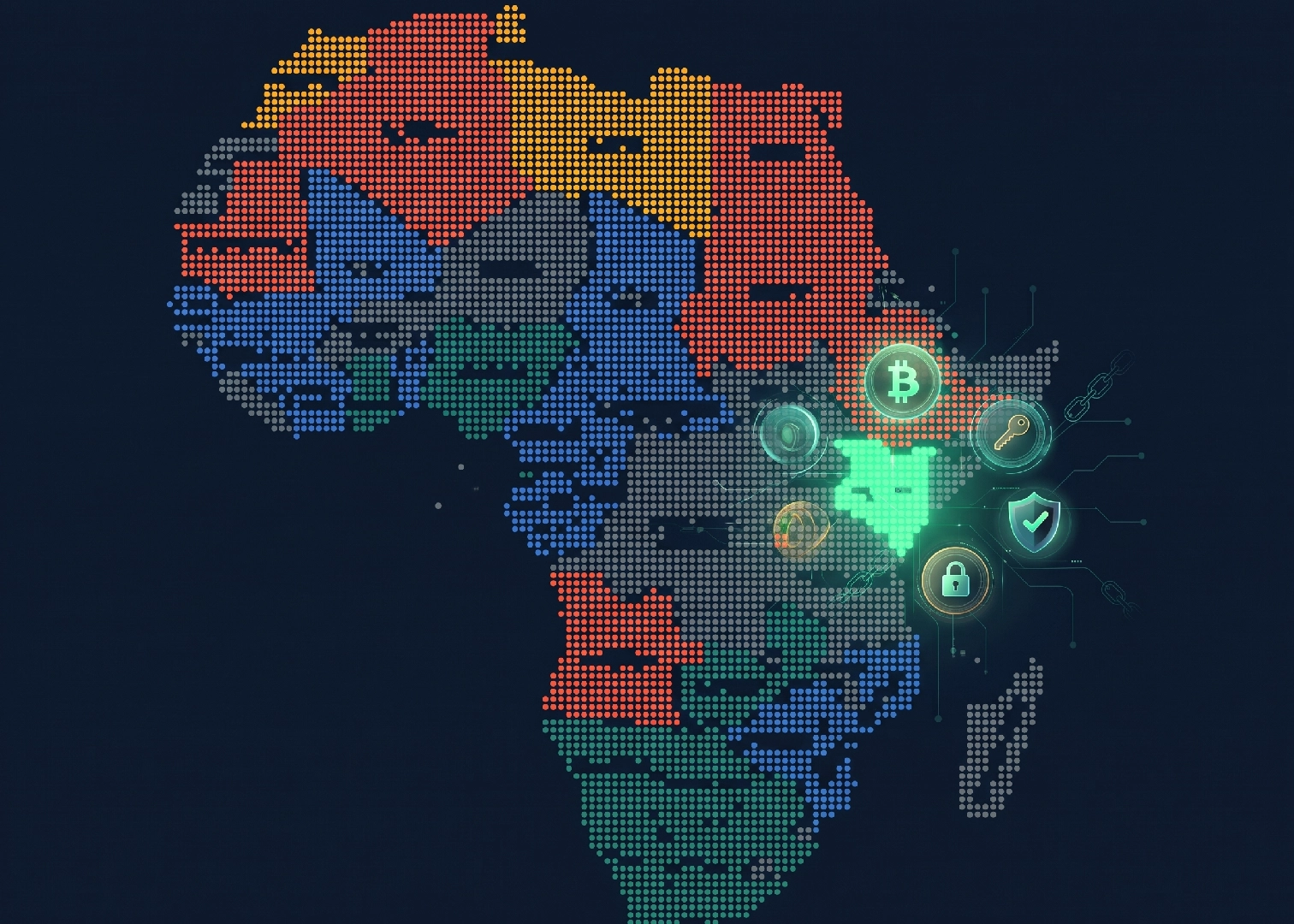
Africa is slowly moving from uncertainty towards formal supervision of cryptocurrency, as governments start to treat virtual assets as a financial-services sector while trading, cross-border payments, and stablecoin use keep growing.
There is still no shared approach, with some countries building licensing systems to attract legitimate operators, others drafting laws, and a few holding on to outright restrictions.
Kenya is positioning itself among the more structured markets through its Virtual Asset Service Providers Act 2025 and accompanying 2026 regulations.
Its approach places it alongside Nigeria and South Africa as an important regulatory market, although the three countries have taken different routes.
Africa’s Crypto Regulatory Landscape
The picture across Africa is one of uneven progress.
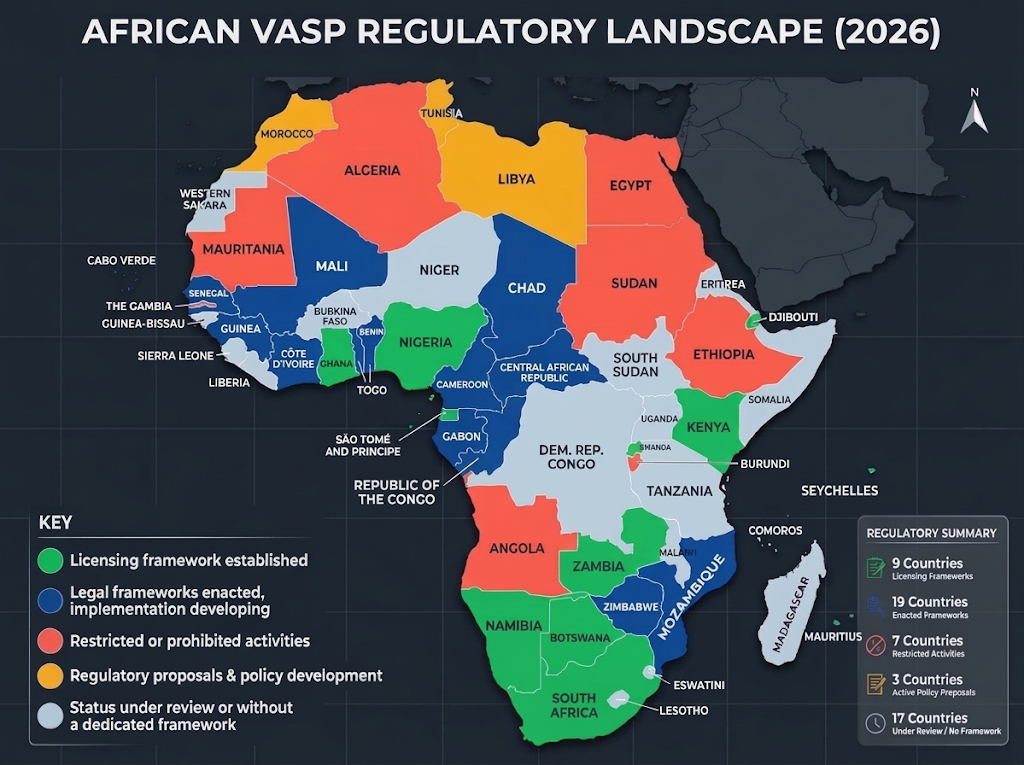
Of the 54 countries and jurisdictions assessed in the Finlazo report, 9 have established licensing frameworks, 17 have enacted legislation or authorization requirements without fully demonstrated implementation, seven maintain significant restrictions, 18 remain under review or lack a dedicated operational framework, and three are pursuing regulatory proposals.
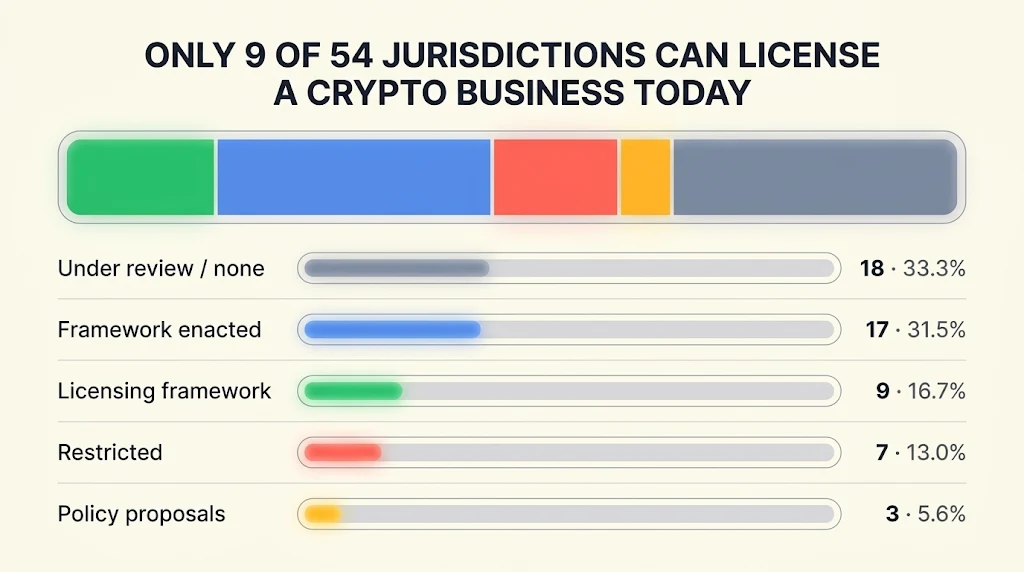
The figures demonstrate that formal regulation is becoming more common, but having legislation does not necessarily mean a crypto exchange can obtain a license and operate. Almost one-third of the jurisdictions remain without a clearly established licensing pathway.
The reasons for this divide vary. Countries with more developed financial markets are increasingly treating crypto businesses like other financial institutions, requiring capital reserves, consumer protection, anti-money laundering controls, and operational safeguards.
Others remain cautious because of concerns about capital flight, currency instability, fraud, unregulated cross-border transfers, and the difficulty of supervising decentralized financial activity.
Kenya, Nigeria, and South Africa: Three Countries, Three Philosophies
The three markets illustrate three different regulatory philosophies.
| Area | Kenya | Nigeria | South Africa |
| Regulatory approach | Dedicated VASP legislation | SEC-led digital asset regulation | Crypto integrated into existing financial-services regulation |
| Main regulator | CBK and CMA, depending on activity | Securities and Exchange Commission | Financial Sector Conduct Authority |
| Licensing | Activity-specific licensing | Category-based registration and authorisation | CASP authorisation under FAIS |
| Capital requirements | KES 10M–300M depending on activity | ₦300M–₦2B depending on category | No comparable standalone VASP capital schedule established in the assessment |
| AML requirements | Yes | Yes | Yes, including FIC registration |
| Implementation maturity | New framework | Established registration structure, with revised capital requirements | Authorisation operational since June 2023 |
Nigeria has arguably the most demanding financial entry requirements. Its SEC framework requires digital asset exchanges and custodians to maintain a minimum capital of ₦2 billion. This creates a high barrier for smaller operators but gives established businesses a clearer regulatory pathway.
Kenya has adopted a similarly capital-conscious approach. Its regulations introduce different thresholds for exchanges, wallet providers, brokers, payment processors, and stablecoin issuers. Stablecoin issuers face a KES 300 million minimum capital requirement.
South Africa takes a different route by bringing crypto asset service providers under its existing Financial Advisory and Intermediary Services framework. Its system has been operational since 2023, giving it a longer implementation history.
One Continent, Many Rulebooks, One Shared Goal
Ultimately, Africa’s crypto and VASP story is no longer about whether governments will regulate digital assets but about how many of them can turn laws into working licenses.
Nigeria is prioritizing structured registration and substantial financial safeguards, South Africa is extending existing financial regulation to crypto, and Kenya is building a dedicated licensing framework.
READ: How Stablecoins Could Become the Infrastructure Behind African Finance
For a continent where crypto grows through cross-border payments, remittances, and stablecoin use that pay no attention to national borders, the risk of a patchwork is that capital, startups, and consumer protection concentrate wherever the rules are easiest, rather than where they are best.
The way forward is for regulators to learn from one another’s implementation, to scale capital requirements so that local founders can compete beside global exchanges, and to align on shared anti-money laundering and consumer safeguards.