





Bumble was built to change how most dating apps work. Instead of letting anyone message anyone and rewarding the loudest voices, it puts more control in users’ hands.
In heterosexual matches, only women can send the first message, and they have 24 hours before the match disappears. It is a simple rule, but it shaped the brand and, for a time, made the app stand out.
That brand is now under pressure. In June 2026, Reuters reported that Bumble was exploring a sale and working with Morgan Stanley on a potential deal. However, sources said there was no guarantee a sale would happen, and the company could still remain independent.
The numbers behind that headline paint a worrying picture. Bumble’s shares have fallen 48% over the past year, leaving the company with a market value of $388 million. That’s a sharp drop from the $7 billion valuation it reached during its 2021 IPO.
The company ended 2025 with about 3.7 million paying users, down more than 11% from the previous year. In the first quarter of 2026, paying users fell another 20% compared to the same period a year earlier. Annual revenue for 2025 also declined nearly 10% to about $966 million.
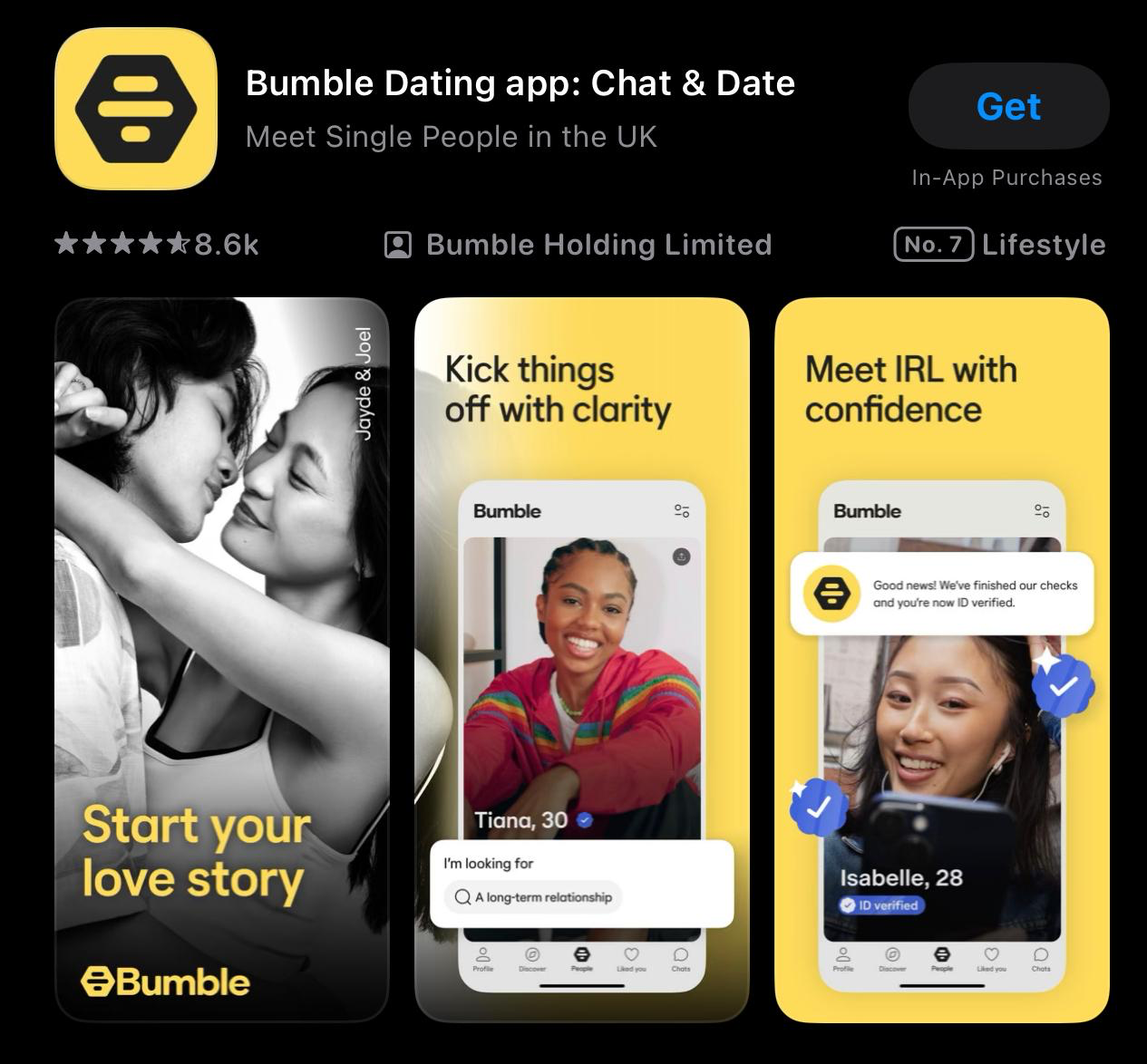
Even so, Bumble is far from a dead product. It remains the world’s second-largest dating app, holding a 14% share of the global dating market. It has been downloaded more than 50 million times on Android and has a 4.3 rating from more than 1.7 million reviews on the App Store.
In markets like Kenya, where the app has gained strong traction and its women-first approach has connected with users, it remains one of the most actively used platforms. For now, the company’s internal challenges are affecting shareholders more than everyday users.
More Than a Dating App
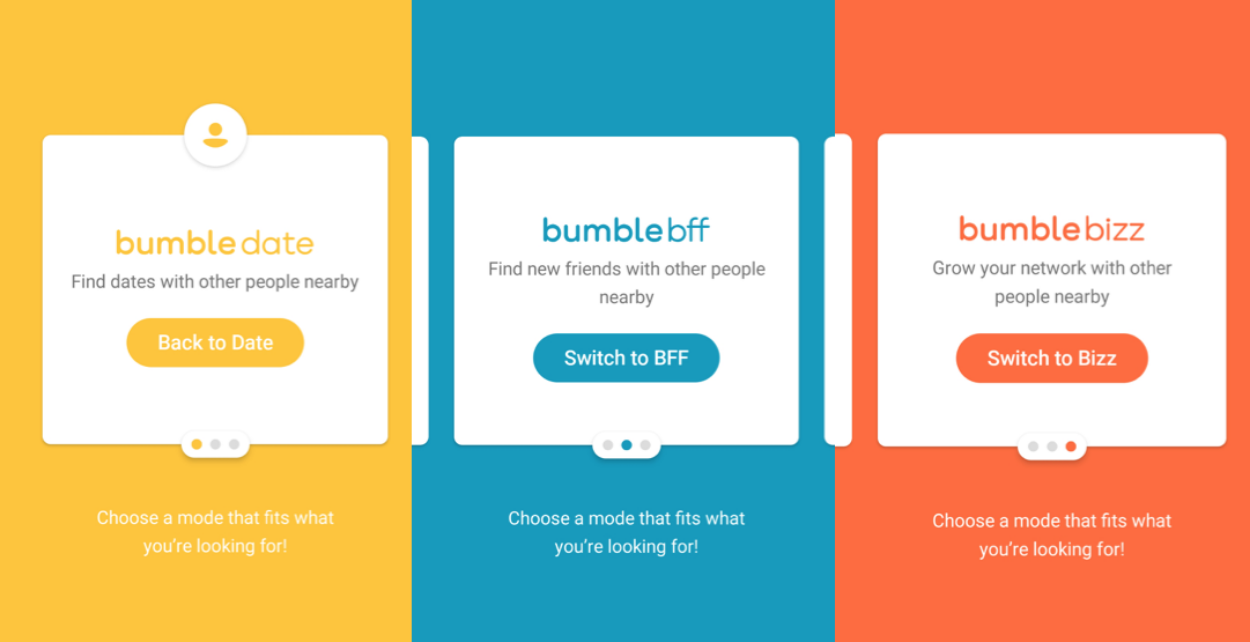
Bumble has three modes within a single profile. Date mode is for dating, BFF mode helps people find platonic friendships, and Bizz mode offers basic professional networking.
The same profile works across all three modes, so you can switch between them without creating a new profile. This is especially useful if you’ve moved to a new city and want to build both a social and professional network without using multiple apps.
Profiles include photos, a short bio, prompts, interests, and optional links such as music preferences. Matching works through the familiar swipe system, but the women-first rule adds a time limit that encourages people to start chatting quickly or lose the match.
This helps prevent inactive matches from piling up, which is common on apps without an expiry feature.
There’s also an Icebreaker feature that suggests a prompt to help start a conversation when neither person knows what to say first.
How Bumble Is Different From Tinder
The most obvious comparison is Tinder, which is still the world’s most downloaded dating app. Both apps use the same swipe-based system, but Tinder does not require women to make the first move, and matches never expire.
As a result, conversations can sit inactive for as long as users want, and either person can send the first message.
For many users, that freedom can also make Tinder feel more crowded and less focused. Bumble takes a more structured approach by encouraging quicker interactions and adding rules that help move conversations forward.
The two apps also differ in how they recommend profiles. Tinder is generally believed to prioritize profiles based on popularity and engagement, while Bumble places greater emphasis on users’ preferences and filters.
For people who find Tinder overwhelming or prefer a more organized experience, Bumble is often the first alternative they try.
Subscription Plans
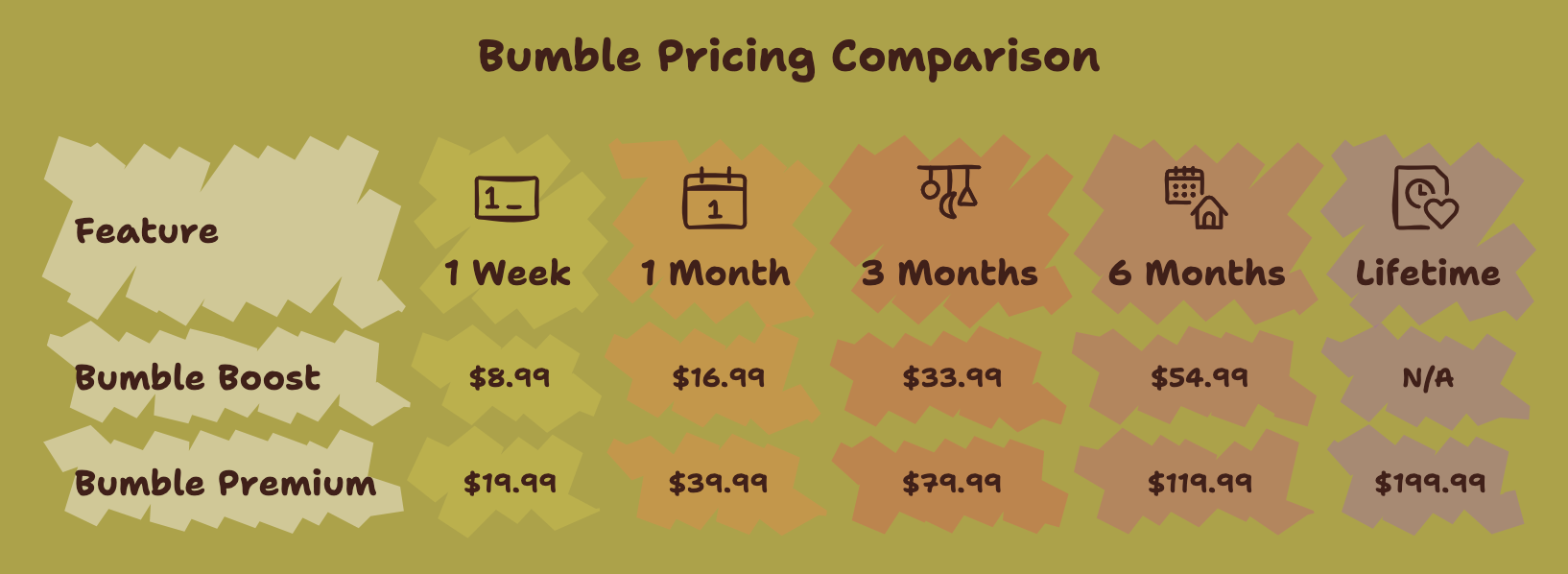
Bumble offers two paid plans: Boost and Premium.
Boost is the more affordable option. It costs about $8.99 per week or $16.99 per month and includes unlimited swipes, match extensions, the ability to rematch with expired connections, backtracks, one Spotlight each week, and five SuperSwipes.
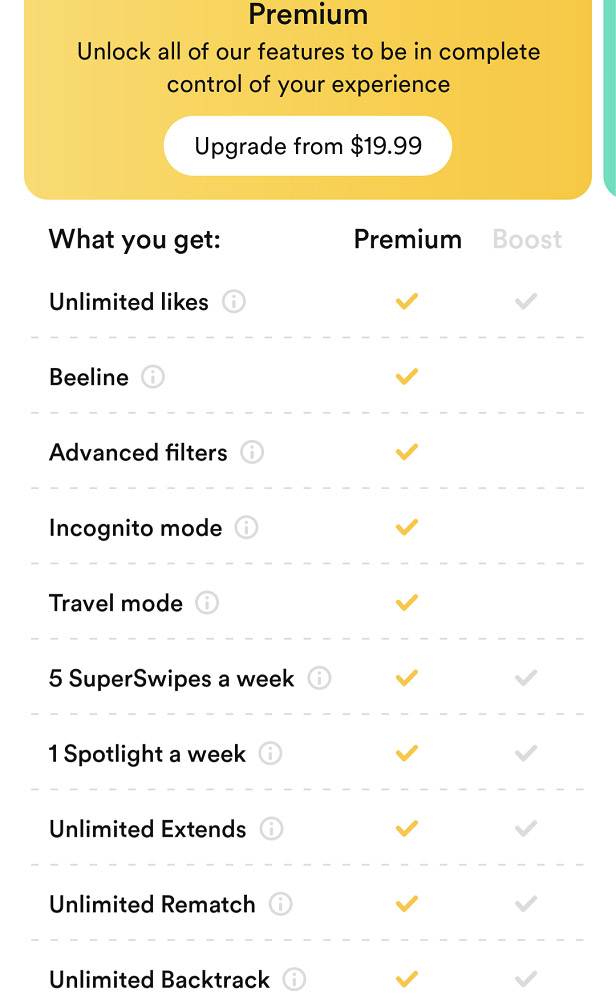
Premium is the higher-tier plan. It costs about $32.99 per week or $69.99 per month and includes everything in Boost, plus Beeline, which lets users see who has already liked their profile before there’s a mutual match.
It also includes Incognito Mode, Travel Mode, and more advanced search filters.
Prices vary by location, so these should be treated as estimates rather than fixed rates.
One criticism that comes up repeatedly in reviews is that visibility on the free tier feels limited. Features like boosts and premium subscriptions make many users feel that there’s a limit to how much organic reach they can get without paying.
This is a common issue across many freemium dating apps, but users seem to notice it more on Bumble than on some of its competitors.
Who It Makes the Most Sense For
Bumble is available in more than 150 countries and has a larger user base among people over 30. Some analysts believe its women-first approach is no longer as unique as it once was.
That is a long-term challenge for the company, but it is not something most new users are likely to notice when they first sign up.
The app still works as intended, its core features remain the same, and the free version is a good place to start. Bumble also offers weekly Boost and Premium subscriptions, which let users try the paid features without paying for a full month first.
Bumble is available on Play Store and App Store.