
Kenya’s mobile networks handled 922 million MB of inbound roaming data in the first quarter of the financial year, up 66% from the previous period. That’s visitors to Kenya using local networks to stream videos, use maps, make video calls, and stay online while traveling.
Voice calls and text messages from foreign visitors also increased, though not as dramatically. Outbound texts from roaming users nearly doubled, while voice minutes saw a modest uptick.
The numbers point to more people moving between Kenya and neighboring countries, in particular Uganda and Tanzania.
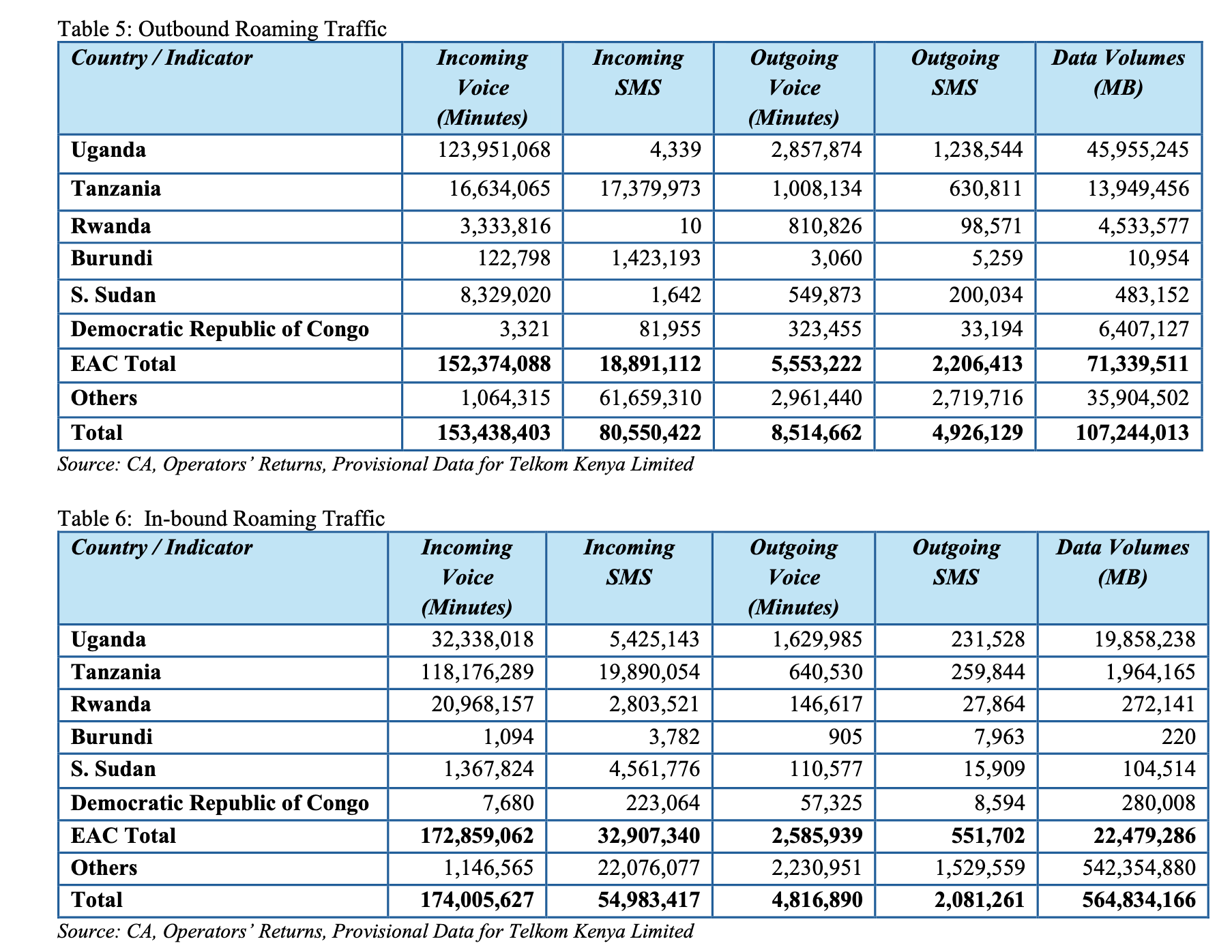
What stands out is the difference between regional and international visitors. Travelers from outside East Africa used significantly more data than those from neighboring countries, enough to account for most of the total inbound roaming volume.
That suggests Kenya’s mobile infrastructure is handling the demands of visitors from places where network speeds and reliability are already high.
Kenyans traveling abroad also stayed connected more than before. Outbound roaming data and SMS both climbed, reflecting greater use of regional roaming agreements that make it easier and cheaper to use mobile services across borders.
The increase in roaming activity tracks with Kenya’s role as a business, trade, and education center in East Africa. As cross-border travel becomes more common and affordable mobile roaming becomes standard, the expectation is that people will stay online regardless of which country they’re in.