






Every group chat eventually reaches the same point. Someone asks a question nobody can answer right away. One person says they will look it up, switches to another app, and either comes back three minutes later when the conversation has already moved on or forgets to return at all.
Convos assumes the assistant is in the chat when you need it, not waiting elsewhere.
Built on XMTP, a decentralized messaging protocol, Convos delivers Signal-grade encryption alongside something no mainstream messenger currently offers: the ability to create a dedicated AI agent for a specific conversation, tailored to a specific purpose, that lives inside the thread and responds where everyone can see it.
No Number, No Email, No Paper Trail
Setup begins without a phone number or email address. A user creates an in-app identity instead, which keeps personal information out of the equation while still confirming a real user is behind the account.
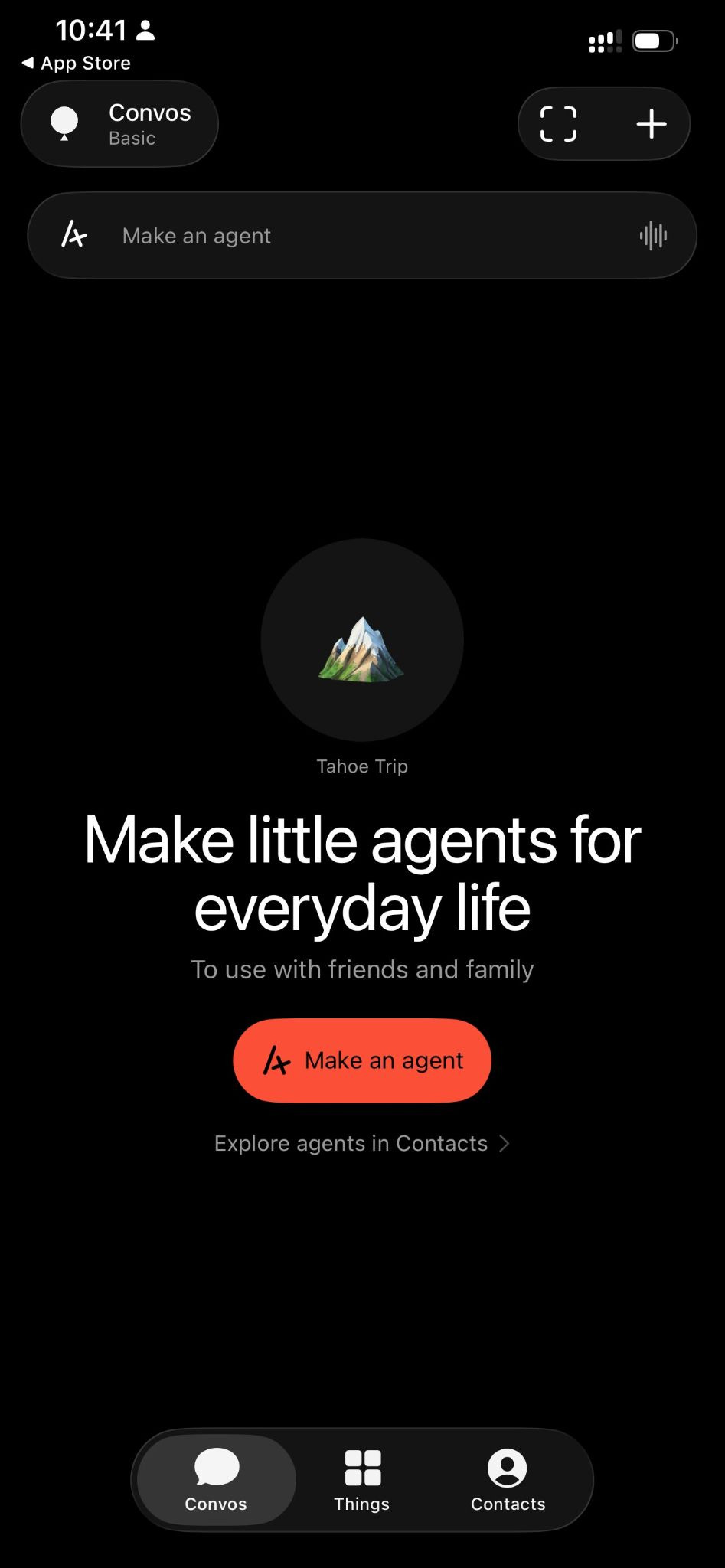
Each chat generates a new identity, meaning there is no single profile accumulating a history of every conversation a person has ever had.
For anyone who has quietly wondered why a messaging app needs to know their phone number, Convos answers that question by not asking for it.
It is the fastest cold-start of any messenger currently available, and the privacy architecture feels less like a feature than a foundational design decision.
How the Agents Work
The core differentiator is what Convos calls Little Assistants, purpose-built agents created from a text prompt, a screenshot, a link, a document, or a voice note, and assigned a specific task rather than left to be a general-purpose chatbot.
A budget manager, a travel planner, a homework helper, a gym routine builder: each one is spun up for a defined job and then talked to like any other person in the chat.
The model powering it, either ChatGPT or Claude, runs quietly in the background without requiring the user to switch between interfaces or relay answers across apps.
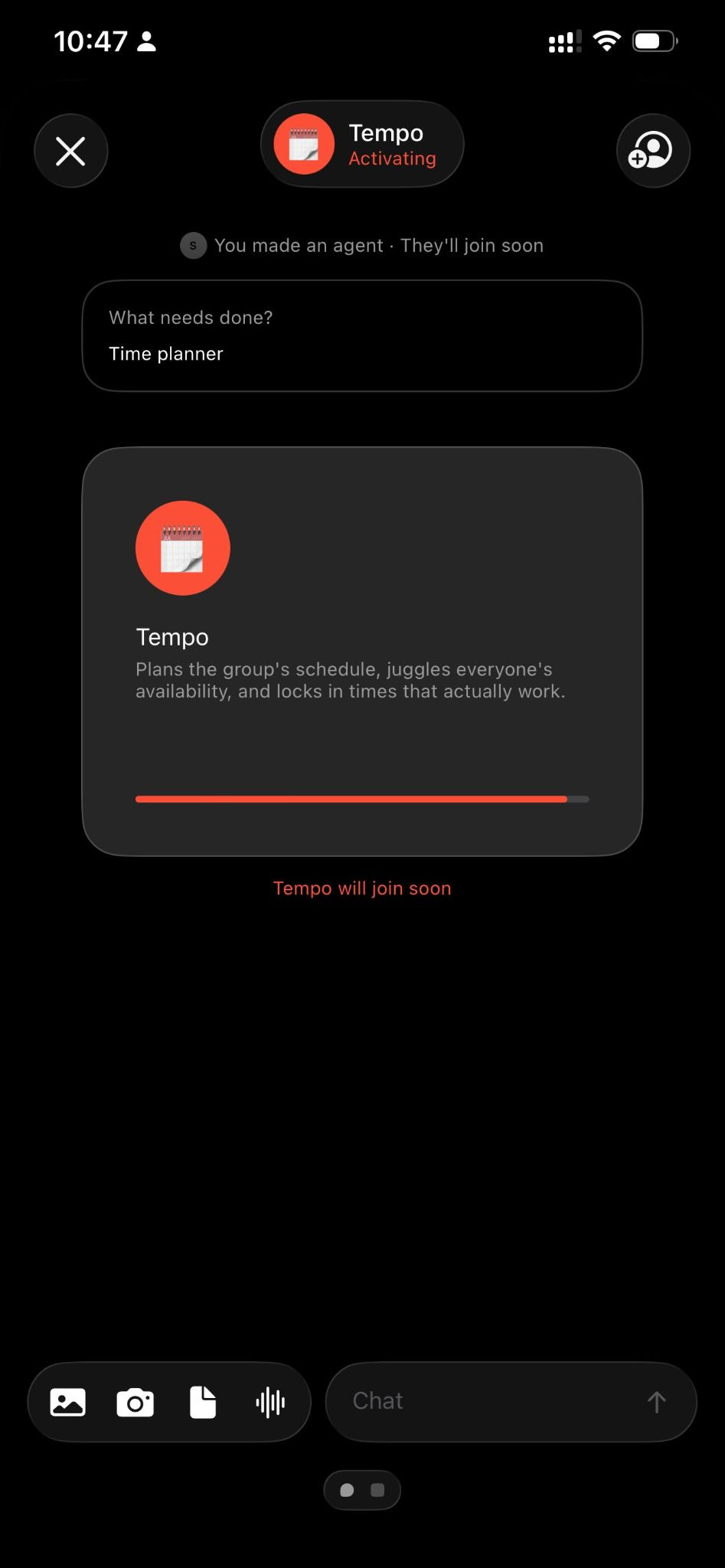
In a group, one assistant serves everyone. Rather than each person running separate ChatGPT sessions and pasting selected answers back into a shared thread, the group creates a single agent together, and every member can query it directly in the conversation.
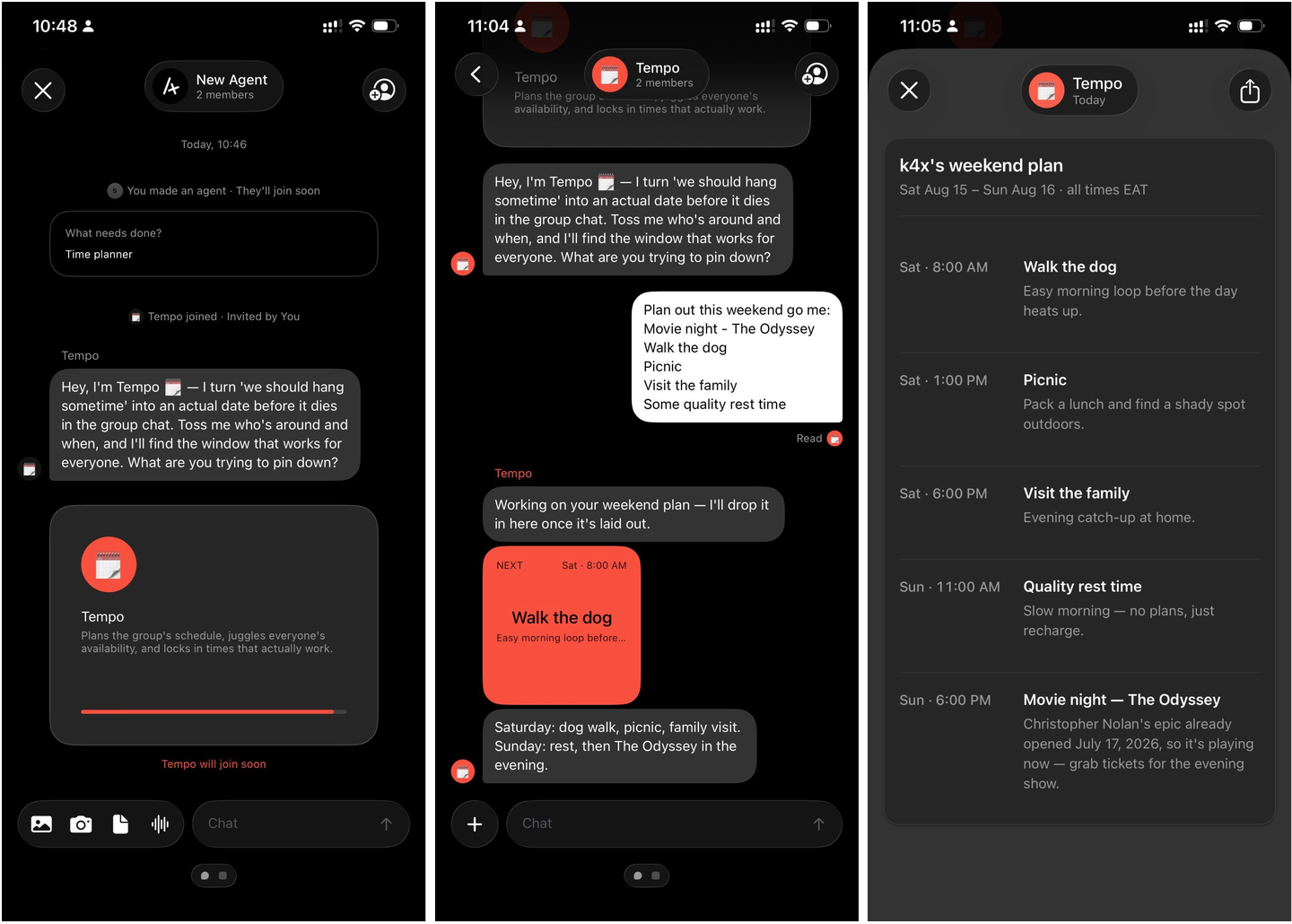
A user’s example of dropping a list of weekend plans into a chat with ‘Tempo,’ an agent developed for planning group schedules and locking in times that actually work, and receiving a structured two-day plan broken down by time and activity is the product doing exactly what it promises.
The assistants can also be shared outside the original chat, similar to a Google Doc, so they are not locked to one conversation or one group. An agent built for a trip can be handed to people who join the planning process later, without them needing to rebuild the context from scratch.
Where Convos Pulls Ahead and Where It Falls Short
The messaging interface feels close enough to WhatsApp, Signal, or Telegram that there is no real learning curve on that side.
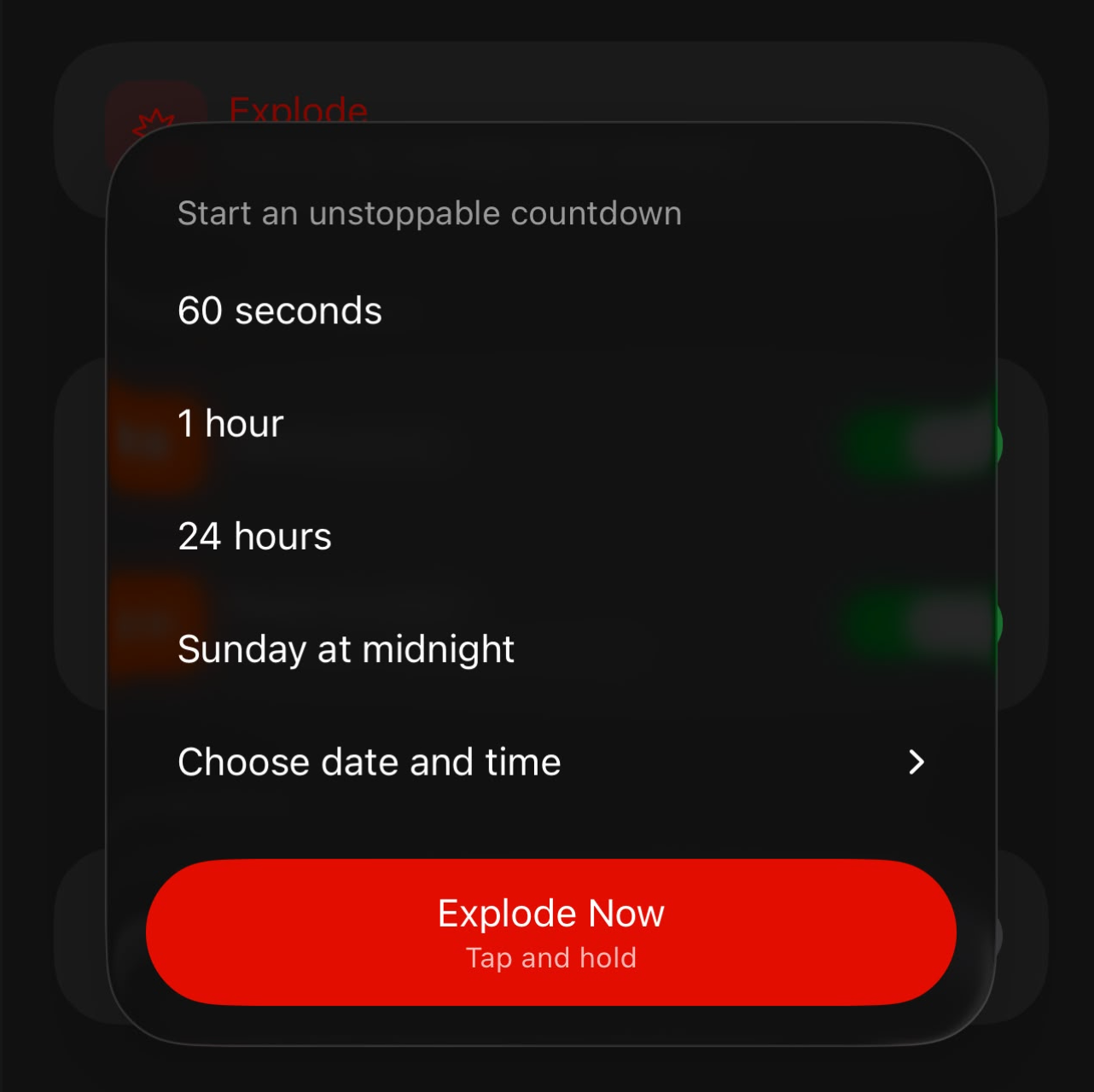
The Explode feature permanently wipes a conversation and all of its history when triggered, going a step further than standard disappearing messages and appealing to anyone for whom temporary is not enough.
The rough edges show up in the gaps between expectation and execution. Joining a chat via a shared link currently does not replicate the auto-join experience that Telegram users are accustomed to, where clicking a link drops a new member straight into the thread with history intact.
The friction there is noticeable, especially when Convos is being introduced to someone unfamiliar with the app.
The agents also respond more slowly than the same models accessed directly through their native interfaces, which is partly an architectural reality of routing queries through a decentralized protocol but still a gap worth naming.
Who Is the App For?
Convos makes the most sense for three kinds of users. The first is anyone who values privacy above convenience and has grown tired of explaining to a messaging app why it needs their phone number. The no-identity, no-number setup is not a workaround here; it is the default.
The second is the group planner: the person who ends up being the one relaying ChatGPT answers back into a shared thread because nobody has built a better system yet. A shared agent that everyone in the group can query directly solves that problem cleanly.
The third is the early adopter who is genuinely curious about where messaging goes next, because Convos is as clear a signal of that direction as anything currently in the market.
It is not for anyone who needs their entire contact list already on the platform or who expects an agent to respond with the same speed as a direct API call.
On the App Store, the app has a 4.8 rating, while the Play Store shows just 100+ downloads. For a new app like this, those numbers are about what you would expect.
The Takeaway
Convos is not trying to replace WhatsApp, and it probably shouldn’t. What it is doing is making a credible case that the next generation of messaging apps should treat AI as a participant in a conversation rather than an external tool accessed around it.
The major messaging apps all ask for your personal details before you can say hello. Convos skips all of that.
It is early, and the privacy angle gives it something real to stand on beyond just hype. For the kind of user who has a group chat for every trip, project, or plan, Convos is worth a serious look.