




Anthropic is expanding text watermarking across more Claude models, adding a way to identify AI-generated writing without visibly changing the responses users receive.
The change takes effect on November 3, 2026, and covers Claude Mythos 5, Claude Opus 4.7, Claude Opus 4.6, and Claude Sonnet 4.6, with the rollout on Amazon Bedrock expected to take a few additional days.
Newer models such as Claude Opus 5.5 already carry the same watermark, and Anthropic’s documentation says older models launched before August 2, 2026 are being brought into line over the coming months, while files such as images receive signed C2PA provenance metadata instead of a text watermark.
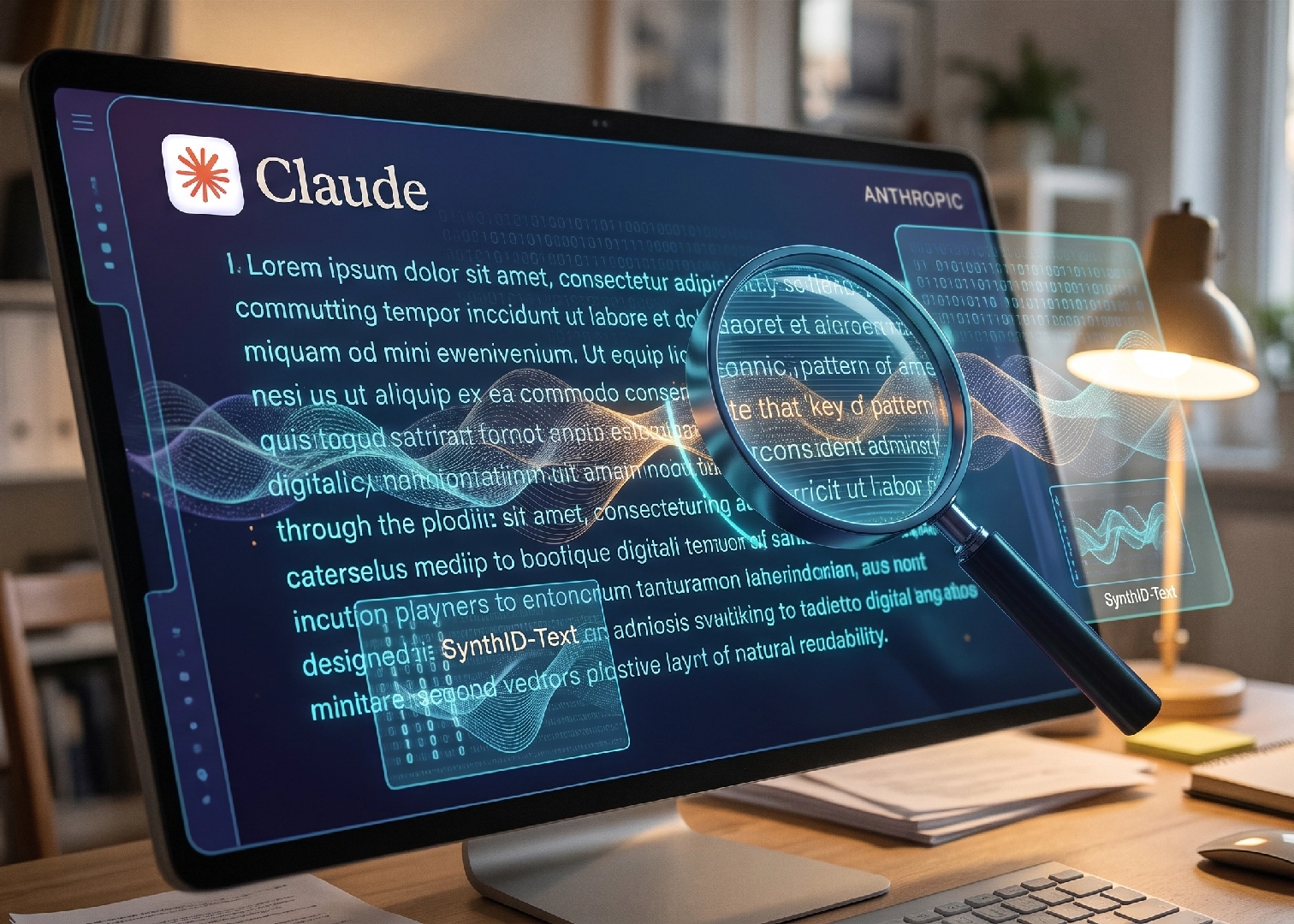
Normally, the model uses ordinary randomness to choose between these words. With watermarking, it uses a secret digital key to guide some of those choices. The result still reads naturally and looks like ordinary writing, but the word choices follow a subtle pattern.
A special detector with the secret key can examine enough text and estimate whether that pattern is present. Readers cannot see the watermark, and it does not appear as a logo, label, or strange symbol. It is more like an invisible signal woven into the way the words were selected.
The method is a version of SynthID-Text, published by Google DeepMind, and Anthropic says it adds no characters or extra tokens, leaves quality and readability unchanged, and costs nothing more to run.
READ: Anthropic Begins Developing Its Own Medicines With AI
The company also says the watermark carries no information that could trace text back to a user, an organization, or a conversation, and it is being introduced to comply with the EU AI Act, applied worldwide because Anthropic cannot yet scope it by region.
Spotting the watermark by eye is not possible, since there are no symbols, odd spacing, or hidden characters to look for.
Checking requires Anthropic’s key, and the company’s detection API is in private preview, open to eligible organizations such as regulators, media outlets, fact-checkers, and researchers rather than the general public. Short passages offer too few word choices for a reliable reading, while factual passages and light proofreading leave little for the watermark to attach to.
A positive result has limits of its own, since it shows only that Claude was likely involved at some point, not whether it wrote, edited, or translated the text.
A full rewrite will remove the mark, and a missing mark says nothing about whether a person wrote the text. For everyday users the change goes unnoticed while giving Anthropic and its partners a probability-based way to judge whether Claude contributed to a piece of writing.