




Zoho is expanding its Analytics platform with a new generation of AI agents designed to help businesses move beyond collecting data and reporting on it to using that information to make decisions and initiate actions.
The update introduces Ask Zia, its conversational AI assistant, taking a more central role in how employees interact with business intelligence tools.
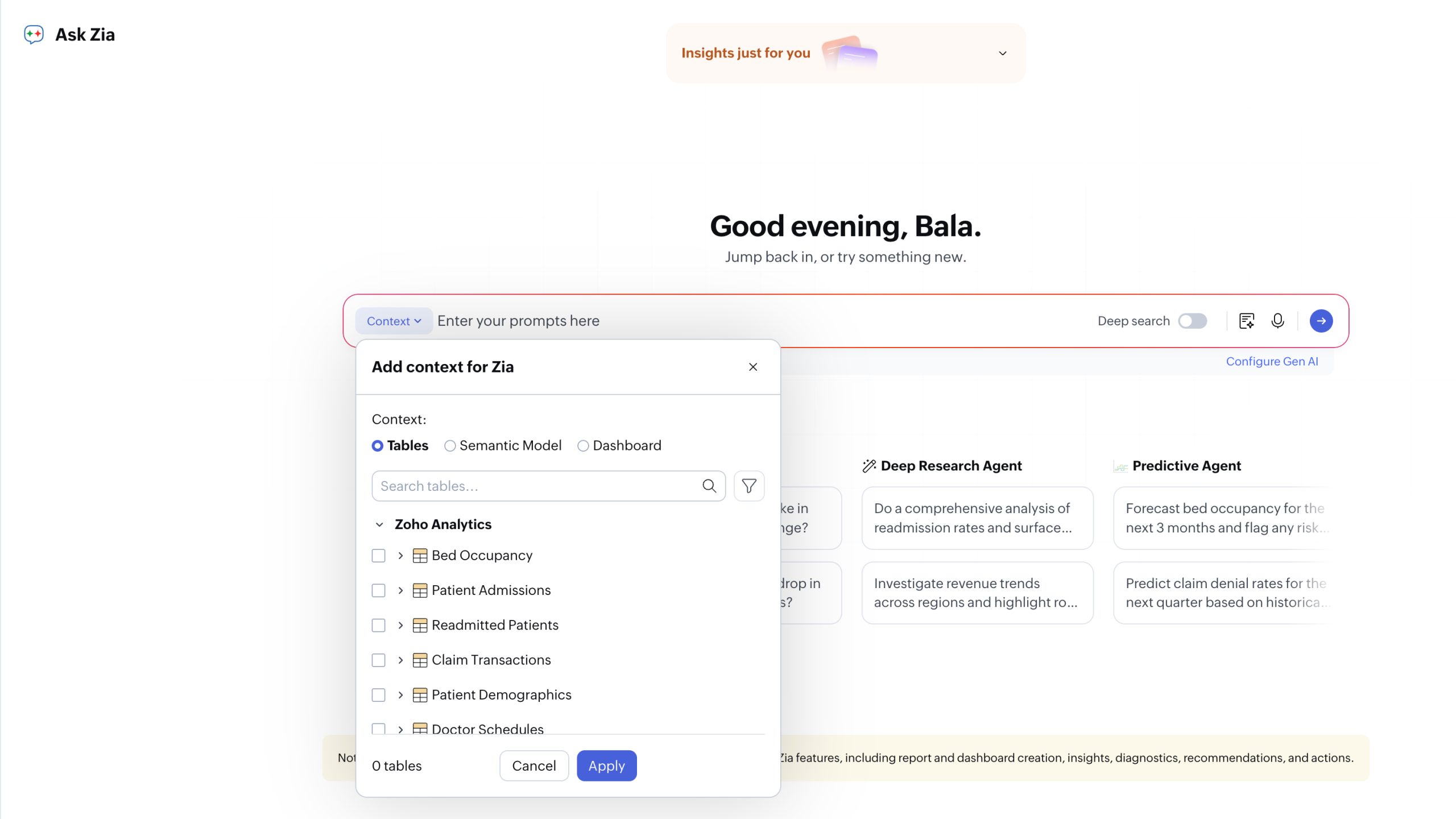
Instead of navigating dashboards, generating reports, or relying on analysts to interpret figures, users can ask questions in natural language and have AI agents handle different parts of the analysis.
For example, a business owner could ask Zia to examine declining sales, identify possible trends, generate a visualization, and help initiate a workflow based on the findings.
The idea is to bring several processes that would traditionally require different tools or specialist skills into one conversational interface.
This could make business intelligence more accessible to employees who do not have technical expertise in data analysis. However, the usefulness of the system will depend on how well it understands an organization’s data, terminology, and internal processes.
“We are at the beginning of the next leap forward in data analytics, where a strong data foundation is the starting point for all agentic activity in business operations,” said Veerakumar Natarajan, Country Head, Zoho Kenya.
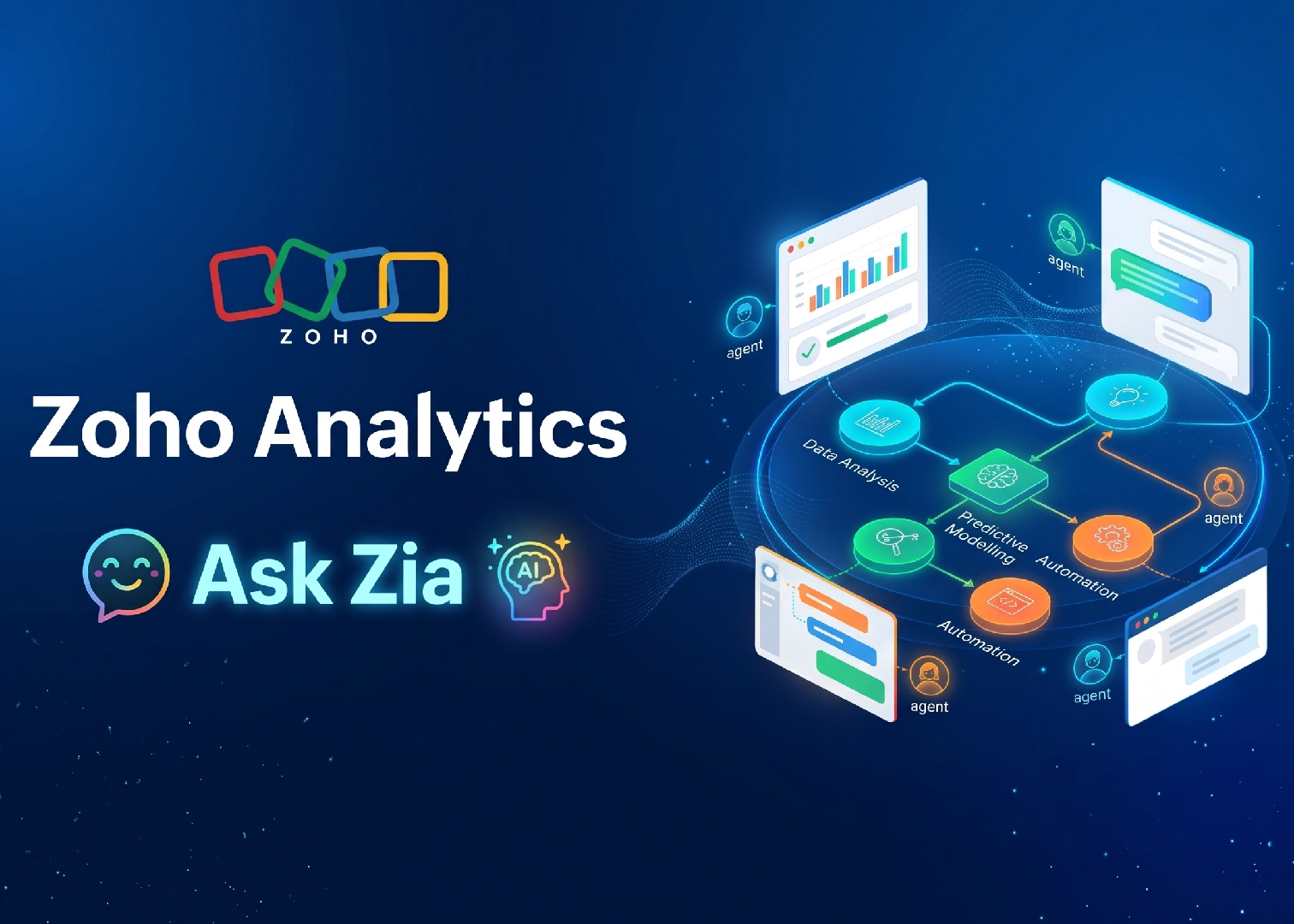
At the center of the update is a multi-agent architecture that allows Zia to coordinate specialized agents responsible for data analysis, visualization, preparation, modelling, coding, and actions.
Rather than relying on one AI model to handle everything, the system distributes tasks among these specialized agents.
Giving Zia a Better Grasp of the Business
Two new layers are meant to help the agents understand the organizations they serve.
The semantic layer sets up a shared glossary for terms, metrics, and definitions, which helps because the same term can mean different things from one company to the next, as with what counts as an active customer.
The ontology layer goes a step further by mapping how entities such as customers, products, and departments connect, so the AI can see how different parts of the business fit together, and without that context, an assistant can reach misleading conclusions from data it has misread.
Natarajan made the same point, noting that agents need more than raw data to work reliably and require a robust intelligence layer on top of it.
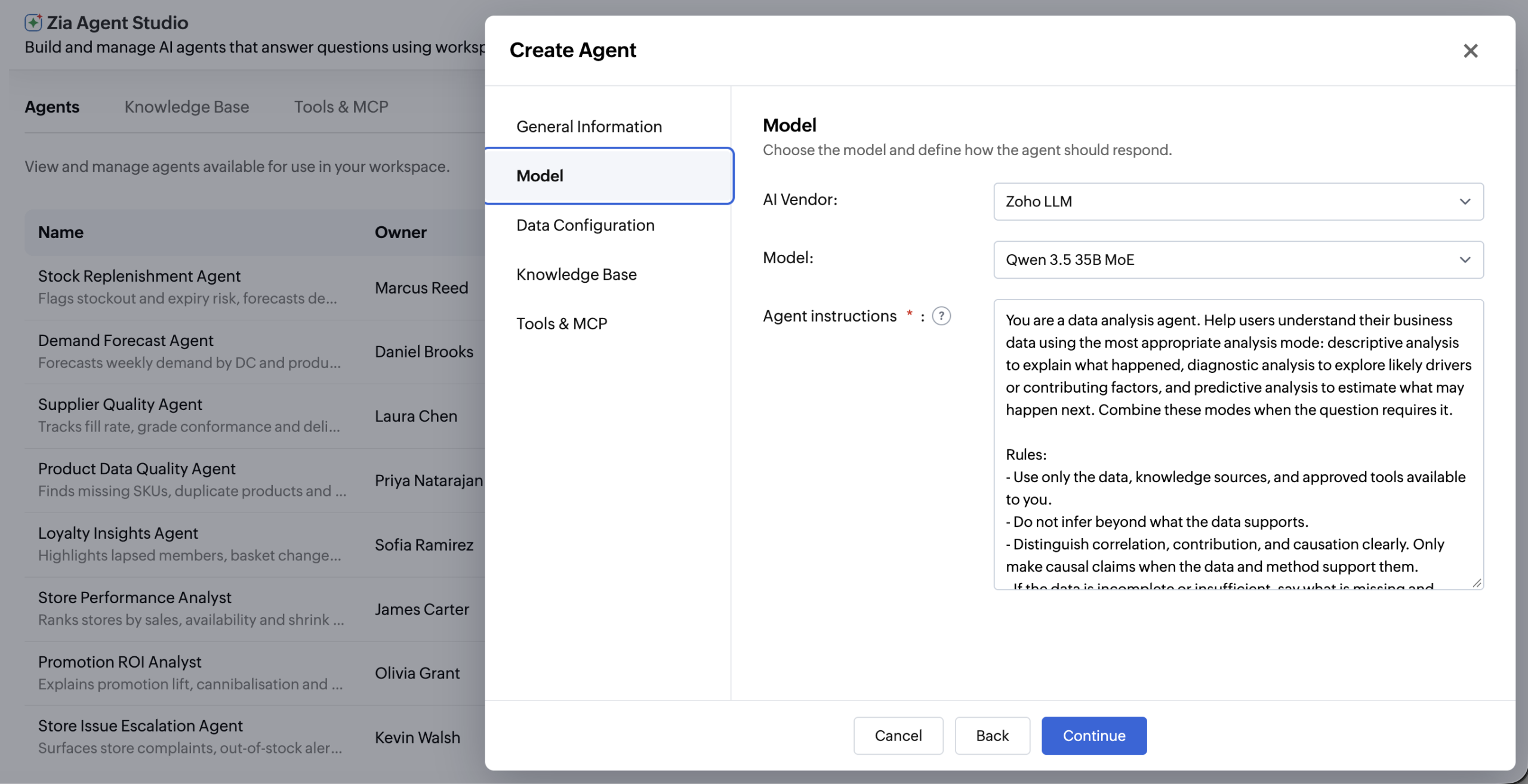
Businesses can also build custom agents grounded in their own data, business models, and knowledge bases, while Zia uses conversation history and agent memory to keep context as users move between related tasks.
Which AI Models Power Ask Zia?
Zoho is not restricting the platform to its large language model (LLM). Zoho Analytics supports Zoho LLM alongside configurable external models, depending on the feature and the customer’s setup, although it has not said which model handles which function.
The platform is also opening to outside AI assistants through the Model Context Protocol (MCP), which lets compatible tools work with Zoho Analytics data and capabilities, while the Claude integration, for instance, allows users to work with Zoho Analytics from within Claude.
Supporting this are more than 30 new data connectors on top of the 500-plus already available, covering Zoho’s own business applications and third-party services such as SAP, PayPal, Adobe Commerce, Twilio, and Notion.
Privacy and Control Remain Important Considerations
The wider reach raises questions about how much access agents have to business information and what happens once they start taking actions.
Zoho says customer data is not used to train its AI models, but businesses connecting an outside service such as Claude through the MCP server may share relevant query results with that provider to get a response, after which processing, retention, and use fall under the provider’s own policies.
Zoho gives administrators control over AI features, data access, and agent deployment, but the level of control over individual agent actions depends on the product and its configuration. This includes whether users must approve high-impact actions.
Businesses will therefore need to establish their own safeguards before allowing AI agents to modify records, trigger workflows, or handle sensitive operations.
Zoho’s AI observability tools show administrators which agents ran, who used them, what information they accessed, and how they responded, with usage and costs tracked across teams.
Accuracy Still Depends on the Data
The semantic and ontology layers are intended to improve the consistency of AI-generated insights, but they do not automatically guarantee accuracy.
Zoho says its data catalogue supports data lineage and impact analysis, helping organizations understand how information is connected and how changes affect their analytics assets.
However, the quality of responses still depends on the underlying data, business definitions, and configuration.
Sandbox and deployment management tools also allow organizations to test agents and analytics assets before publishing them, with the option to restore previous versions.
Ultimately, Zoho’s update reflects a broader shift in business software, where AI is moving from answering questions to participating in operational processes.
Ask Zia could reduce the technical barriers to analyzing business information, but organizations will still need reliable data, clearly defined permissions, and proper oversight to get meaningful results.