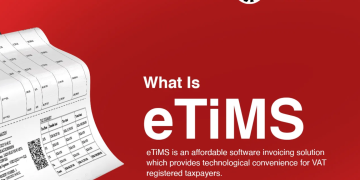




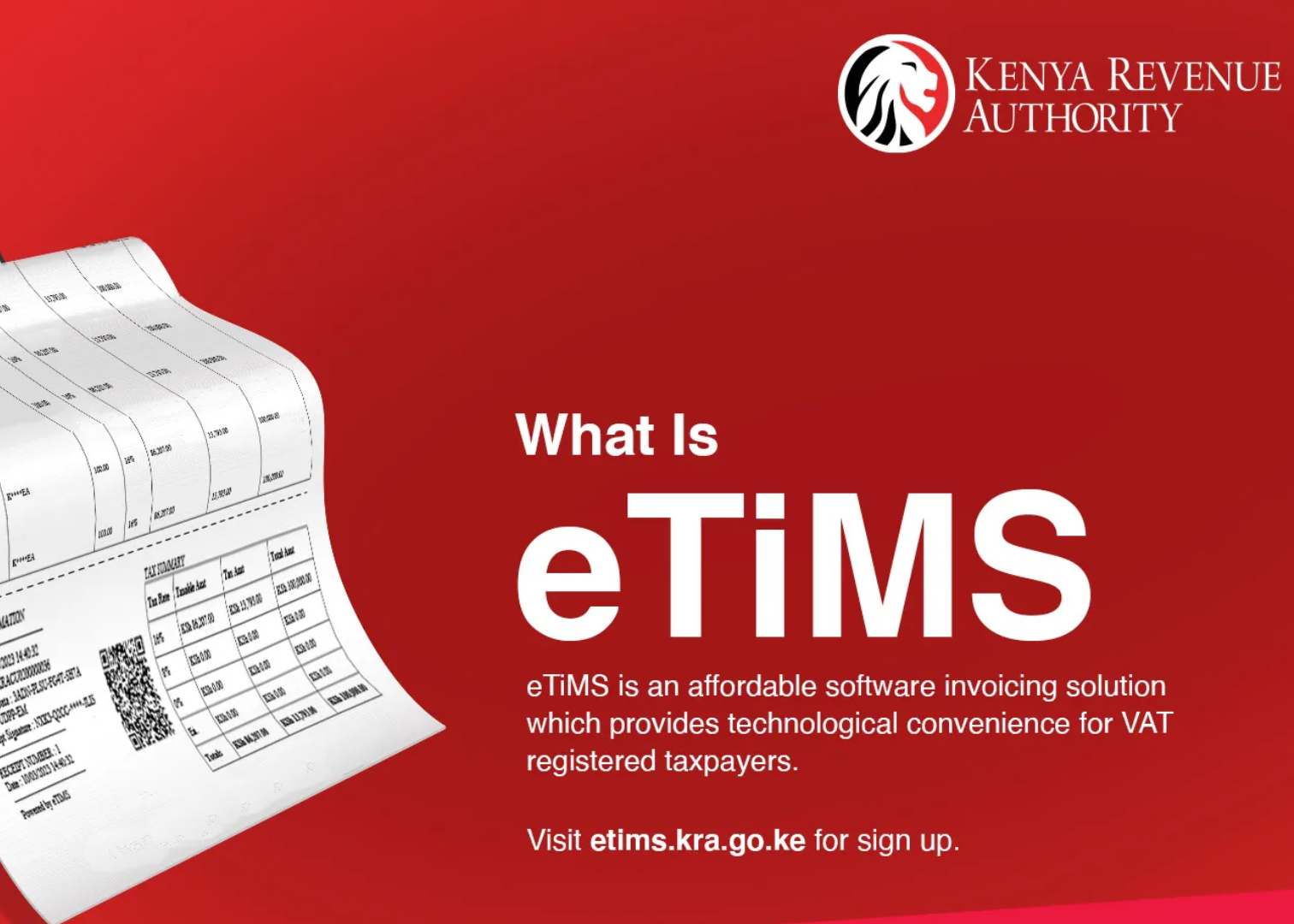
The Kenya Revenue Authority (KRA) has completed the integration of its Electronic Tax Invoice Management System (eTIMS) with the government’s Integrated Financial Management Information System (IFMIS).
The move, announced jointly with the National Treasury, changes how companies and individuals supplying goods or services to government entities get paid.
Previously, suppliers submitted invoices for payment through IFMIS without those invoices being automatically checked against tax records. Now the two systems talk to each other. Every invoice submitted for payment through IFMIS will be validated against what is recorded in eTIMS.
This is part of a wider push to digitize government financial processes. KRA says the goal is to close gaps that allowed inconsistent or unverified invoices to slip through, and to make government transactions easier to track.
New Requirements for Suppliers
Anyone doing business with a government entity now has to follow three rules:
- Generate a valid eTIMS invoice before payment: Every supply made to government must have a corresponding eTIMS invoice generated first. Payment processing through IFMIS won’t proceed without it.
- Match the details exactly: The invoice submitted to the government entity has to line up precisely with what’s recorded in eTIMS. Any mismatch, whether it’s the amount, the item description, or other details, can hold up payment.
- Keep tax records current: Suppliers are expected to regularly check their tax compliance status and make sure their records are accurate. KRA has warned that outdated or inconsistent tax information could delay or affect payment.
For suppliers, this means invoicing errors that used to be sorted out later in the process can now stop a payment before it starts. Anyone whose eTIMS records aren’t clean or up to date risks delays when trying to get paid by a government entity.
For KRA, the integration closes a loophole. Government spending is massive, and invoices tied to it have not always been consistently checked against actual tax records. Automated validation removes the manual gap where discrepancies could go unnoticed.
Support During the Transition
KRA and the Treasury say they will continue running sensitization programs and offering technical support while suppliers adjust to the new system.
Suppliers who need help with onboarding onto eTIMS, generating invoices, or resolving related issues have been told to reach out through KRA’s existing support channels.