






Many Kenyan businesses have treated eTIMS mainly as a tool for generating invoices, something they turn on at the till and move on from. However, a public notice issued by the Kenya Revenue Authority (KRA) in September suggests that the system is expected to do much more.
KRA now requires businesses using TIMS or eTIMS to keep accurate and up-to-date stock records for goods purchased or received, sold, transferred, returned, adjusted, or otherwise disposed of. This means inventory is now part of the electronic records that KRA can access.
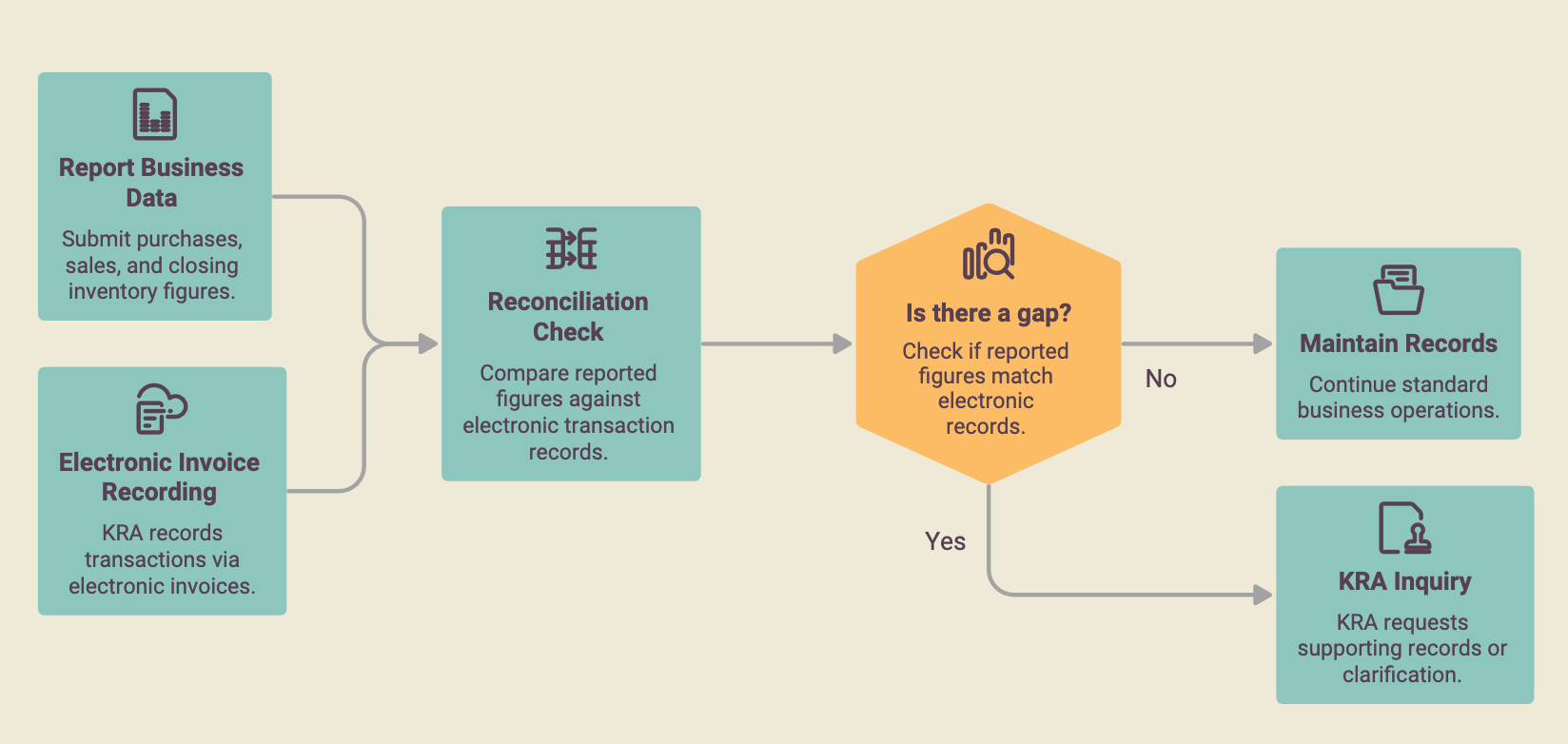
The logic is simple. KRA can compare stock records and tax returns with electronic invoices. A business reporting its purchases, sales, and closing stock will increasingly need to ensure that these figures match the transactions already recorded electronically.
A mismatch does not necessarily mean the business has done anything wrong, but if it cannot be explained, KRA may ask for supporting records or clarification.
KRA says the stock-management functionality is meant to support compliance and sharpen the accuracy of returns. It plans to consult businesses and other stakeholders on how the functionality works, the challenges they face, and possible improvements.
READ: Biggest Taxpayers Remain a Small Group of Formal Businesses, KRA Data Shows
What The System Already Does
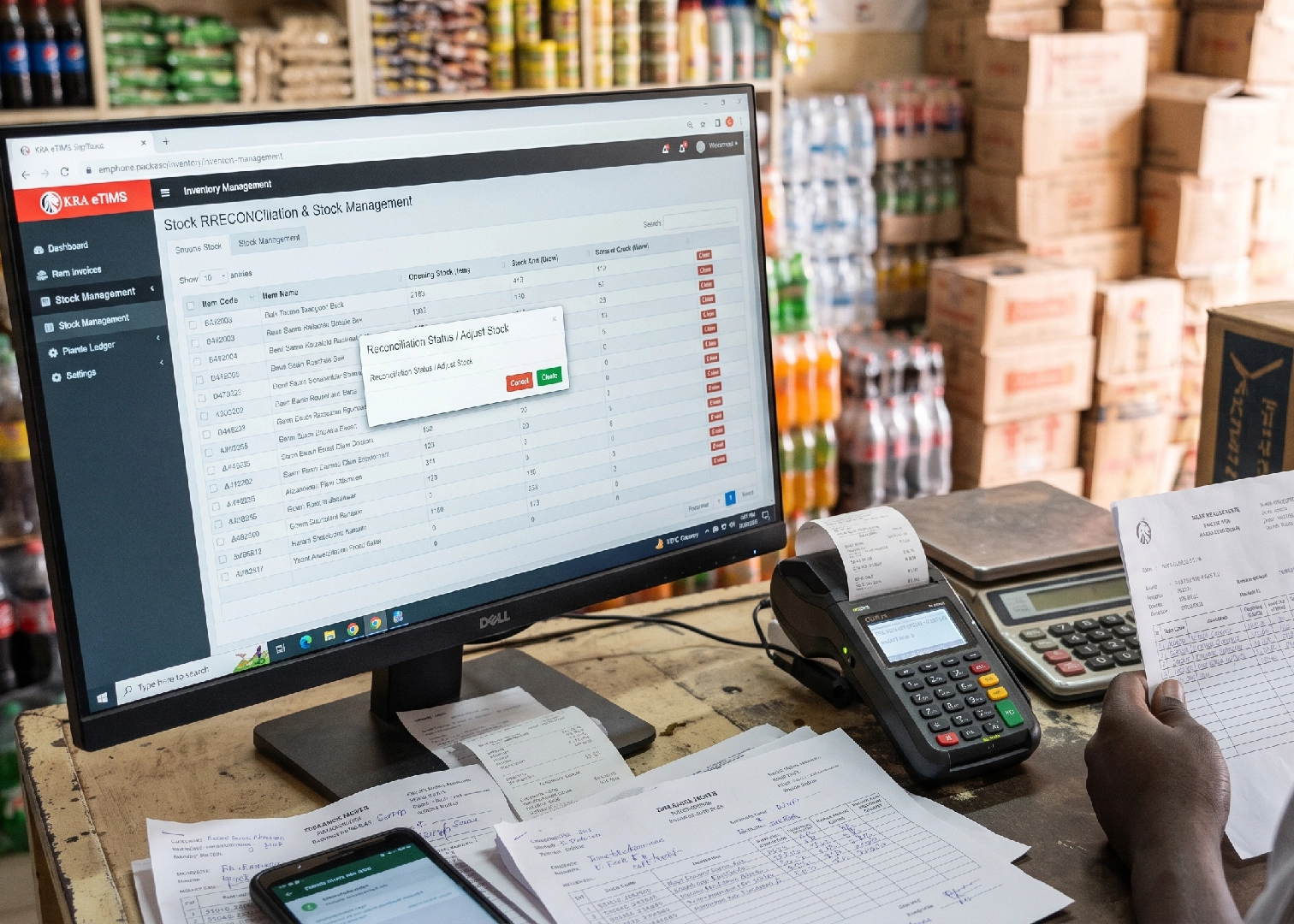
Much of the groundwork is already in place. The eTIMS PayPoint documentation includes a stock management module that tracks stock coming in and going out, shows current stock levels, and allows businesses to adjust stock when previously recorded items have run out.
Earlier KRA documentation also includes fields such as beginning stock, current stock, quantity units, and item codes. This means how a business names, codes, and maps its products will become more important than when eTIMS was mainly used to issue receipts.
The Zero-Stock Proposition
There are marketing suggestions that a supplier’s invoice will automatically add stock to the buyer’s balance and that each sale will deduct stock until a zero balance blocks any further invoice.
KRA’s notice asks businesses to keep accurate stock records and makes no mention of supplier invoices topping up a buyer’s balance automatically.
The PayPoint guide, meanwhile, allows stock to be adjusted once recorded inventory has run out, which describes a system built for controlled corrections rather than one that stops invoicing at zero.
READ: KRA Links eTIMS With IFMIS to Validate Government Invoices
Which solution a business uses also counts, since KRA offers PayPoint, Multi-Paypoint, an online portal, an Android solution, and system-to-system integration for different types of taxpayers.
The Fuel Stations Case Study
KRA’s fuel-station system provides a sense of how entrenched visibility can go. It integrates with forecourt controllers, sales systems, POS systems, and fuel-management systems, with transactions recorded and sent to KRA in real time.
Even there, physical movement is not automatically captured, so losses, transfers, returns, adjustments, and own consumption still need to be recorded and backed up.
READ: KRA Brings 500 Fuel Stations Onto eTIMS as Majority Remain Outside System
The same applies elsewhere, because electronic invoices show what a business says moved through its systems while the goods on the shelf still have to be matched against that record.
What Businesses Should Do
The practical change is less about suddenly requiring businesses to maintain zero stock and more about keeping accurate records.
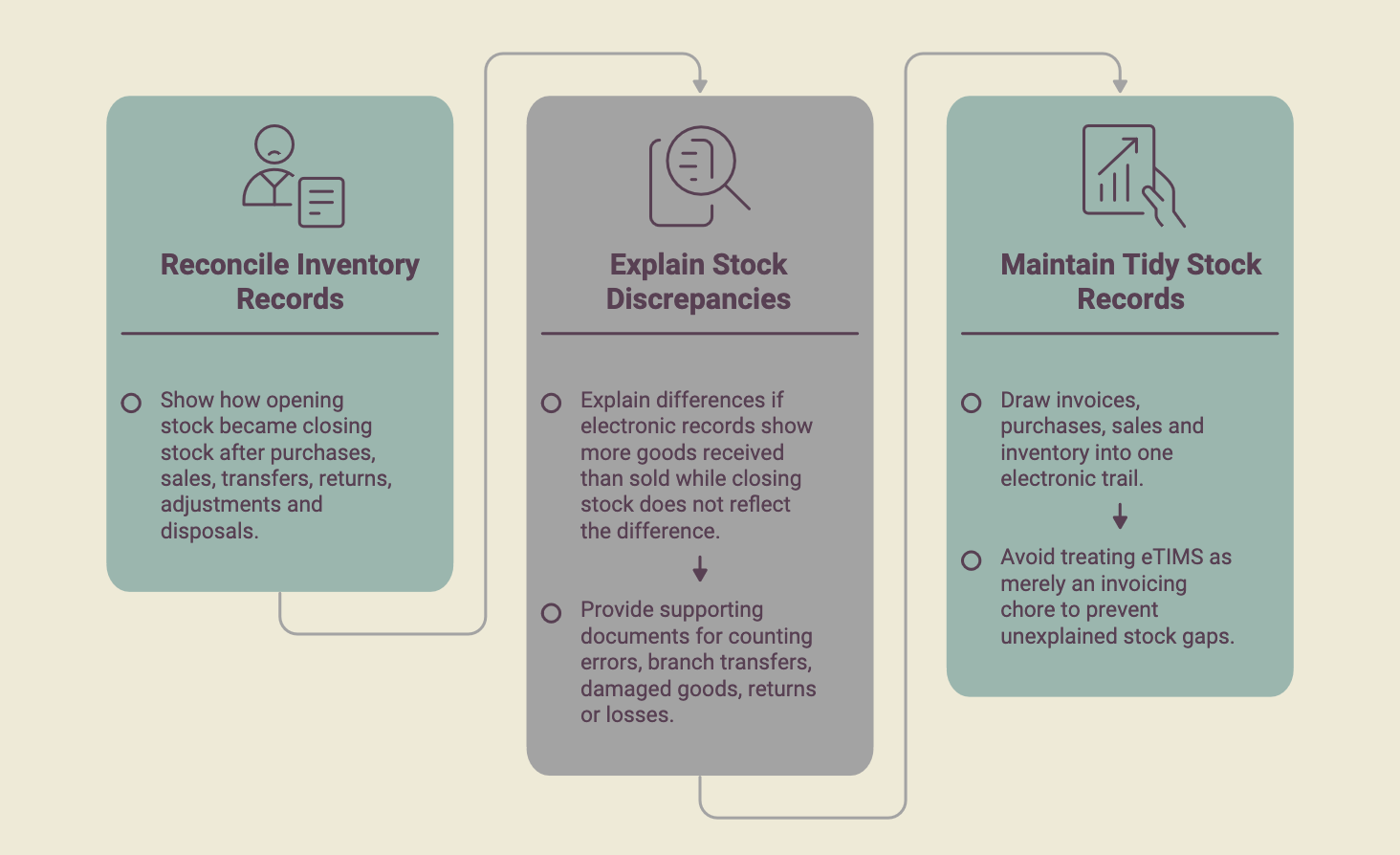
A retailer, wholesaler, or manufacturer should be able to show how its opening stock became its closing stock after accounting for purchases, sales, transfers, returns, adjustments, and disposals.
If electronic records show that more goods were received than sold, but the closing stock does not account for the difference, the business may need to explain what happened.
READ: How to Use KRA’s WhatsApp eTIMS to Generate Invoices and File Returns
This could be due to a counting error, a branch transfer, damaged goods, returns, or losses. The business should have documents to support the explanation.
Businesses that keep treating eTIMS as an invoicing chore may find themselves explaining stock gaps they never knew existed.
As consultations proceed and KRA refines the functionality, invoices, purchases, sales, and inventory are being drawn into one electronic trail, and tidy stock records are the safest way to be ready for it.