



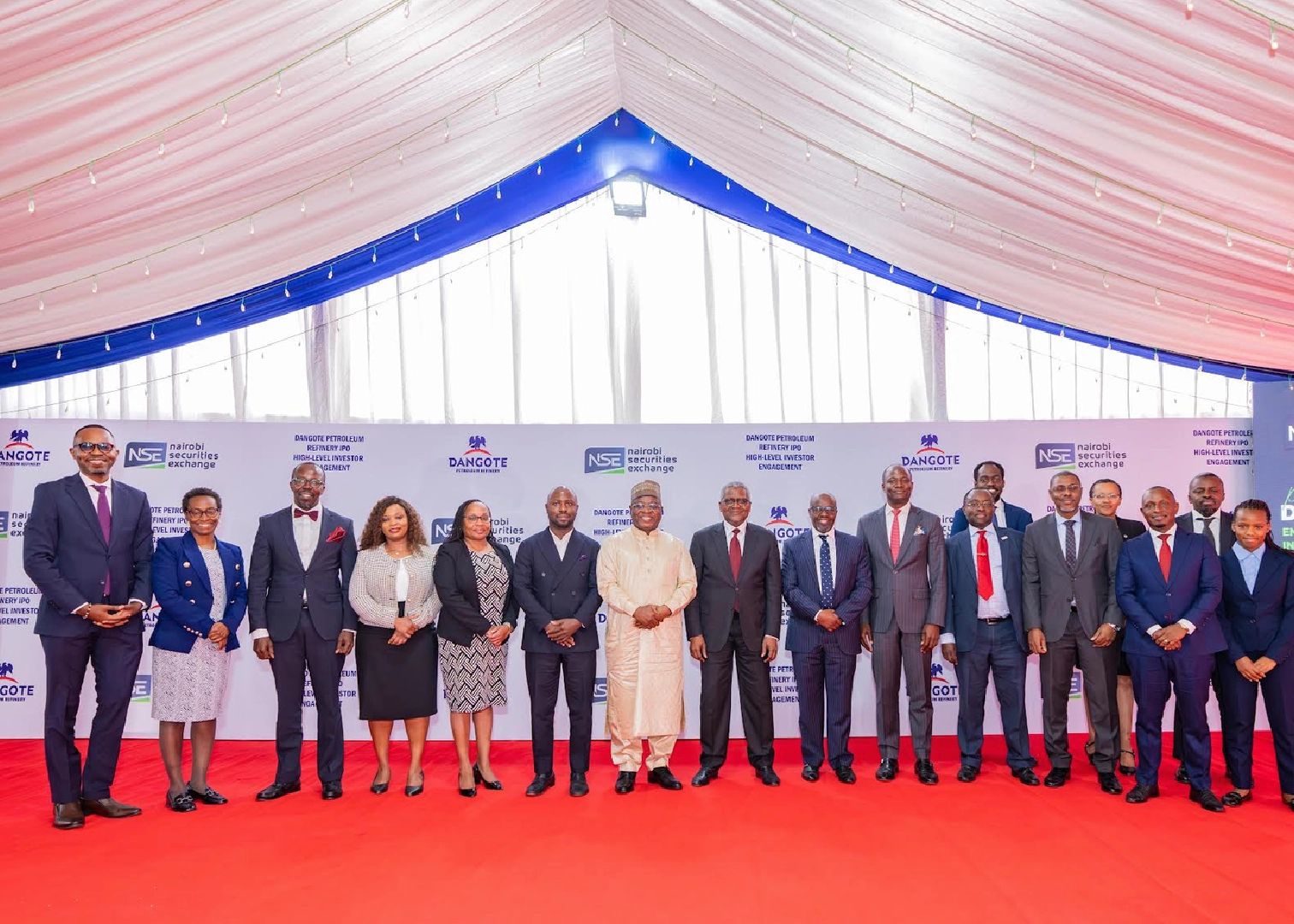
Kenyans can now buy into Dangote Petroleum Refinery through the Nairobi Securities Exchange (NSE) with as little as KES 535. This is a fraction of the KES 107,000 previously required, which had put the offer out of reach for most small investors.
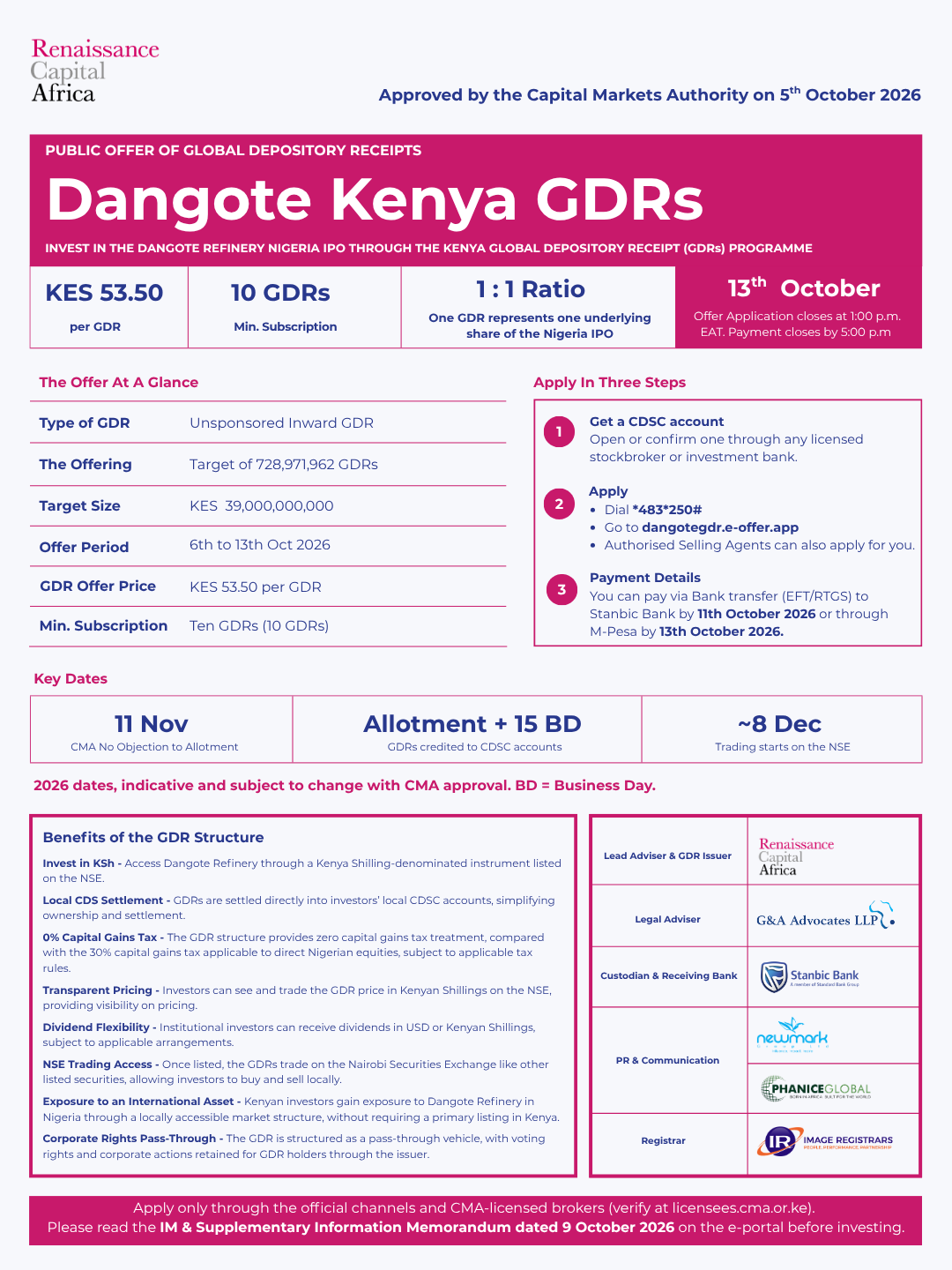
Renaissance Capital, the issuer of the Global Depositary Receipts (GDRs), announced that investors can now apply for as few as 10 GDRs, down from the previous minimum of 2,000. Each GDR costs KES 53.50, and the new minimum investment is payable in full when applying.
However, the change does not mean Dangote shares have become cheaper. What has changed is the minimum number of GDRs an investor must buy to participate in the offer.
Why the Minimum Was Cut
Renaissance Capital says the decision came after feedback from prospective investors, strong demand, and approval from the Capital Markets Authority (CMA).
The previous minimum of KES 107,000 placed the offer beyond the reach of many ordinary investors. Reducing it to KES 535 allows people with smaller amounts of money to participate, rather than limiting access to those who can commit more than KES 100,000.
The new minimum also matches what Nigerian investors pay in the refinery’s initial public offering in Nigeria.
A lower threshold means more people can apply, but it does not mean everyone who applies will get all the GDRs they ask for.
What Kenyans are Buying
A Global Depositary Receipt (GDR) is a financial instrument that allows investors to gain exposure to shares in a company listed in another country without having to trade directly on that country’s stock exchange.
In this case, each GDR represents one share in Dangote Petroleum Refinery Plc, held in custody in Nigeria, while investors buy and sell the receipts in Kenyan shillings on the NSE without needing a Nigerian brokerage account.
The offer covers up to 728,971,962 GDRs, which at KES 53.50 each adds up to roughly KES 39 billion. The CMA approved the Kenyan offer on October 5, 2026, but the NSE listing still needs a go-ahead from Nigeria’s Securities and Exchange Commission.
Could the Change Improve Trading on the NSE?
Allowing smaller applications could attract a wider pool of investors and increase interest in the listing. If more people subsequently buy and sell the GDRs, trading activity could improve.
That outcome is not guaranteed, however. A large number of applicants does not necessarily translate into an active market after the offer closes.
Trading will also depend on whether investors are willing to sell their holdings, how much demand there is from buyers, and whether the market has adequate support to facilitate transactions.
The success of the listing will therefore depend on more than the reduced minimum investment.
What Happens Next?
The Kenyan offer opened on October 6 and is scheduled to close at 5 PM on October 13, 2026.
Eligible investors with a valid Central Depository and Settlement Corporation (CDSC) account can apply through the USSD code 483250#, the official application portal, or an authorized selling agent. Those without a CDSC account can apply to open one through the portal.
Investors must pay in full in Kenyan shillings before the deadline.
After the offer closes, attention will naturally turn to the number of applications received, how the GDRs are allocated, and when trading is expected to begin. The final listing also depends on the required Nigerian regulatory clearance.
The revised minimum is a significant change in how much money buyers in Kenya need to participate. A lower minimum makes participation possible for more people. It does not remove the risks that come with investing in shares.