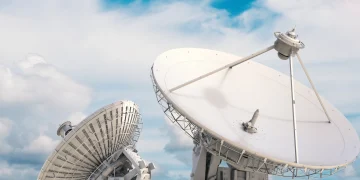





The Communications Authority of Kenya (CA) has drafted the Satellite Frequency Licensing Framework, 2026, and wants public feedback before it is finalized.
Comments go to [email protected] and must arrive by November 6, 2026. That leaves about three and a half weeks from today.
What the Framework Does
The Satellite Frequency Licensing Framework sets out which licenses and frequency authorizations a company needs to run satellite services in Kenya.
It covers geostationary (GSO) and non-geostationary (NGSO) systems, which includes the low Earth orbit constellations that have driven much of the recent growth in satellite broadband.
It also covers earth stations, compliance monitoring and the Authority’s work on satellite filings and coordination.
The CA says the aim is efficient spectrum use, lawful market entry, protection of existing users and an orderly rollout of new services.
It also notes that more NGSO systems sharing bands with GSO and terrestrial services means more potential for interference, which is why it wants frequency monitoring systems that can help resolve it.
READ: CA Opens Public Consultation on New Network Equipment Rules
What Operators Would Have to Hold
Under the draft, the Landing Rights Authorization comes first. Almost every route to a frequency authorization requires it. After that, the requirements depend on the type of station:
- Gateway earth stations: an International Gateway Systems and Services (IGSS) license. The authorization lasts as long as the license.
- Fixed satellite user terminals: the relevant licenses under the market structure, which can include landing rights, IGSS (if the operator builds a gateway), Network Facility Provider, Application Service Provider and Communications Equipment Distributor licenses. The authorization lasts as long as the Application Service Provider license. Because satellite operators supply their own terminals, the draft makes them responsible for keeping those terminals within the rules and free of harmful interference.
- VSATs: a VSAT license, and the satellite operator must hold valid landing rights. The authorization lasts as long as the VSAT license.
- Land-based earth stations in motion (ESIMs): an Application Service Provider license, plus the other licenses above or a partnership with holders of them. Only type-approved terminals can be distributed and used.
- Aeronautical and maritime ESIMs on foreign-registered aircraft and ships: authorization from the CA and landing rights for the satellite system.
- Mobile satellite services: an Application Service Provider license, plus the same supporting licenses or partnerships.
- Broadcasting satellite feeder links: landing rights, with the authorization lasting as long as the landing rights.
- Other ground stations (positioning and navigation, Earth observation, space research, and telemetry, tracking and command): CA authorization and landing rights.
Every authorization carries an annual frequency utilization fee.
Equipment and Reporting
All electronic equipment used in a satellite service needs type approval from the CA. That covers equipment in the provider’s core and access networks as well as end-user devices.
Licensed satellite services must also keep a record of every terminal on their network, including locations and areas of operation in Kenya, and file periodic returns as the CA requires.
What the CA Is Asking
The consultation has ten questions:
- Are the purpose and scope clear enough to cover current and emerging satellite services?
- Is the relationship between telecom licensing and frequency authorization clear?
- What other legal, regulatory or policy issues should shape the scope?
- Any comments on licensing requirements under the Telecommunications Market Structure?
- Where should the Framework treat GSO and NGSO systems differently?
- Are the authorization requirements clear and proportionate for both GSO and NGSO, and what extra information should applicants provide?
- Any other comments on the frequency authorization requirements?
- Comments on type approval?
- Comments on reporting requirements?
- Comments on the Framework overall and its implementation?
Questions 5 and 6 are the most important for anyone planning to operate in Kenya. The draft treats GSO and NGSO systems largely the same way, so operators with a case for different treatment will need to make it.
How to Submit a Useful Response
The CA’s instructions are specific:
- Use the template provided with the consultation notice.
- Give reasons, supporting evidence and a practical alternative wherever you propose a different approach.
- State who you are or which organization you represent.
- Cite the question number and the relevant section of the document.
- Mark clearly any information you consider confidential.
- Send it to [email protected] on or before November 6, 2026.
Who Should Respond
Satellite operators, ISPs, broadcasters, equipment importers and distributors, and anyone who relies on satellite links for backhaul, maritime or aviation connectivity, or remote-area service all stand to be affected.
Under the draft, a distributor needs a specific license and has to sell type-approved equipment, and a VSAT user has to check that the satellite operator holds landing rights. If any of those obligations would be hard to meet in practice, this consultation is where to say so.
The draft also states that the Framework may be reviewed from time to time, but changes made after finalization will be harder to get than changes made now.