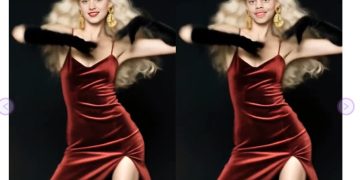





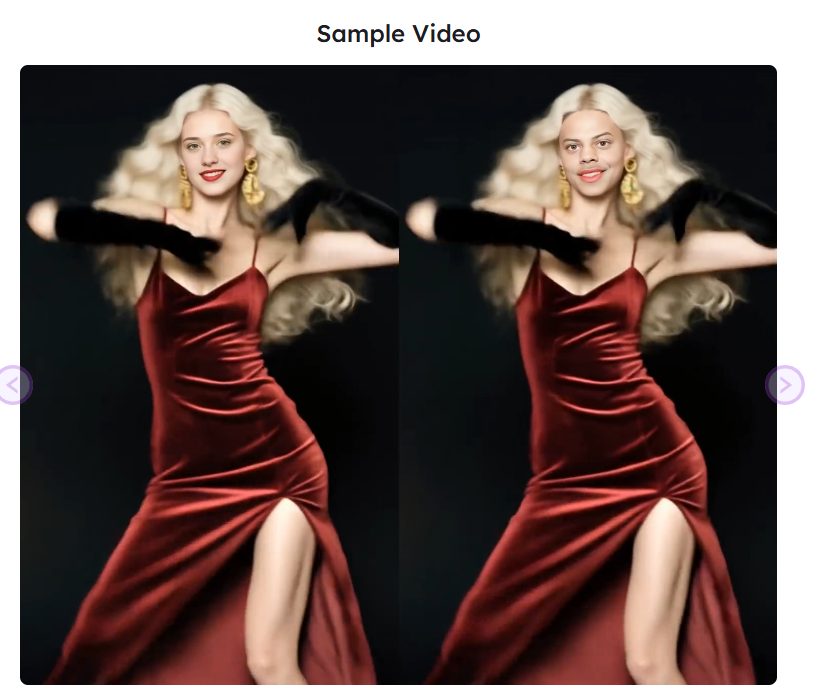
The transformative power of artificial intelligence in visual media has accelerated at a breakneck pace. What was once the exclusive domain of Hollywood visual effects studios—altering an actor’s appearance, de-aging them, or even mapping a new face onto theirs—is now accessible to anyone with a web browser. This revolution is most apparent in the rise of AI video face swap technology, a process that uses sophisticated algorithms to analyze a video and replace a person’s face with a new one from a source image.These AI-driven tools now offer unprecedented ease and realism, providing a powerful new avenue for creative expression, entertainment, and social media engagement, all driven by advanced computational models.
Technological Foundations and Realism
At the heart of today’s most impressive AI face swap tools are the same foundational technologies that power cutting-edge generative models like OpenAI’s sora 2 ai video generator
, Google’s Veo 3, and Runway. While these models are famous for creating entire video scenes from text, the underlying principles of understanding motion, lighting, and physics are what enable a new generation of refacing tools to achieve super-realistic results.
The process is a symphony of complex computations masked by a simple interface. Here’s how the AI’s role breaks down:
- Frame-by-Frame Analysis: The AI scans every single frame of the target video, identifying the face to be replaced. It maps key facial landmarks—eyes, nose, mouth, and jawline—in three-dimensional space.
- Contextual Matching: Simultaneously, it analyzes the source photo. The magic happens as the AI matches the lighting, shadows, and angle from the video to the source face.It doesn’t just “paste” the face; it intelligently re-lights it to fit the scene.
- Seamless Blending and Generation: The AI then blends the new face onto the target, ensuring that expressions are preserved.If the person in the video smiles or speaks, the source face realistically mimics that expression.This capability for uncanny precision is what separates modern tools from older, more “plastic-looking” apps.
The result is a high-resolution, often watermark-free video that looks genuinely filmed, making it difficult to distinguish the synthetic from the real.
Key Applications and Creative Use Cases
This accessible technology has unlocked a wide range of applications, moving far beyond a simple gimmick. It has become a staple for content creators, marketers, and casual users alike.
Entertainment and Parody
The most popular use is for pure entertainment. Users can now effortlessly swap their faces with their favorite celebrities, singers, or athletes. This has given rise to the “Movie Face Swap” trend, where a user can instantly appear in an iconic cinematic moment. Imagine delivering a romantic confession from a famous drama, leading an epic battle in a fantasy blockbuster, or landing the punchline in a well-known comedy skit.
Social Media and Virality
On platforms like TikTok and Instagram, speed and novelty are king. AI face swap tools are built to generate “viral short clips” effortlessly. Users can participate in trending challenges by creating:
- Celebrity Face Swaps: Appearing as a musician in a trending music video.
- Gender Swaps: Reimagining themselves with a simple clip.
- Head Swaps: Creating hilarious edits by placing their face on a pet, baby, or friend.
This ability to quickly produce high-quality, humorous, or surprising content makes it an invaluable tool for social media engagement.
Accessibility for All
Perhaps the technology’s greatest utility is its democratization of video editing. These tools are designed for both experienced video editors and film lovers who have no editing skills whatsoever. What once required complex software like Adobe After Effects and hours of manual tracking can now be achieved in minutes.
How to Make a Face Swap Video with EaseMate AI
To illustrate this simplicity, consider a user-friendly online tool like the EaseMate AI Video Face Swap. This platform, and others like it, has refined the workflow into a simple three-step process, making seamless video refacing accessible to everyone.
The Simple 3-Step Process:
- Step 1: Upload Source Photo
This is the “new” face you want to use. For best results, the photo should be a clear, high-quality, and unobstructed portrait where the person is facing forward.20
- Step 2: Upload Target Video
This is the original clip where you want to replace a face.21 Most online tools have limitations, such as a max video length of 120 seconds.22 Like the source photo, the highest quality results come from videos where the original face is well-lit and forward-facing.23

- Step 3: Generate and Download
The user simply clicks “Generate.” The AI processes the request, which may take a few minutes depending on the video length. The platform then provides the final, watermark-free video, ready to be downloaded and shared.
A critical, and often overlooked, aspect of this workflow is safety and privacy. Reputable AI face swap tools have clear policies: user-uploaded content is processed securely, and both the source photos and the resulting videos are deleted automatically from the platform’s servers after a short period (often 24-72 hours) to protect user privacy.
Conclusion
AI face swap technology is a clear example of the democratization of powerful creative tools.By leveraging the advanced intelligence of generative models, these platforms have removed the technical barriers to high-level video editing, prioritizing both realism and ease of use. This shift has not only changed how we create content for entertainment and social media but also opens up a new discourse on digital identity and personalization. As the technology continues to evolve, its potential to fundamentally alter the landscape of content creation is only just beginning to be realized, placing the power of the visual effects studio into the hands of the individual.