




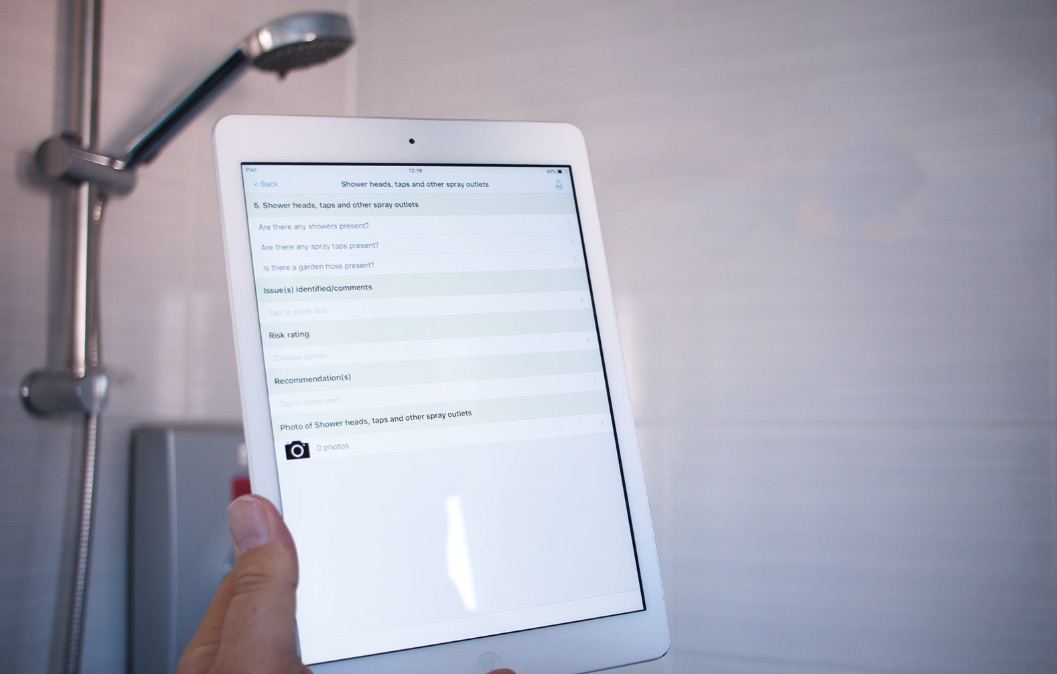
Legionella management is essential for any organisation operating water systems such as cooling towers, hot and cold water storage tanks, or showers. The risk of Legionella bacteria spreading and causing Legionnaires’ disease or Pontiac fever remains a significant public health risk across the UK. As regulations tighten, many organisations are turning to digital tools like a legionella risk assessment app to enhance legionella control, improve data collection, and achieve compliance through smarter monitoring and risk management.
Why Legionella Risk Management Matters
Legionella risk assessments are a legal requirement for managing water safety in public buildings and workplaces. These assessments help identify potential risks within water systems, particularly where water remains stagnant or where water temperatures fall within the range that encourages legionella growth. If left unmanaged, the bacteria can multiply rapidly, increasing the chances of people inhaling water droplets contaminated with legionella, which can lead to severe respiratory illnesses.
The impact of missing legionella outbreaks can be devastating. Not only can they cause harm to public health, but they can also result in business closures, reputational damage, and legal consequences. That’s why effective legionella risk prevention and control systems are vital for maintaining public safety and business compliance.
The Rise of AI in Legionella Control
Traditional legionella monitoring methods rely heavily on manual sampling, paper-based record keeping, and human judgement. While this approach can be effective, it is labour intensive and prone to delays and inconsistencies. Artificial intelligence and automated IoT solutions are introducing a new era of proactive management for legionella risk.
AI legionella software benefits organisations by continuously analysing data from sensory devices connected throughout the water system. These low power sensory devices record measurements such as sentinel temperatures, flow rates, and water movement, feeding data into a centralised system for real time monitoring. This ensures that water safety teams can detect anomalies or risks before they become serious hazards.
Proactive Management Through Continuous Surveillance
AI-driven legionella software enables continuous surveillance of water systems, helping businesses identify potential risks earlier. By monitoring water temperatures, flow, and stagnation points automatically, the system can alert facilities teams when readings indicate conditions favourable for legionella growth. This proactive management approach minimises the chances of outbreaks by ensuring timely intervention and corrective action.
Routine monitoring no longer needs to depend solely on site visits and manual testing. Remote monitoring capabilities allow maintenance teams to track water safety data from anywhere, saving significant time and resources. For large estates or public buildings with multiple systems, this represents a major step forward in managing water safety efficiently.
Reducing Human Error and Ensuring Accuracy
Manual record keeping and sampling introduce a risk of human error. Misread temperatures, missed inspections, or misplaced paperwork can all compromise compliance and safety. AI legionella software eliminates much of this uncertainty by automating data collection, analysis, and reporting.
With continuous digital data streams, AI systems can instantly flag readings that fall outside safe parameters, allowing quick action before a problem escalates. Automated alerts also support decision making, ensuring that staff receive clear guidance on when and where to investigate.
This improved accuracy not only helps maintain compliance but also provides detailed guidance and evidence for health and safety audits. Organisations can demonstrate that they’ve taken all necessary steps to manage legionella risk, reinforcing accountability and transparency.
Achieving Compliance More Efficiently
Legionella compliance is a key responsibility under health and safety regulations. Every business must carry out regular legionella risk assessments, maintain accurate records, and ensure that their water management plan remains effective.
AI legionella software streamlines these processes by storing all inspection data, temperature readings, and control actions in one central system. Automated reporting tools simplify audits and help teams demonstrate compliance with water safety legislation. This is particularly beneficial for facility managers responsible for multiple sites or public buildings, where maintaining consistency across systems can be a major challenge.
Identifying Potential Hazards and Preventing Outbreaks
AI systems play a key role in identifying potential hazards that might otherwise go unnoticed. By continuously analysing patterns in water temperature, flow, and usage, they can detect early warning signs of bacterial growth. For example, if certain pipes experience frequent periods of stagnant water or if temperature fluctuations suggest a risk zone, the software will alert operators immediately.
This predictive capability allows facilities to implement targeted interventions before a health risk develops. Instead of reacting to test results after contamination has occurred, teams can now prevent outbreaks entirely through data-driven decision making.
Significant Cost and Time Savings
Another major benefit of AI legionella software is the reduction in time and labour required for ongoing monitoring. Manual testing involves site visits, paperwork, and coordination across departments. Automated systems reduce this burden by enabling remote monitoring and instant data access.
By cutting down on unnecessary visits and manual checks, organisations can redirect resources to more critical health and safety activities. The result is significant cost savings over time, particularly for large facilities or organisations with complex water systems.
Supporting Public Health and Business Resilience
Legionella outbreaks can quickly escalate into serious public health issues, leading to severe respiratory illnesses and, in some cases, fatalities. Proactive digital management of legionella risk is therefore not only a matter of compliance but a key part of maintaining public safety.
By embracing AI-based solutions, businesses demonstrate a commitment to protecting health while modernising their operations. These technologies help ensure that water systems remain safe, clean, and compliant at all times, even in the most complex environments.
Real Time Monitoring and Better Decision Making
AI legionella software enables real time monitoring across entire water systems, from cooling towers to hot water tanks. Instant access to temperature readings, flow data, and historical trends gives teams a complete overview of system performance.
This level of visibility empowers decision makers to act quickly and confidently. Whether adjusting control systems, planning maintenance, or reviewing compliance reports, reliable data ensures that actions are evidence-based and effective.
The Future of Legionella Risk Prevention
As more industry leaders adopt AI and IoT-based legionella control systems, the benefits for health, safety, and compliance will continue to grow. Low power sensory devices and intelligent analytics are making it possible to maintain continuous oversight of water systems without increasing resource demands.
This shift toward automation and proactive management will help prevent outbreaks, reduce legal risks, and strengthen overall water management strategies. With innovative solutions like AI legionella software, many organisations are now better equipped to lead in public safety and sustainability.
Conclusion
Managing legionella effectively is about more than meeting regulatory requirements — it’s about protecting people, maintaining trust, and ensuring long-term business compliance. AI legionella software offers a smarter, more efficient way to manage water safety, providing continuous surveillance, accurate data collection, and early warning systems that help prevent outbreaks before they occur.
By integrating artificial intelligence and connected sensory devices into routine monitoring, organisations can move beyond traditional, reactive methods toward a future of proactive risk prevention and control. As technology continues to advance, those who invest in AI-driven legionella management will not only maintain compliance but also lead the way in safeguarding public health and water safety.