





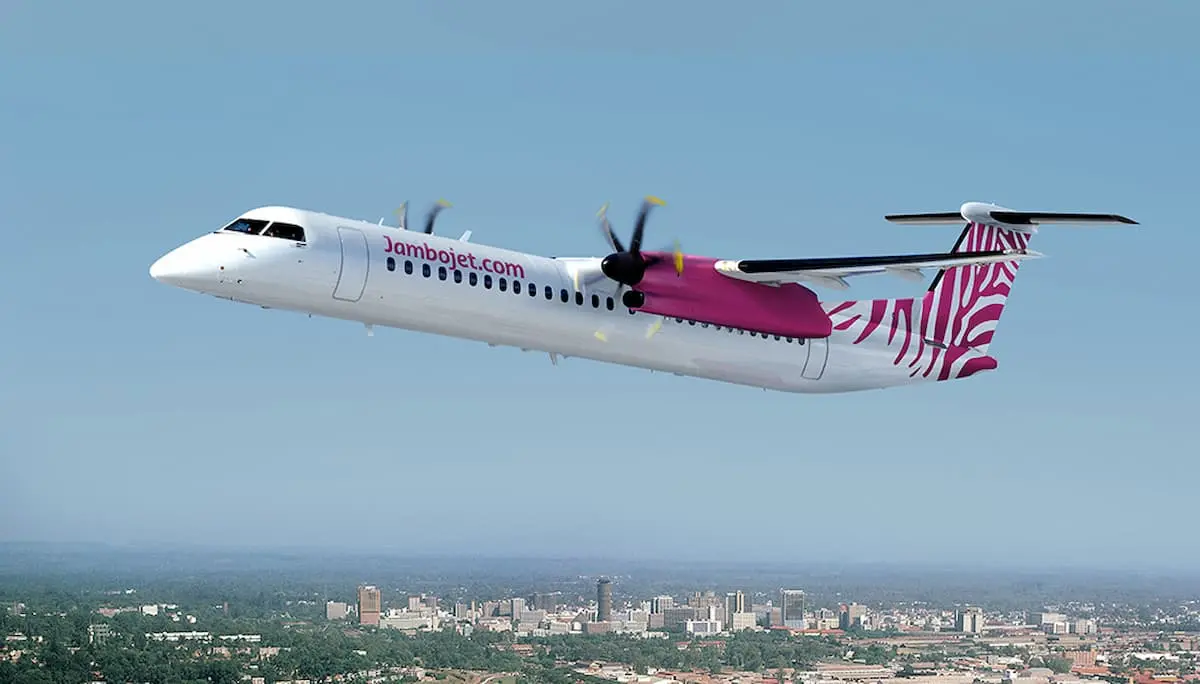
Jambojet is planning to triple its fleet and extend operations far beyond its current East African footprint.
The low cost airline, which has become a dominant force in Kenya’s domestic travel market, wants to position itself as a wider African carrier capable of connecting major cities across the continent.
The airline currently operates a fleet of around 11 aircraft, mainly the Dash 8 Q400 turboprops that have served as the backbone of its short haul network.
These aircrafts have helped Jambojet maintain a strong presence on domestic routes such as Mombasa, Kisumu, Eldoret, Diani and Malindi, as well as regional routes into neighboring countries.
According to its leadership, demand for affordable and reliable air travel continues to grow across Africa, creating an opportunity for a hybrid expansion strategy.
As part of this strategy, Jambojet will introduce larger aircraft with longer range capabilities, enabling it to serve destinations in West Africa, North Africa and Southern Africa. The shift will allow the airline to move from being a regional operator to a continental player.
Since its launch in 2014, Jambojet has flown more than 9 million passengers. It also commands a major share of Kenya’s domestic aviation market.
The company believes its next phase of expansion will strengthen not only its own position but also the role of Nairobi as a strategic aviation hub connecting African capitals and commercial centers.
“This expansion marks a pivotal shift for Jambojet,” said CEO Karanja Ndegwa. “By introducing larger aircraft, we will extend our reach beyond East Africa and tap into the growing demand for air travel across the continent.”
Executives at the airline say the goal is to meet rising passenger demand while maintaining a disciplined and sustainable business model. The plan to grow the fleet will not simply focus on adding aircraft but on ensuring the right mix of aircraft types to serve different route profiles.
The introduction of larger jets will complement the Dash 8 fleet, which will continue to support shorter and high frequency routes.
Industry observers note that increased competition and improved connectivity are essential for the growth of African aviation. Many travelers still face high fares and limited flight options when moving between African cities.