




Kenya’s clean-cooking market has spent 2026 relearning how fragile its subsidized fuel model was.
When the country’s dominant bioethanol network shut down at the end of January after losing government authorization for the carbon credits that financed its pricing, roughly 1.5 million households lost access to their cheapest alternative to charcoal and kerosene almost overnight.
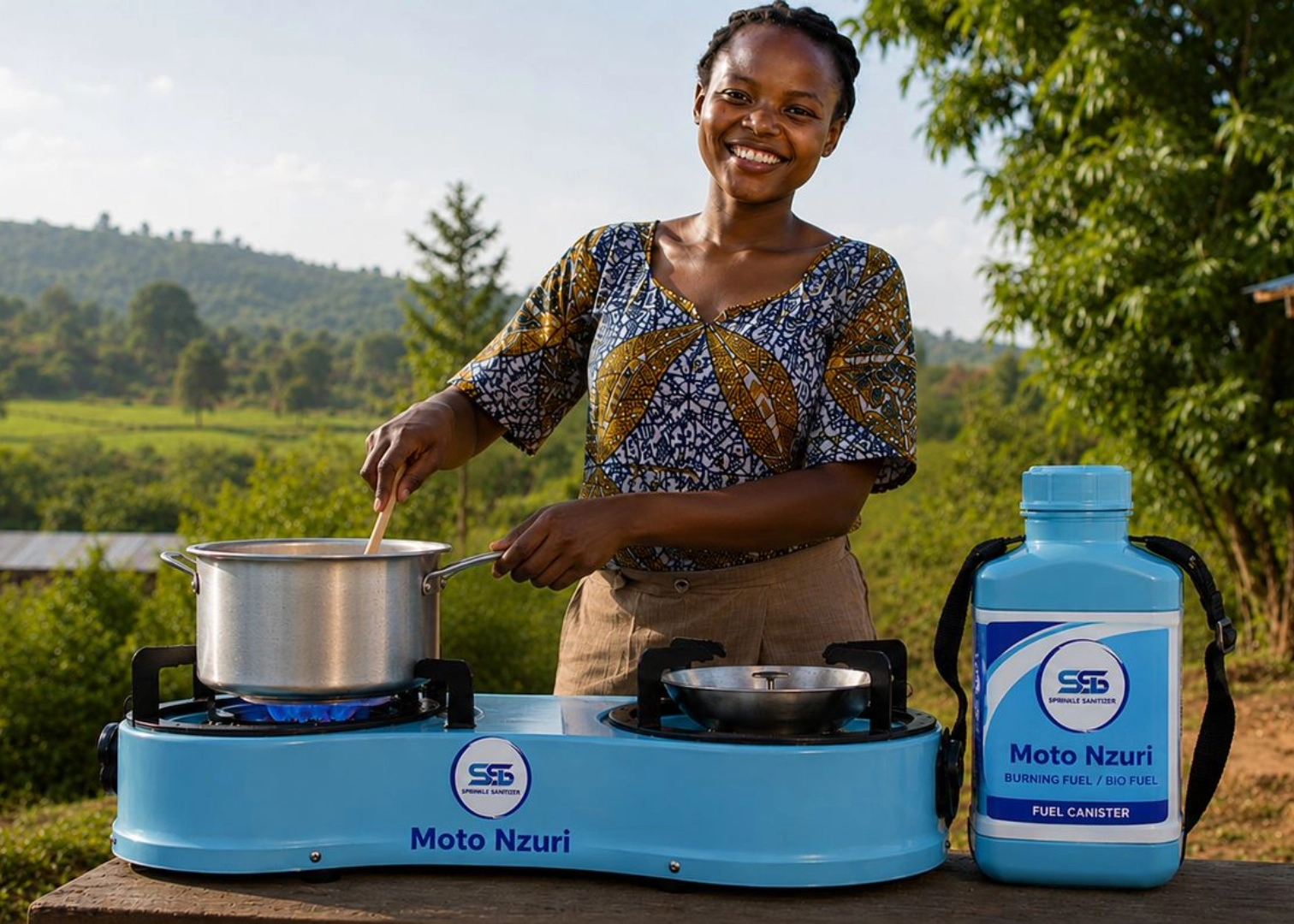
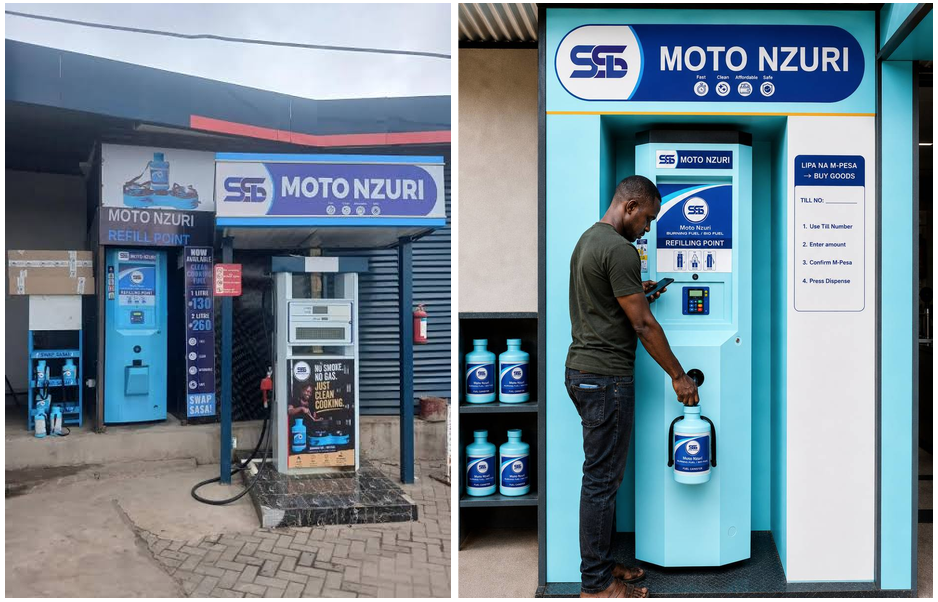
Into that quiet has stepped Moto Nzuri, a bioethanol refill ATM operating out of Ongata Rongai. It is a small operation with a specific pitch: clean, smokeless cooking fuel, dispensed like an automated (ATM) withdrawal, paid for on M-Pesa, available seven days a week.
Moto Nzuri is an early-stage, local entrant with an undisclosed ownership structure and carbon-finance model. Its resemblance to KOKO Networks is a business-model resemblance, not proof of corporate succession.
KOKO’s Functional Substitute
Moto Nzuri has entered the same consumer problem space KOKO left behind, offering a complete liquid-fuel cooking kit, a reusable branded canister, M-Pesa payment, automated dispensing, and a shop-hosted refill network.
That makes it a functional substitute for the household experience KOKO provided.
Customers walk up, pay through M-Pesa, and draw off however much fuel they need for that day’s cooking or longer.
KOKO did not exit the market because customers stopped needing clean cooking. It exited after a scaled, capital-intensive system lost access to the financing mechanism that held its end-user price down.
PwC’s official notice says the Kenyan government did not grant a license to trade KOKO’s carbon credits on the compliance market at premium prices. Without that income, the company could not continue operations.
“Even good doctors lose patients.” – David Ndii, presidential adviser on economic affairs, as quoted in AP.
Moto Nzuri’s entrance is almost the mirror image in surface form but not yet in demonstrated depth. It is adding a locally concentrated network, publicly posting a simple retail tariff and selling a kit priced at the point of entry.
The Pricing Model
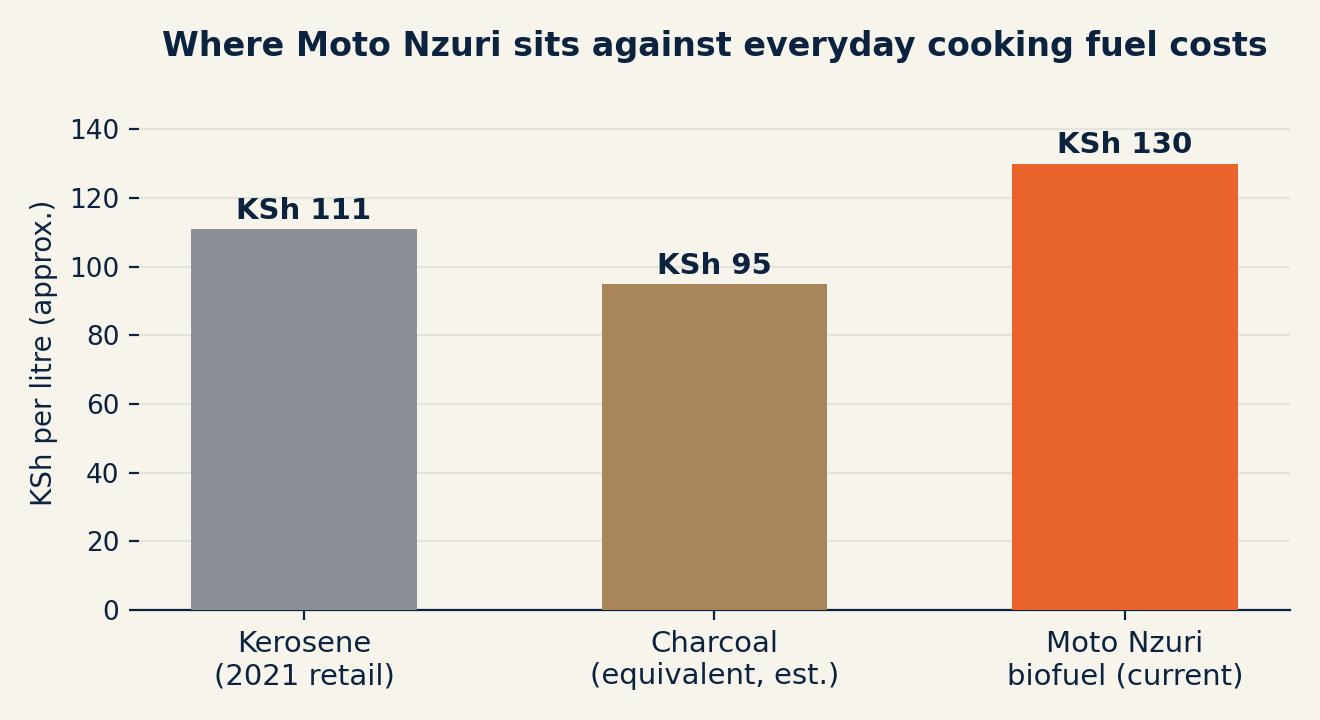
Pricing is where Moto Nzuri’s positioning becomes clearest. A liter is listed at KES 130, with a 2-liter refill at KES 260.
That sits below kerosene’s roughly KES 193 retail price as per current pricing and undercuts the rough cost of an equivalent amount of charcoal for daily cooking while landing above what many households were used to paying at a subsidized bioethanol ATM.
READ: KOKO Networks Puts Its Ethanol Empire Up For Sale
Before its closure, a full 2.3-liter canister at KOKO’s network cost approximately KES 175 to 200, and its smart ATMs allowed much smaller “kadogo” top-ups, as low as KES 35 to 50, built specifically for households topping up in small daily amounts.
Moto Nzuri has not yet published an equivalent micro-refill tier below its KES 130 minimum, which is worth watching as it courts the same kadogo-spending households.
Comparable, But Not Identical
Moto Nzuri is positioning its ATM as a neighborhood utility stop instead of a kiosk focused on just one product. Alongside biofuel, each location also sells hand sanitizer, detergent, Jik, surgical spirit, methylated spirit, fuel gel, and reusable sanitary pads.
The range feels more like a neighborhood household goods shop, with clean cooking fuel at the center, than a traditional fuel outlet.
| Category | What Moto Nzuri sells |
| Core fuel | Bioethanol refills via smart ATM (1L / 2L) |
| Cooking hardware | Cooker kits and refillable canisters |
| Home & hygiene | Hand sanitizer, detergent, Jik, surgical & methylated spirit |
| Adjacent products | Fuel gel; reusable sanitary pads |
| Payment | M-Pesa only, ATM-based dispensing |
Moto Nzuri currently operates from one flagship location, serving customers in Ongata Rongai, Kayole, Umoja, and Stimvak.
Instead of funding the rollout of new ATMs itself, the company plans to grow through a partner and franchise program. It also offers bulk deliveries and runs a “girl child support” initiative linked to its sanitary pad product line.
This is a very different growth model from the capital-intensive, company-owned network built by the sector’s former leader. It may be slower, but it does not rely on the kind of external financing that collapsed after a single policy decision cut off access to funding.
The Early Assessment So Far
Moto Nzuri fills a gap left by KOKO and is emerging as a local clean cooking provider worth watching.
Its pricing, cooking kit, branded gas canister, M-Pesa-powered ATM system, and community distributor network create a customer experience that feels familiar to former KOKO users.
However, the public record is not yet sufficient to call it KOKO’s replacement in a corporate, technical, or financial sense.
For now, the evidence suggests that Moto Nzuri could be a local alternative for a small number of households, but it has not yet proven it can replace KOKO’s nationwide, carbon-funded network.
Whether Moto Nzuri grows into a larger network or remains a well-run neighborhood service will depend on data the company has not shared yet.