






A new philanthropic fund launched in Nairobi last month wants to build factories and ship workers abroad, not fund another app.
The Africa Jobs Fund (AJF), fronted by Wasoko founder Daniel Yu and housed at Renaissance Philanthropy, is aiming to mobilize $100 million over five years.
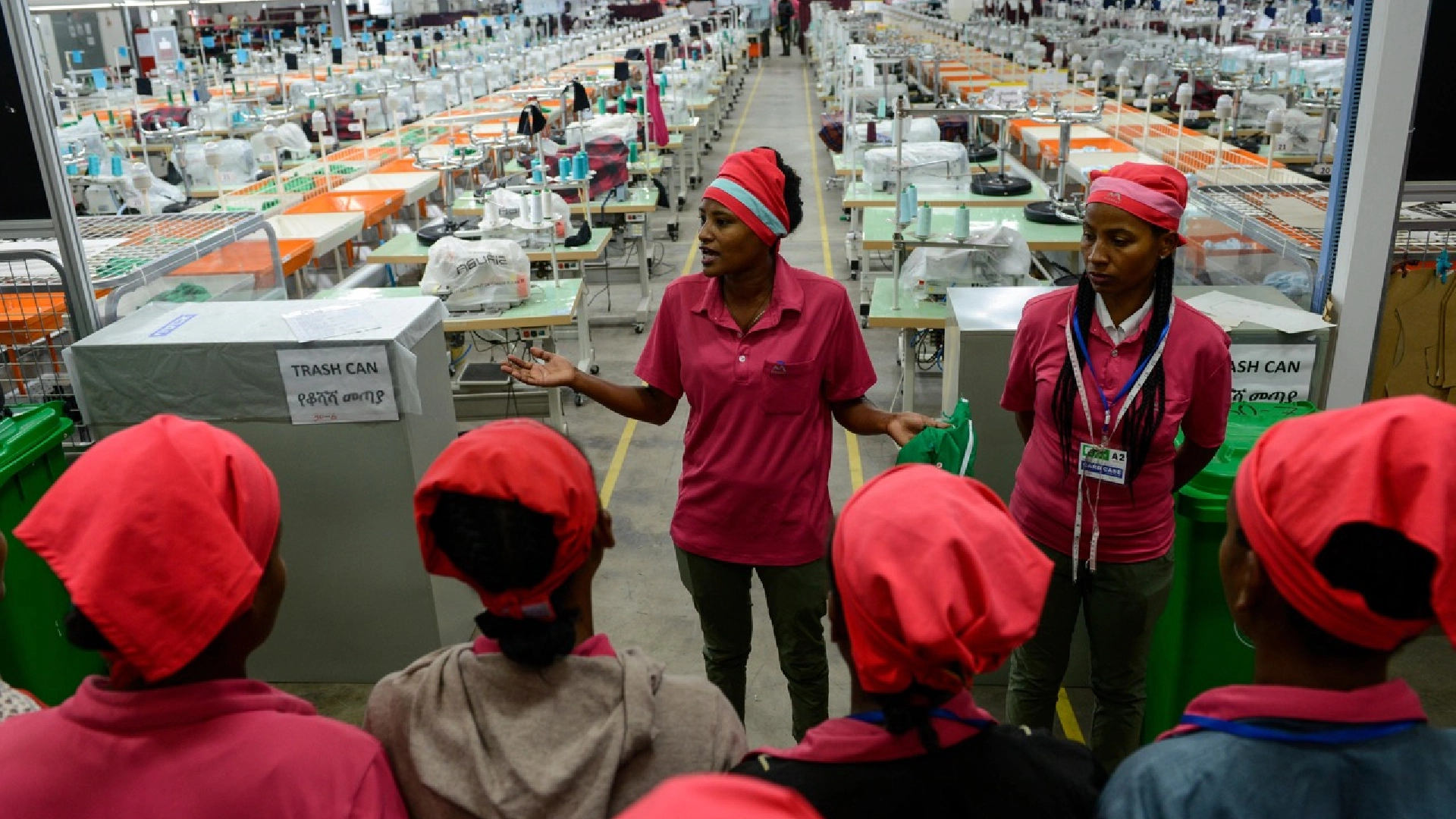
It will support companies in export manufacturing and international labor mobility, with the goal of helping at least 250,000 low-income Africans double their lifetime incomes.
The initiative also projects $50 billion in economic gains across the continent. Kenya, where Yu built his previous company, is one of the markets AJF says it understands “particularly well.”
Kenya already has a much larger labor export program. Cabinet Secretary Alfred Mutua’s Kazi Majuu initiative aims to send 1 million Kenyan workers abroad each year, with reports saying that 300 to 500 leave daily for Gulf countries and, more controversially, Russia.
The program has also faced well-documented concerns over fraud and worker safety.
AJF is taking a different approach. Instead of focusing on large numbers, it plans to offer fewer migration pathways through vetted operators.
Each placement will include a published cost-effectiveness model, with the focus on a smaller, more carefully managed program rather than sending as many workers abroad as possible.
Software has attracted most of Africa’s venture funding for years, but it has done little to solve the continent’s jobs crisis. Africa creates about 3 million formal jobs each year, while around 12 million young people join the workforce.
An ISS Africa report also estimates that by 2040, nearly 600 million of the world’s people living in extreme poverty will be in Africa. AJF aims to invest in sectors that banks consider too risky and venture capital firms often overlook.
Whether that bet pays off in Kenya is a different question. To find out, let’s take an in-depth look at the fund and speak with Daniel Yu.
A Model Built to Be Patient and Reinvest
What makes AJF different is how it funds businesses. Instead of handing out grants that run out once they’re spent, it offers low-cost, flexible loans that traditional banks are unlikely to approve.
Companies then repay a percentage of their revenue instead of making fixed payments on a set schedule.
Speaking to Techweez, Yu said the firm expects to recover between 80 and 90 cents for every dollar it invests. That money is then reinvested into the next group of companies.
The aim is to create impact at venture scale rather than maximize financial returns like a traditional venture capital fund. This puts AJF somewhere between philanthropy and venture capital.
Yu also admits that this approach comes with challenges. Grant makers are not used to seeing their money invested, while investors are not used to funding projects based on development outcomes. As a result, AJF sits between both worlds.
So far, it has raised $15 million toward its $100 million target, all from philanthropic sources. It has yet to attract the institutional investment that would help prove the model can work on a larger commercial scale.
The Manufacturing Pitch Meets Kenya’s Actual Track Record
AJF argues that export manufacturing can increase a worker’s productivity by up to five times compared to subsistence farming.
It points to Kenya’s competitive wages and preferential access to markets in the US, EU, and Gulf, saying the country could follow the same export-led path that helped China, Poland, and Mauritius reduce poverty.
Kenya’s experience with special economic zones (SEZ), however, presents a more complicated picture. The zones have been in place for years but have seen mixed success because of many of the same challenges AJF aims to address.
These include high setup costs, unreliable power, weak logistics, and the difficulty of attracting buyers without an established track record.
AJF believes philanthropic capital can cover those early losses until businesses become viable. That idea is plausible, but similar donor-backed industrial projects in Kenya have tried to do the same, often falling short of their original goals.
If AJF has an advantage, it is likely to come from how well it executes its strategy and selects founders rather than from a new idea.
Yu’s own track record reflects some of the same challenges. Wasoko, the company most often cited as evidence of his ability to build a large business in Africa, merged with Egypt’s MaxAB in 2023 and 2024. The integration was far from smooth.
More than 100 employees in Kenya and India lost their jobs. A court temporarily blocked the dismissal of 9 employees, while former staff claimed the company kept the merger plans from them for 6 months.
The court later lifted the order on a technicality, and Wasoko has maintained that it did nothing wrong.
Yu, however, describes the company’s story differently:
“Building Wasoko taught me how hard, and how valuable, it is to build a scalable commercial business in Africa, and that the binding constraint is almost always finding the right founders. It also showed me that in many ways the biggest impact I was having was through the thousands of people we employed and the monthly paycheck they took home from the business.”
That version of Wasoko’s story is much cleaner than what unfolded in a Nairobi courtroom. It is worth remembering when assessing how the same leadership approaches difficult decisions at AJF’s portfolio companies.
Labor Mobility Has Clear Economic Benefits, but Also Real Risks
The numbers supporting this pillar are strong. An informal worker earning about $2,000 a year in Kenya can earn $40,000 or more abroad.
Yu’s example of a Ugandan moving to Germany and increasing lifetime earnings from roughly $200,000 to $2 million is not unusual. Remittances to Kenya reached about $5 billion in 2024, equal to around 4.2% of GDP, and have grown steadily for decades.
Where AJF’s argument deserves closer examination is Kenya’s experience with migration to the Gulf, which receives little attention in its presentation.
Kenya has already sent more than 300,000 workers to Saudi Arabia, Qatar, and the UAE, most of them women working as domestic workers.
Researchers and labor unions have documented years of forced labor, passport confiscation, unpaid wages, and abuse under the kafala sponsorship system. Rights groups have also recorded at least 274 deaths of Kenyan domestic workers in Saudi Arabia over the past five years.
Instead of strengthening worker protections, the government reduced mandatory pre-departure training in late 2024. A bill intended to regulate recruitment agencies has remained stalled since that same year, while rights groups are now suing the government over its failure to protect workers using these migration channels.
On the issue of brain drain, Yu argues that countries with a surplus of workers often experience a net benefit from migration. He points to the Philippines, where nurse migration led to about 9 new trainees entering the profession for every nurse who left. That is a credible example.
AJF’s commitment to support only rights-respecting operators in countries with surplus labor is a sensible approach. However, Kenya’s migration challenges have rarely been caused by a lack of willing workers.
The bigger issues have been weak oversight of recruitment agencies and inconsistent government enforcement, which has arguably become weaker in recent years.
AJF will have to operate within that same system. Saying it will only support responsible operators depends on thorough due diligence in a market where reliable and unreliable agencies can appear almost identical on paper.
The Honest Scorecard
Describing $100 million as catalytic rather than comprehensive is a fair assessment. Compared with the needs of more than 600 million people and a jobs gap that has built up over decades, it is a relatively small amount. Yu does not exaggerate its potential impact.
The bigger concern is presenting manufacturing and labor mobility as well-established solutions when Kenya’s recent experience has been more complicated than the launch materials suggest.
READ: Kenya Declares Olkaria a Special Economic Zone to Drive Industrial Growth
Industrial zones have often struggled to attract businesses, while migration routes continue to expose workers to significant risks.
None of this means AJF’s overall thesis is flawed. Manufacturing and labor mobility are likely underfunded relative to their potential, and a fund willing to take early risks that banks and venture capital firms avoid could fill an important gap.
The real test for AJF in Kenya will not be whether its investment thesis is correct. It will be whether the fund can identify capable operators and work with government partners that are reliable enough to make industrial zones thrive and migration routes safer.
Those are challenges that have persisted despite better-funded efforts in the past.