




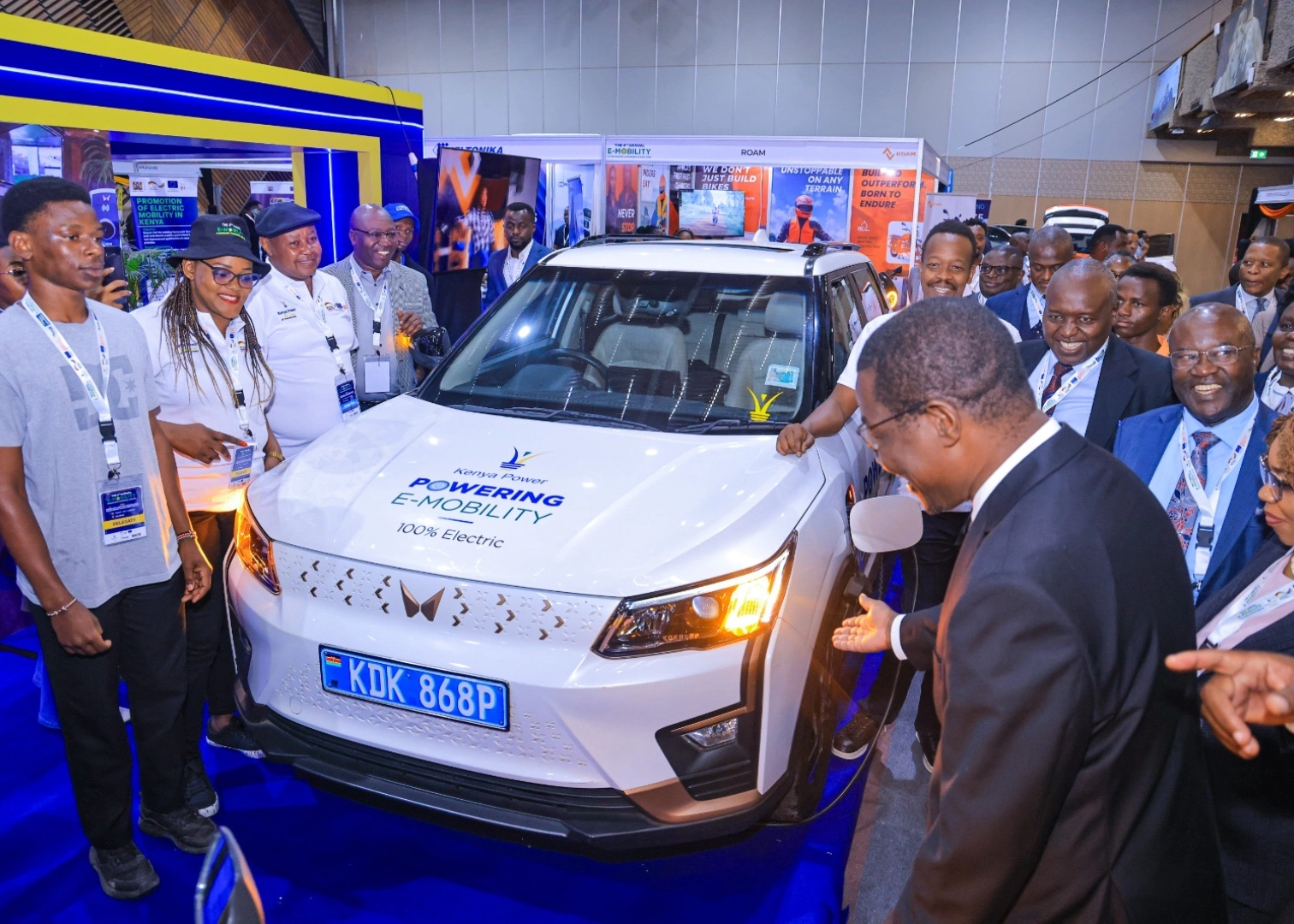
Kenya Power has launched a mop-up exercise to migrate all electric vehicle (EV) charging customers onto its dedicated E-mobility tariff. This move is a structural reset for how the country tracks, prices, and plans for a transport sector moving faster than most expected.
Monthly revenues from EV charging have grown from KES 873,907 in July 2023 to KES 35.25 million in February 2026. Cumulative revenues over that period also hit KES 382 million.
READ: Ruto Waives Import Duty on First 100,000 EVs as Kenya’s Fuel Crisis Deepens
In November 2025, the sector crossed 1 million units of electricity sold in a single month for the first time and has stayed above that level since. Kenya Power now projects annual EV charging revenues reaching KES 5.9 billion by 2030.
The E-mobility tariff, approved by EPRA in 2023, offers KES 16 per unit during peak hours and KES 8 per unit off-peak. The off-peak rate is the key incentive, pushing charging to overnight windows when grid demand is softer.
The problem is that a large share of customers currently charging vehicles have never been formally migrated onto this tariff, sitting on standard meter configurations and paying standard rates.
Their consumption is not tracked as EV-specific demand, meaning Kenya Power has incomplete visibility into how much electricity the sector is actually drawing and how that demand will grow.
READ: Kenya Power Earns KES 191 Million From EV Charging as Demand Jumps 188%
The timing of this move tracks directly with the National Electric Mobility Policy, launched in February 2026. The policy moved Kenya’s EV sector from fragmented pilots into a structured national economic strategy, covering local manufacturing, charging infrastructure, grid readiness, and fiscal incentives.
Kenya Power’s tariff migration is the utility’s contribution to that architecture. The National EV Policy can set targets, but those targets need an energy infrastructure layer behind them.
Accurate metering is the foundation for planning grid upgrades, building out public charging, and pricing electricity correctly for a growing sector.
Three benefits stand out. First is price certainty for commercial operators and fleet logistics businesses, who need stable input costs not tied to rate adjustments designed for other sectors.
READ: Finance Bill 2026 Could Raise EV and Solar Battery Prices Across Kenya
Second, usable data. Investors, fleet financiers, and county governments planning transport electrification all need consumption data to make decisions. Kenya Power’s migration exercise is what builds that dataset.
Third, grid alignment. With roughly 90% of Kenya’s energy already renewable, time-of-use pricing is the mechanism that shifts charging load to when supply is cleanest and demand is lowest.
Kenya had 796 registered EVs three years ago. It now has over 35,000, almost entirely two-wheelers. Only 331 customers are currently metered under the E-mobility tariff.
That mismatch shows how informal and unstructured much of the charging ecosystem remains and how much work the migration exercise has ahead of it.
The foundation is being built. The infrastructure behind Kenya’s EV ambitions, however, is still catching up to the vehicles already on the road.