




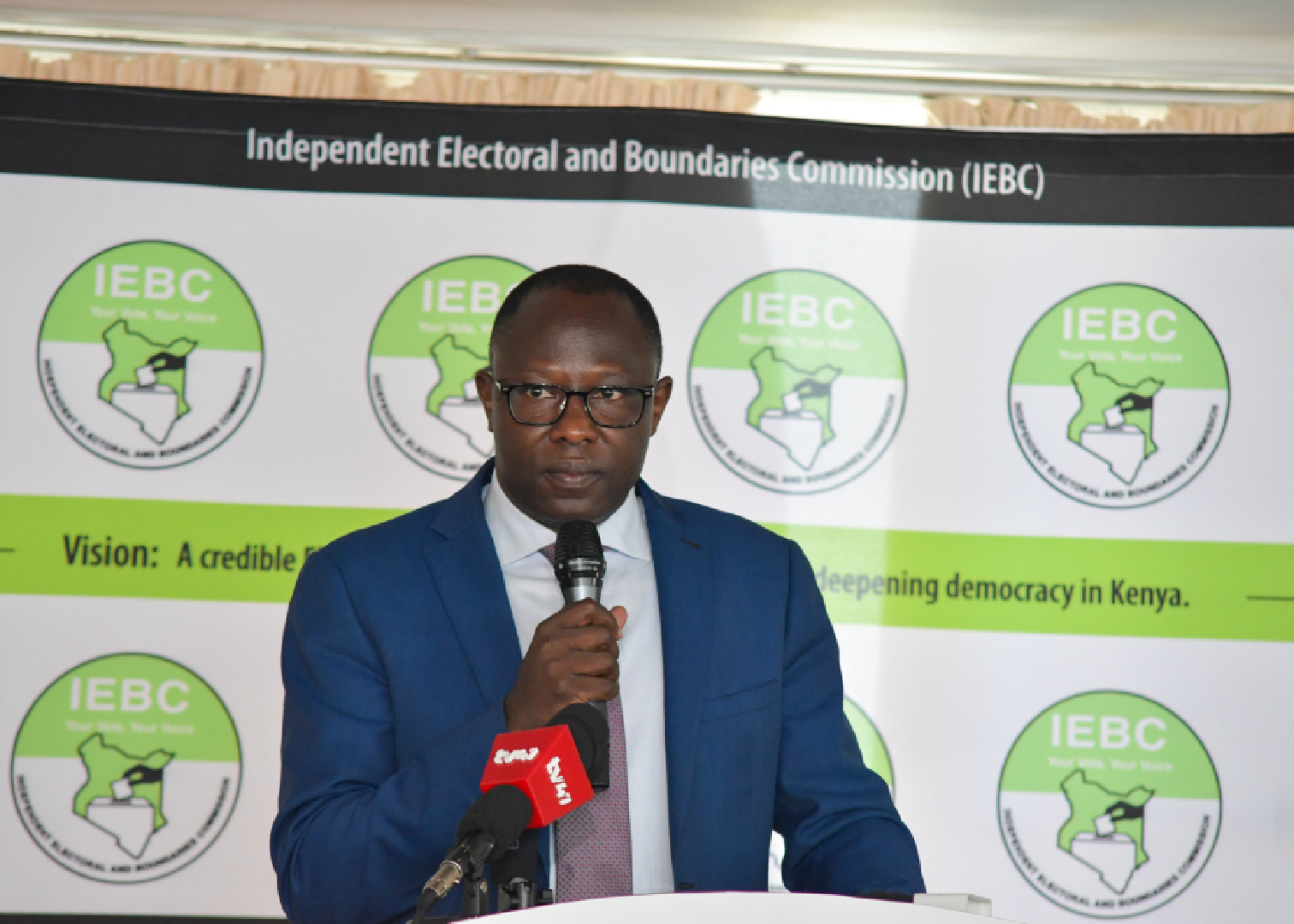
The IEBC has released a statement critiquing media coverage of the Election Laws (Amendment) Bill, 2026, calling it a misrepresentation of what the Bill actually does.
Compared with the reporting, the Commission’s response clearly addresses some claims but leaves others unanswered. The strongest part of IEBC’s response is its clarification on manual voter identification.
It states clearly that Section 44 and the Integrated Elections Management System remain unchanged, and that the proposed amendment only applies to polling stations where there is no 3G network for transmitting results.
This is a specific claim that can be verified, and it is accurate. The Bill does not bring back manual voter identification.
Its second key point is about verification. IEBC says the Bill requires the Commission to compare the original physical Form 34A with the electronically transmitted image before declaring results.
It argues that this aligns the law with the Supreme Court‘s 2017 ruling that Form 34A is the primary and final record. This does strengthen the verification process, and the statement explains that clearly.
Where the statement falls short is in what it leaves out rather than what it includes. It says nothing about the live public results feed, which allows Kenyans, election agents, and journalists to follow results from polling stations in real time.
The statement contains 9 points covering voter identification, result transmission, Form 34A verification, and the constitutional history of Section 39. Yet none of them answers the main public concern.
READ: IEBC Owns Up to Cracks in 2022’s Dispute Resolution Process, Eyes Fixes Before 2027
It does not explain whether people will still be able to follow results live in the 2027 election as they did in 2013, 2017, and 2022, or whether they will only be able to access results after they have already been uploaded.
That omission stands out because it avoids the question many people are asking.
The technical details IEBC does provide make that gap even more noticeable. It says the Bill removes Sections 39(1C)(a), 39(1D), 39(1E), 39(1F), and 39(1G) because the High Court declared them unconstitutional in 2018 in Katiba Institute & 3 others v. Attorney General.
At the same time, it says Section 39(1C)(c), which deals with access to the results portal, remains in place.
If the legal requirement for the live results feed was contained in the deleted sections, then IEBC’s statement suggests that the legal basis for the livestream has not existed since 2018, long before this Bill was introduced.
That would be a significant point because it would mean the live feed used in later elections continued without clear statutory backing. However, the statement never says this directly.
It does not identify which specific subsection created the livestream requirement, nor does it explain how the feed remained in use during the 2022 general election if its legal basis had already been removed. Instead, it presents the facts without addressing their implications.
That unanswered question matters more than the issues IEBC directly disputes because it raises doubts about the future of the live results feed, regardless of whether this Bill passes.
If the Commission wants to address public concerns, it needs to answer two questions it left untouched. Will the live results feed continue after the Bill becomes law? And if not, what will replace the real-time public scrutiny it currently provides?
Until those questions are answered, the statement has corrected a claim that was not at the center of the debate while leaving the main concern unresolved.