






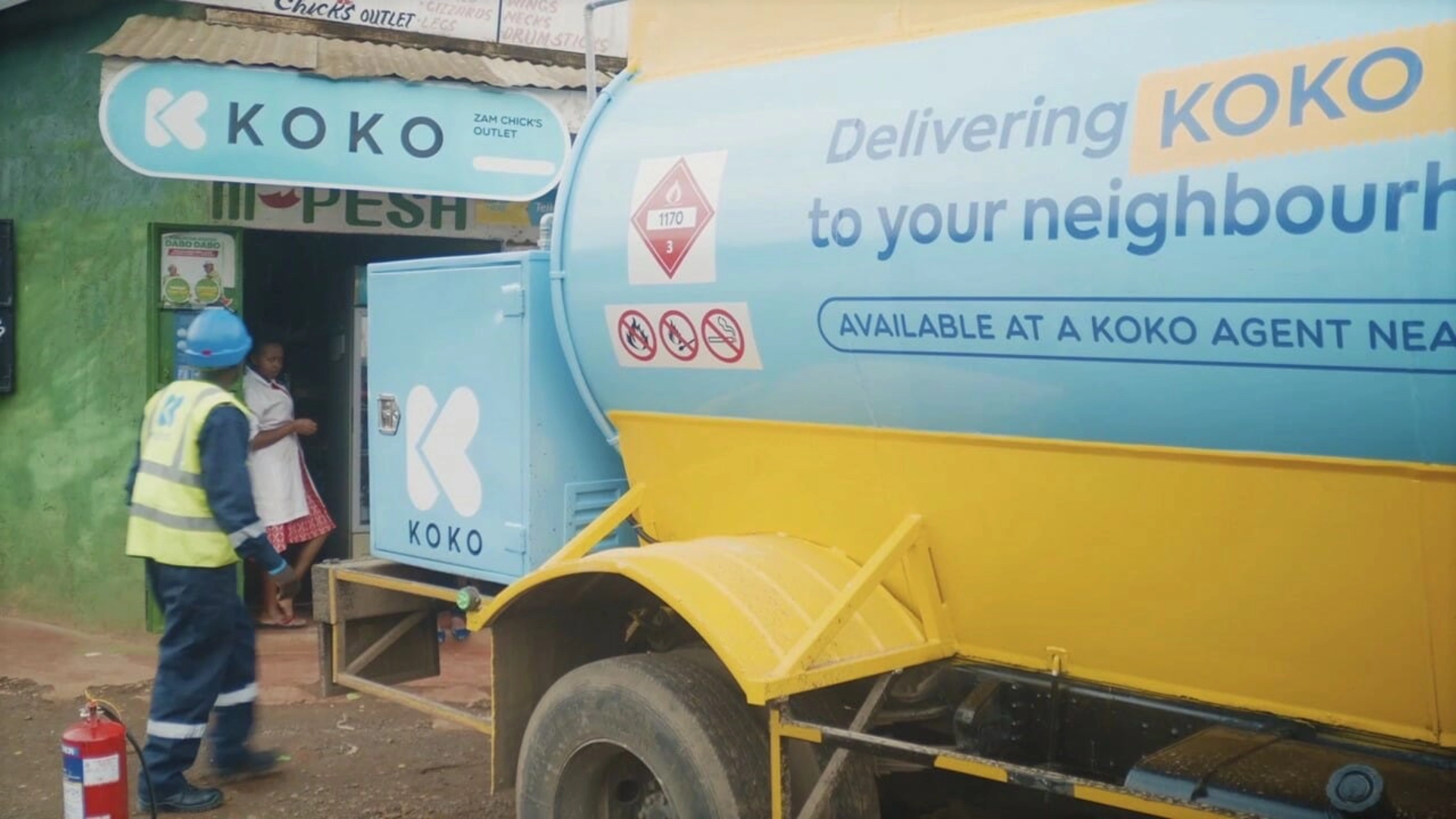
Koko Networks, a startup that helped 1.5 million Kenyan households switch from charcoal to cleaner bioethanol fuel, filed for administration today. The shutdown happened suddenly, as employees got positive updates one week, then emails telling them not to come to work the next.
The company wasn’t failing. It had over 3,000 fuel ATMs across Kenya and was operationally profitable. But it couldn’t sell its carbon credits internationally, and that killed the business.
The Business Model That Worked
Koko sold bioethanol cooking fuel and specialized twin-hob stoves to low-income urban families. The fuel came from sugarcane grown in East Africa, dispensed through vending machines at corner stores where customers filled reusable bottles.
The pricing made this possible since a liter of fuel cost customers KES 100 instead of the market price of KES 200. Stoves cost KES 1,500 instead of KES 15,000. And no, these were not promotional prices; they were the permanent rates.
Koko covered the difference through carbon credit sales. When households switched from charcoal to bioethanol, they stopped contributing to deforestation.
The company calculated the resulting emission reductions, measuring avoided carbon from reduced fuel use and lower methane and black carbon output.
Each credit represented roughly one ton of CO₂ equivalent avoided. These credits were certified by Gold Standard, a verification organization.
The company invested $300 million (~ KES 38.3 billion) total, with half going directly to consumer subsidies. Over four years, it deployed more than $100 million in carbon finance this way.
Why Carbon Credits Were Worth So Much
Koko wasn’t selling to the voluntary carbon market, where credits often fetch $2 or less and have a reputation problem. It was selling to compliance markets, which are government-backed schemes that require companies to offset their emissions.
The airline industry specifically wanted these credits under a program run by the International Civil Aviation Organization. Those credits sold for about $20 each, roughly ten times what voluntary market credits brought in.
But accessing compliance markets required something specific: a Letter of Authorization from the Kenyan government.
Article 6 of the Paris Agreement allows countries to cooperate on emissions reductions through international carbon markets. When a company generates emission reductions in one country, those reductions can help another country meet its climate targets.
However, this requires the host government to authorize the transfer and apply a “corresponding adjustment,” meaning the government agrees not to count those same reductions toward its own national climate goals.
The Letter of Authorization makes this official. Without it, credits can’t be sold as Article 6-compliant international transfers.
In June 2024, Kenya’s government signed an investment framework agreement with Koko that should have enabled these sales. The company applied for the necessary authorization letters. The government denied them.
According to a source familiar with Koko’s internal discussions, the denial wasn’t about the business model or financial performance.
“The business was operational and profitable, with more than 1.5 million customers and over 3,000 fuel dispensing points across Kenya,” the source told Techweez.
Instead, they believe the impasse arose from disagreements over who should benefit from carbon credit revenues, with the government reluctant to grant Koko direct access to those markets without retaining a stake or control.
READ: Kenya’s Solar Industry Warns of Mass Job Losses Over 16% VAT Proposal
The authorization was extremely important because, according to the source, “Koko would have been among the first companies in Kenya to receive such authorization, effectively setting a precedent for the carbon credit market.”
The source further told us that comparable approvals had been granted in neighboring countries like Tanzania, “proving that the challenge was jurisdiction-specific rather than structural to the business itself.”
This wasn’t a problem with how carbon credits work or whether the model could succeed elsewhere. It was about Kenya’s government deciding how it wanted to control access to this emerging market.
READ: Koko Networks Eyes Entry into Telco Industry
How Koko Was Forced to Shut Down Operations
The source described how the shutdown unfolded internally, saying, “Everyone was receiving positive signals about the company’s outlook just days before an email instructed employees not to report to work.”
Management tried to explain the situation through meetings, but the source said frustration with prolonged government negotiations ultimately left the company with no viable path forward.
The company held emergency board meetings on Thursday and Friday to discuss options. By Saturday, it filed for administration.
Around 700 employees across Kenya, Rwanda, India, the United Kingdom, and Mauritius will lose their jobs. Although the regulatory issue centered on Kenya, Koko opted to shut down entirely.
Last March, the World Bank’s Multilateral Investment Guarantee Agency insured Koko’s investment for $179.6 million (~ KES 23 billion), the world’s first carbon-linked political insurance coverage.
The policy explicitly covered government breach of contract. This means that Koko can file a claim under the breach-of-contract coverage.
Unfortunately, the 1.5 million customers who had switched to cleaner fuel will likely return to charcoal or kerosene. Liquefied petroleum gas currently costs about KES 1,200 – KES 1,400 to refill the 6kg tank, which is unaffordable for the households Koko served.
Koko’s story shows just how difficult it is to operate innovative climate-focused businesses in environments where governance, policy clarity, and commercial interests collide.
The model itself worked. It could work in any of the 60 tropical forest nations where populations rely on charcoal for cooking. But operating in environments where the government can simply refuse to authorize a business model it previously signed an agreement to support proved fatal, even for a profitable company with World Bank insurance and institutional backing.
While the source suggested the company may seek opportunities in more permissive countries in the future, Koko’s exit from Kenya has just turned into a case study of what happens when innovation runs into state control.