





It’s no secret that the AI industry has been booming and ever faster since the launch of ChatGPT. We have seen a meteoric rise in AI-related stocks and companies.
Organizations like Google, Microsoft, ByteDance (the company that owns TikTok), NVIDIA, etc. have all pumped major investments into the industry to the tune of billions.
Shortly after getting back into office, Trump announced the project “Stargate.” OpenAI officially described it as “a new company that intends to invest $500 billion over the next four years building new AI infrastructure for OpenAI in the United States.”
Key members of the partnership are Larry Ellison of Oracle and SoftBank CEO Masayoshi Son. Masayoshi went further, pledging an investment of $100 billion into the project.
The project directs a huge chunk of the funds towards building new data centers and acquiring more GPUs, a key ingredient in the AI pipeline.
On the back of the AI boom, NVIDIA has risen to become the world’s richest company. It was also the first company to reach the $5 trillion mark in market capitalization. NVIDIA’s rise saw it overtake the likes of Saudi Aramco and Microsoft.
Data centers, which are integral to the AI race, use so much energy to power everything from your YouTube algorithm and Instagram feeds to e-commerce chatbots and autonomous vehicles.
The huge demand forces data centers to use enormous amounts of water for cooling. The Consumer Price Index report placed American energy costs in some regions 20-30% higher than they were in 2021. Much of the increase is attributed to the ferocious appetite of data centers.
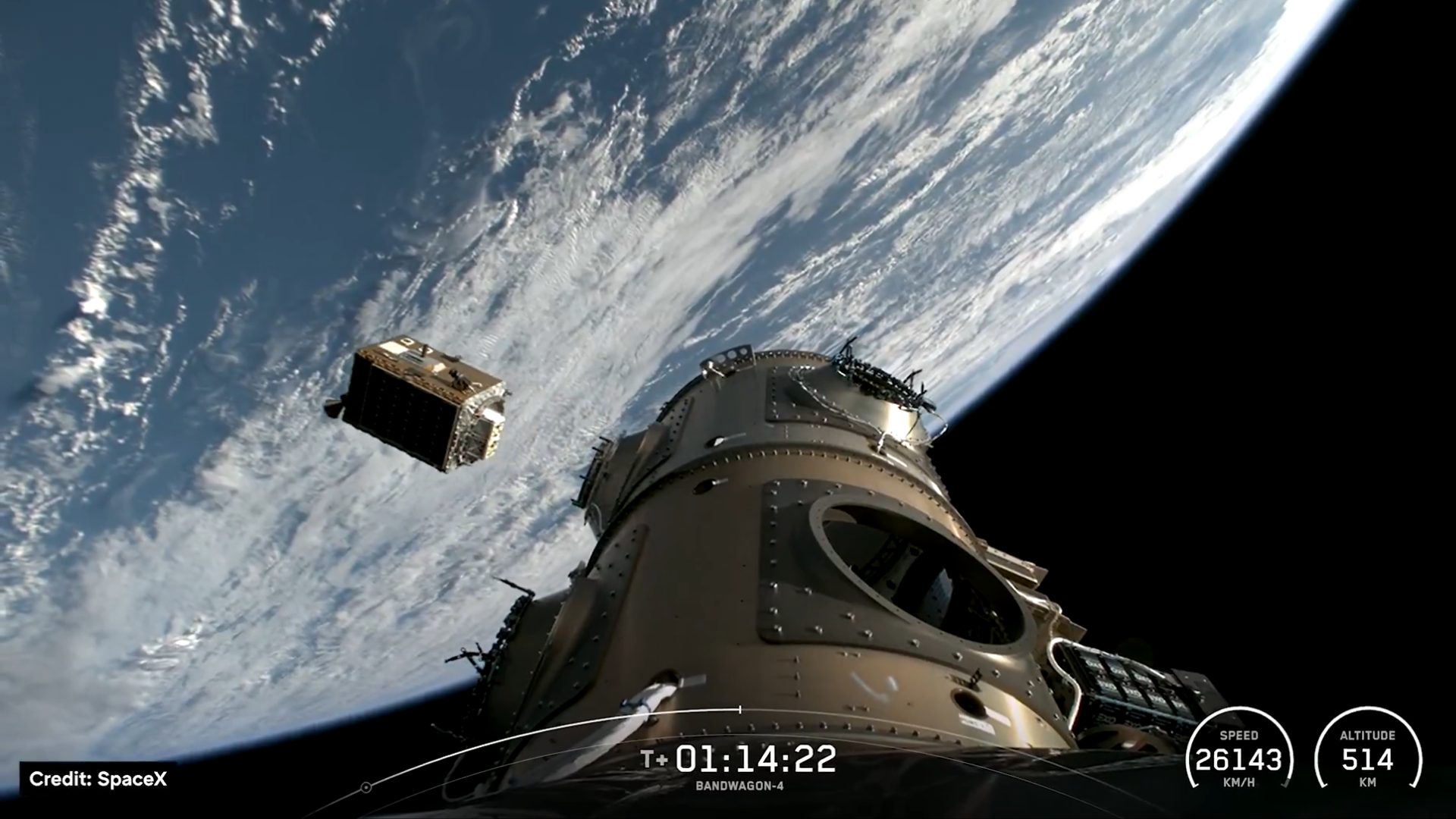
In the past couple of months, a new paradigm has emerged in the market: placing data centers in space and not on Earth. The low-Earth-orbit economy has been rising over the past decade.
The major leader in space is Elon Musk, who launched Starlink, which provides internet access spread through satellites orbiting the earth and not fiber optics. His company, SpaceX, launched a Tesla Roadster into space aboard SpaceX’s Falcon Heavy rocket on February 2018.
This became the first production car to enter orbit. And finally, his company, SpaceX, has been a major leader in the space economy, including bringing back two stranded astronauts aboard the Crew Dragon capsule. Technical mishaps with the capsule extended the astronauts’ intended 8-day stay to 9 months.
Data centers in space could bypass the need for extensive water-based cooling systems because the vacuum of space simplifies heat dissipation. In addition, space offers access to 24 hours a day of direct solar power/sunlight, which has not been reflected or filtered by the Earth’s atmosphere.
Space-based data centers also offer unparalleled physical security against Earth’s natural disasters such as earthquakes, tsunamis, wildfires, large-scale power grid failures, and human-caused disasters like vandalism.
Last month, Starcloud, a Y Combinator and NVIDIA-backed company, launched NVIDIA’s H100s into space. The company’s founder, Phillip Johnson, said one of the advantages of putting data centers in space is that they can avoid the long and tedious process of acquiring permits on Earth.
He also added that their service, Star Cloud, first task is processing orbit imagery captured by satellites, which will allow real-time processing of the massive amounts of data generated by Earth observation satellites and sensors.
In early November, Google announced Project Suncatcher, which seeks to place its TPUs (Tensor Processing Units) at a 650-kilometer altitude.
In the first phases, their TPUs were tested under radiation and performed quite well. Google CEO Sundar Pichai announced that in early 2027, Google will launch two prototype satellites into space.
In addition, Jeff Bezos, founder of Amazon, also predicts that in 20 years, we will have giant gigawatt data centers in space, with his company Blue Origin already working on it.