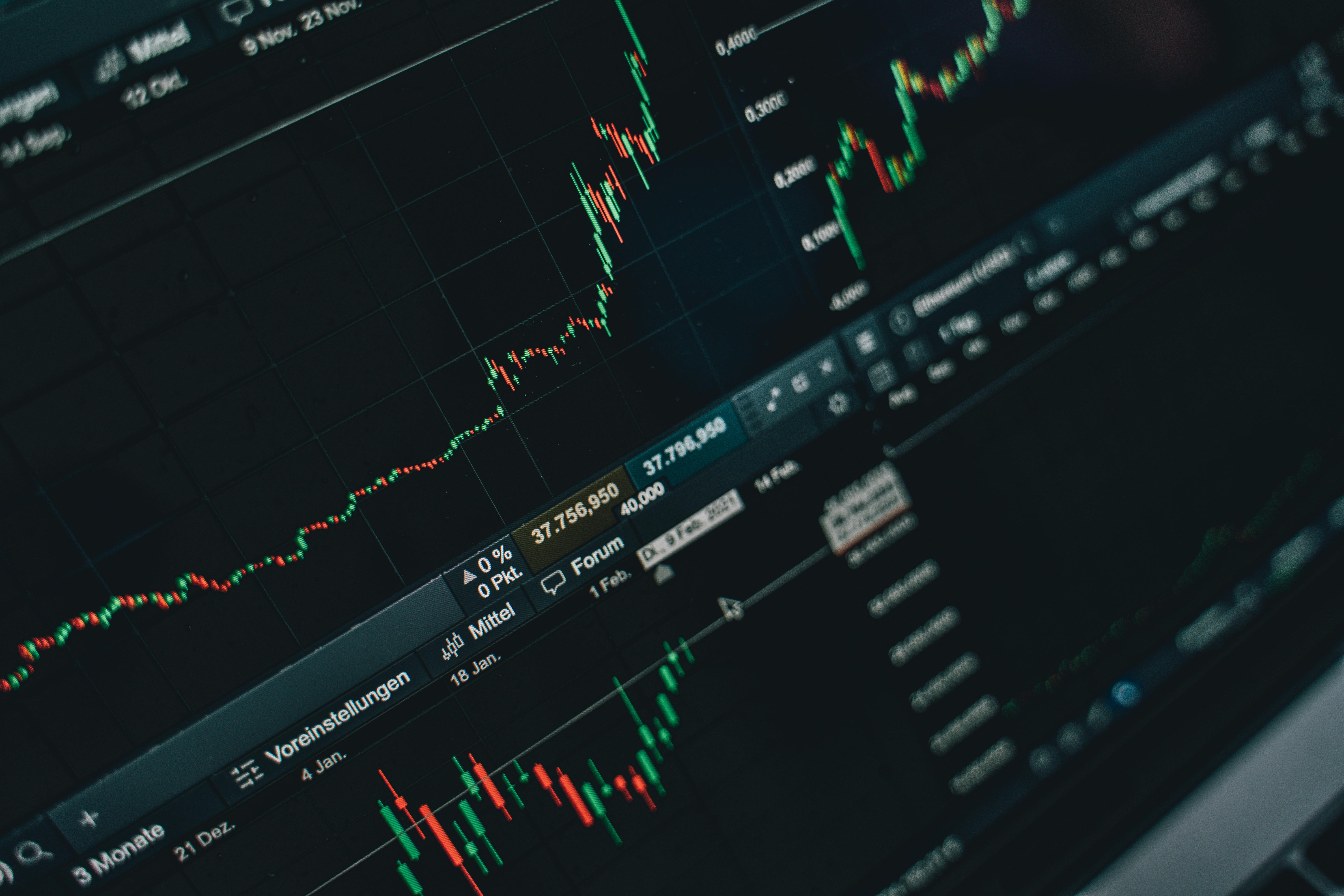
More than half of Kenyans now use mobile money every day: 52.6% in 2024, up from 23.6% in 2021. So sending, receiving, and storing money on your phone becomes routine, the next step, putting money to work through trading websites, starts to feel less like a leap and more like a learnable habit.
In this article, we’ll look at the rails Kenyans already trust, the quick checks that make online investing safer, and the small design choices that are helping more people participate in markets with confidence.
Your Phone Already Trained You
Here’s the underrated truth about access: it’s rarely about interest first; it’s more about friction. When money moves smoothly, people try new things with it.
Kenya’s payment system has spent years removing that friction, and the Central Bank of Kenya’s National Payments System reporting shows just how mainstream mobile money is. In December 2025, CBK recorded 89.46 million registered mobile money accounts, alongside 473,536 active mobile money agents. That combination matters because it joins digital convenience with real-world reach; if you can cash in or cash out near home or work, the phone stops feeling like a fragile finance tool and starts feeling dependable.
Now look at behaviour, not just infrastructure. In the same December 2025 CBK data, total agent cash-in and cash-out activity reached 217.58 million transactions worth KSh 722.53 billion. For an everyday reader, the point isn’t the size of the number. It’s what the number represents: a repeated, familiar action that Kenyans have already learned to do safely and quickly.
This is where trading websites quietly earn their chance. If a platform makes account setup clear, funding straightforward, and withdrawals predictable, it’s tapping into an existing Kenyan skill: managing money on a phone without it feeling like a special event. And when investing starts to feel like a normal digital task, more people are willing to begin small, learn gradually, and build comfort over time.
That said, easy movement of money should lead us to one sensible next question: where exactly is that money going?
The Checklist You Deserve
If trading is becoming more accessible, trust has to keep pace. The good news is you don’t need a finance degree to make smart checks; you just need to know what to look for and where to confirm it.
Start with the simplest anchor: Kenya’s Capital Markets Authority maintains a public list of licensees, including firms licensed as non-dealing online foreign exchange brokers. On that CMA list you’ll find names and license numbers such as EGM Securities Limited (FXPesa, licence 107) and SCFM Limited (Scope Markets, licence 123), plus others like Pepperstone Markets Kenya Limited (licence 128), Exness KE Limited (licence 162), and FP Markets Limited (licence 193).
Why bring regulation into a conversation about normalising investing? Because normal is easier to embrace when you can verify the basics fast, especially before you deposit.
FinAccess 2024, a nationally representative household survey led by CBK and KNBS with FSD Kenya, makes the consumer-protection angle hard to ignore. It reports that 9.8% of mobile money users experienced losing money in 2024. That statistic doesn’t mean mobile money is unsafe; it means that even familiar tools benefit from good habits, and trading websites should be approached with the same calm, practical mindset.
Here’s a quick, beginner-friendly verification routine you can keep on your phone notes:
- Check the CMA licensee registry for the firm’s exact name and licence number; confirm the website link if it’s provided there.
- Read the platform’s fees before funding, and don’t proceed if charges are vague or only appear at the last step.
- Look for clear risk explanations in plain language, not just flashy performance claims.
- Use strong account security options, and treat verification steps as protection, not inconvenience.
- Start small while you learn the interface; your goal early on is competence, not adrenaline.
A small afterthought that’s worth saying out loud: doing checks like these doesn’t make you suspicious, it makes you prepared. With trust covered, we can talk about the most interesting part of this story: what happens when investing stops feeling like it’s reserved for insiders.
When Investing Stops Feeling Like a Club
Normalising investing isn’t about making everyone trade every day. It’s about making participation possible for people who were previously locked out by paperwork, distance, jargon, or sheer intimidation.
FinAccess 2024 puts a firm marker down: it notes that use of securities has increased with the introduction of apps. That’s an access story in one line, and it matches what many people feel: if learning happens inside a device you already use daily, you’re more likely to take the first step.
But true access also means meeting people where they are, not where a platform wishes they were. FinAccess reports that 9.9% of adults are still financially excluded, and within that excluded group, rural youth account for 45.5%. It also identifies practical barriers, including lack of a mobile phone (64.1%) and lack of ID (51.5%).
This is where trading websites can do something genuinely helpful, without grand promises. They can design lighter, more secure experiences that work on budget phones, make customer support easy to reach, explain KYC requirements clearly, and avoid language that assumes every user already speaks ‘markets’. That kind of design is not cosmetic; it’s what turns access into real participation.
There’s another layer too: knowledge and wellbeing. FinAccess reports 42.1% of people have high financial literacy (based on three core questions), and it also reports that 18.3% are financially healthy. Those numbers tell a hopeful story with unfinished work. If trading websites pair easy deposits with clear education, they help investing feel normal in a way that supports people’s lives, not just their curiosity.
If investing is becoming as easy as tapping send, are trading websites doing enough to make risk just as easy to understand?
Normal Can Be Smart
Kenya already has the rails for mass participation in digital finance, and the CBK data shows just how embedded mobile money has become in daily life. FinAccess 2024 adds another side: everyday use is rising, securities are being adopted through apps, and consumer protection needs to stay front and centre as more people explore online platforms. CMA’s licensee registry gives Kenyans a practical tool to verify who’s regulated, which is a big step toward making online investing feel ordinary for the right reasons.
Your best takeaway is simple: treat investing as a skill you build. Verify the platform, understand the costs, respect the risks, and give yourself time to learn the basics properly.