





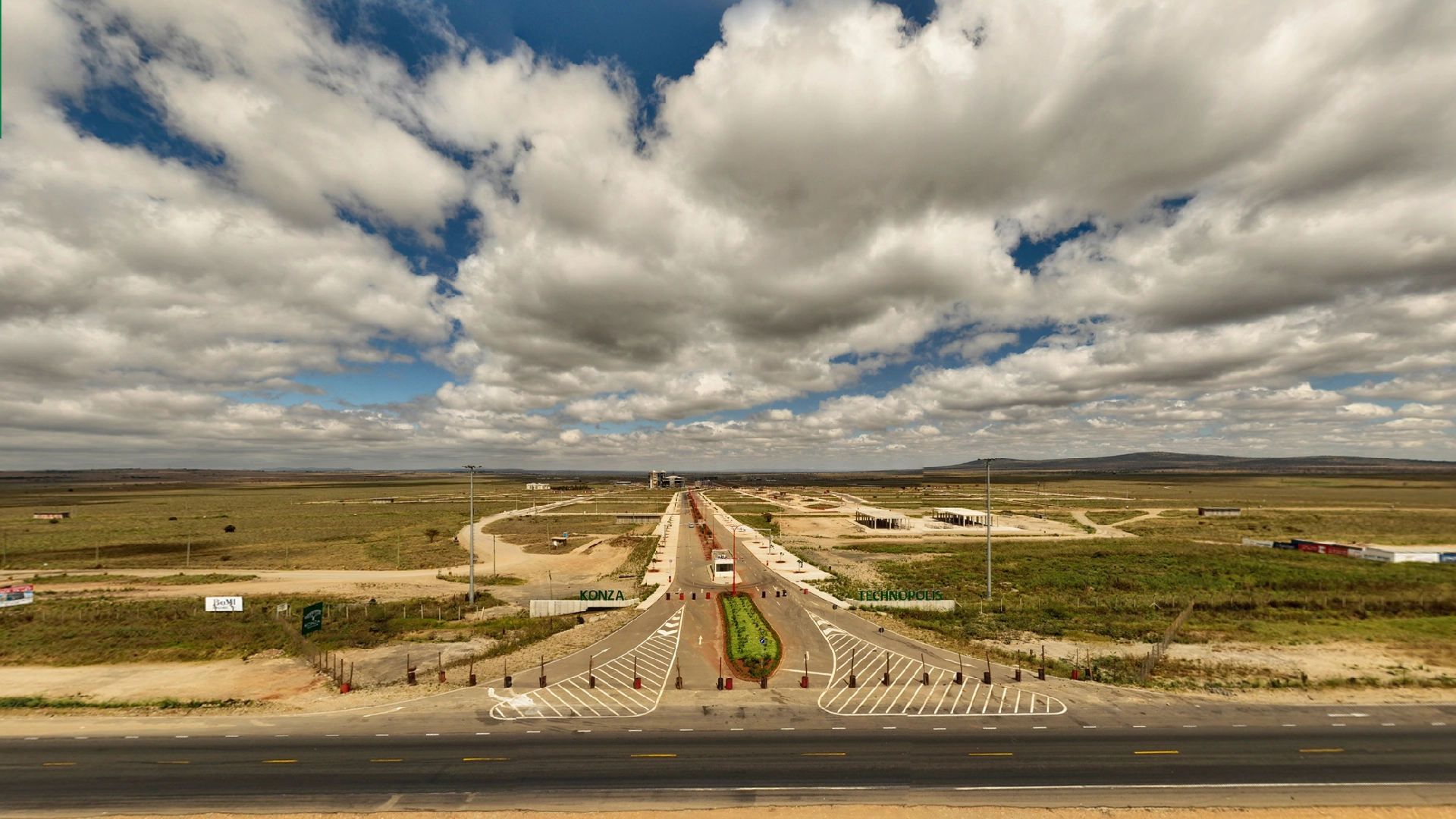
For over a decade, the vision of Konza Technopolis, Kenya’s ambitious “Silicon Savannah,” has captured the imagination of East Africa. Conceived as a $14.5 billion smart city in 2009, its centerpiece, the Konza Data Centre, was meant to be the digital heart of the region.
Even as the Kenyan government rolls out a new Public-Private Partnership (PPP) plan to expand the facility, the real question is not about the technical specifications of the expansion, but why this flagship project has struggled to attract the global investment it was designed for.
While there’s no single answer, its story is shaped by a convergence of location obstacles, regulatory grey areas, and the rise of a formidable new contender powered by a green energy advantage.
The Appeal
The government is actively seeking investors through a PPP to expand the Konza Data Centre in an expansion aimed at significantly increasing the nation’s data storage and processing capacity to meet the rapidly growing demand for cloud computing services across East Africa.
On paper, Kenya presents an irresistible proposition for global data center operators. It is objectively the undisputed digital gateway to East Africa, anchored by a robust fiber-optic infrastructure.
Being a major landing point for multiple subsea cables, Kenya offers the low latency and high bandwidth essential for modern cloud services. Furthermore, Kenya’s power profile is a significant environmental selling point.
It also translates well to scalability. With a grid heavily reliant on renewable sources, particularly geothermal and wind, it offers a pathway for hyperscalers to meet their stringent global Environmental, Social, and Governance (ESG) commitments.
The appeal is not lost on the global tech companies looking to venture into Africa, as it checks the mark of their sustainability targets.
Demand for data centers in East Africa is rising sharply. According to a report by the Africa Energy Chamber, the market is expected to grow by over 30% each year up to 2028, with Kenya alone projected to require enough capacity to power large-scale digital infrastructure equivalent to about 40 MW.
The prospects of market growth and development are very predictable. The growth is driven by a young, digitally savvy population, a burgeoning startup ecosystem, and the increasing adoption of cloud services by both government and private enterprises.
Then there is Kenya’s strong connectivity, green energy potential, and growing demand that are attracting the world’s largest tech companies.
The “Big Three” cloud providers (hyperscalers), Amazon Web Services, Microsoft Azure, and Google Cloud Platform, have already established a significant local presence.

The Conundrum
Despite this powerful allure, the Konza Data Centre has failed to scale as envisioned. The core of the problem is not a lack of infrastructure but might be a lack of a compelling Return on Investment (ROI) narrative compared to alternatives.
One major hurdle is the ‘location-cum-ecosystem’ problem. Konza Technopolis is situated 64 km outside Nairobi. While this distance was intended to provide a clean slate for development, it has isolated the project from the vibrant, established tech hub of Nairobi.
Investors and entrepreneurs have historically shunned the move, preferring the organic, bustling ecosystem of the capital. Infrastructure without a surrounding business and residential community remains an aspirational asset, not a functional hub.
Evidently, since the Konza Technopolis was launched, while Konza has sluggishly dragged on, the areas around and within the business district have exponentially grown.
Older neighborhoods like Westlands, Upperhill, Kilimani, and Parklands now serve as a CBD annex and feed into the Nairobi ‘tech hub’ appeal.
The other hurdle, and perhaps the most critical challenge, is the emergence of a superior competitive advantage within Kenya itself: the Olkaria Geothermal Field.
In a move that bypassed Konza entirely, Microsoft and UAE-based G42 announced a $1 billion investment in 2024 to build a state-of-the-art data center campus in Olkaria.
The appeal for this choice is simple and devastatingly effective: the Olkaria facility will run entirely on renewable geothermal energy. And it checks all the right sustainability boxes.
For hyperscalers, having guaranteed 24/7 renewable power straight from the source is far more compelling than relying on Konza’s grid-connected stability.
This decision effectively diverted the first major wave of tech investment away from Konza, proving that “going green” is no longer just a buzzword and leaving it to compete with a more sustainable, better-located rival. And Konza lost out on this one.
The Competitive Edge
Beyond location and power considerations, investors are also weighing Kenya’s regulatory clarity and tax competitiveness.
Kenya has become a major hub for data center investment in Africa, according to Bowman Law research, with Nairobi drawing significant digital players because of its dependable and safe infrastructure.
Kenya has also made strides with the Data Protection Act (2019) and the recently approved Kenya Cloud Policy 2025, which mandates that public entities prioritize cloud-based solutions for ICT investments.
It also establishes the idea of a “trusted data zone.” These are environments where data is hosted, processed, and governed under clearly defined legal and technical controls that satisfy both Kenyan law and the expectations of international entities.
The edge that the policy is considering is a framework that allows data stored in Kenya to remain governed by the laws of its country of origin, a smart move designed to attract international data flows.
Despite these advances, the regulatory framework is still evolving. Meanwhile, the tax incentives in Konza’s Special Economic Zone (SEZ), a 10% corporate tax for the first 10 years, are not particularly distinctive, leaving investors cautious and room for external competition.
While these incentives position the Konza project favorably, it still faces stiff competition from other African markets that offer more aggressive incentives or more streamlined regulatory environments.
Rwanda has aggressive tax breaks and streamlined ICT regulations. Couple that with South Africa’s mature but stable framework. These are two strong options that pose strong competitive pressure on Konza in attracting the tech and data center investment.

The Reset Strategy
The proposed expansion of the Konza Data Centre under a PPP still makes sense, but only if the project is re-positioned to match today’s market realities. Demand for data infrastructure is growing fast, and Kenya urgently needs more local capacity.
Firstly, it’s long overdue to move from the bargaining phase to accepting that Konza is no longer the automatic first choice for hyperscale cloud giants.
The emergence of Olkaria, with its direct access to geothermal power, has changed the competitive landscape. And who knows, another golden goose for tech investment might spawn in Garba Tula.
So, rather than chasing the same investors, Konza can secure quick wins by focusing on what it already controls, foremost of all: government goodwill and support.
One of the clearest low-hanging fruits is government and enterprise demand. Focusing the expansion on hosting government agencies and large Kenyan enterprises that are mandated to use the National Data Centre.
READ: Konza City Explores Bonds and PPP Option to Fund Phase 2
Konza can lock in anchor tenants and guaranteed revenue streams. This provides stability, reduces risk for private investors, and creates an immediate use case for expansion.
At the same time, regulatory uncertainty must be addressed. Fast-tracking a clear and comprehensive data center framework and fully activating the “trusted data zone” concept would send a strong signal to international investors that Kenya, and in this case the Konza Data Centre, is serious about becoming a regional data hub.
Finally, Konza must sharpen its green energy proposition. Even Saudi Arabia, the petrol station of the world, is going green. Not only to compete with Olkaria’s renewable advantage but also to give the project a long-term plan for affordable, renewable power sourcing.
Sustainability is no longer a marketing slogan; it is now becoming a deciding factor for major tech investments.
The Konza project still remains a symbol of Kenya’s digital ambition. But for the project to finally transition from a decade-long aspiration to a functional, scaled-up hub, the government must first offer investors not just a vision of the future, but a guaranteed, competitive, and green return on investment.