




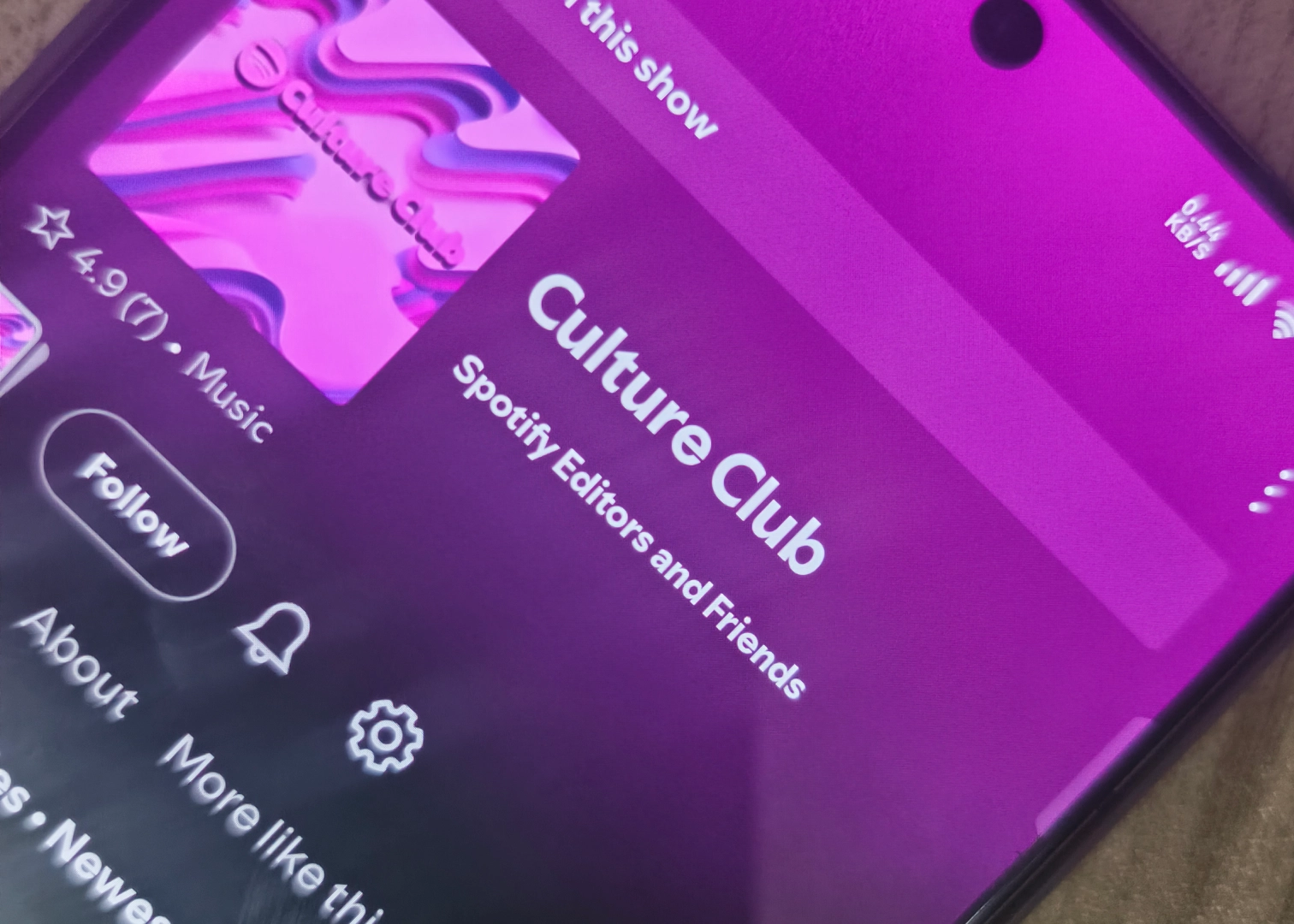
Spotify has spent the past few years expanding its presence in Africa, and its new editorial podcast, Culture Club, hopes to reflect that focus.
Culture Club podcast has been in listeners’ feeds since October 2025, and the show now stands at ten episodes covering everything from Afrobeats’ global rise to the female voices reshaping Amapiano.
Spotify’s recent push to spotlight the series suggests the company sees an opportunity to bring more attention to its back catalogue.
It is partly about raising awareness of a show that is quietly building a following, but it also reflects the growing importance of African music to Spotify’s global strategy.
Spotify’s music editors give artists space to talk about their creative journeys rather than reducing their stories to short soundbites.
LADIPOE discusses the resurgence of Nigerian hip-hop, supported by Spotify data showing a 3,080% increase in local streams for the genre since 2021. Zee Nxumalo talks about creating space for female voices in Amapiano.
Joshua Baraka highlights Uganda and East Africa as music scenes that deserve attention on their own, rather than being seen as extensions of West Africa’s influence. Lekompo, which is still largely known through South African streets and social media, also gets rare mainstream exposure.
The Numbers Behind the Podcast
Spotify’s own data gives Culture Club plenty to work with. The platform’s biggest African artists are now generating billions of streams, with some building audiences that rival those of major global acts.
| Artist | Spotify streams |
| Wizkid | 11.2B+ |
| Burna Boy | 9.5B+ |
| Rema | 5.6B+ |
| Tems | 4.4B |
| Tyla | 3.7B |
| Ayra Starr | 3.3B |
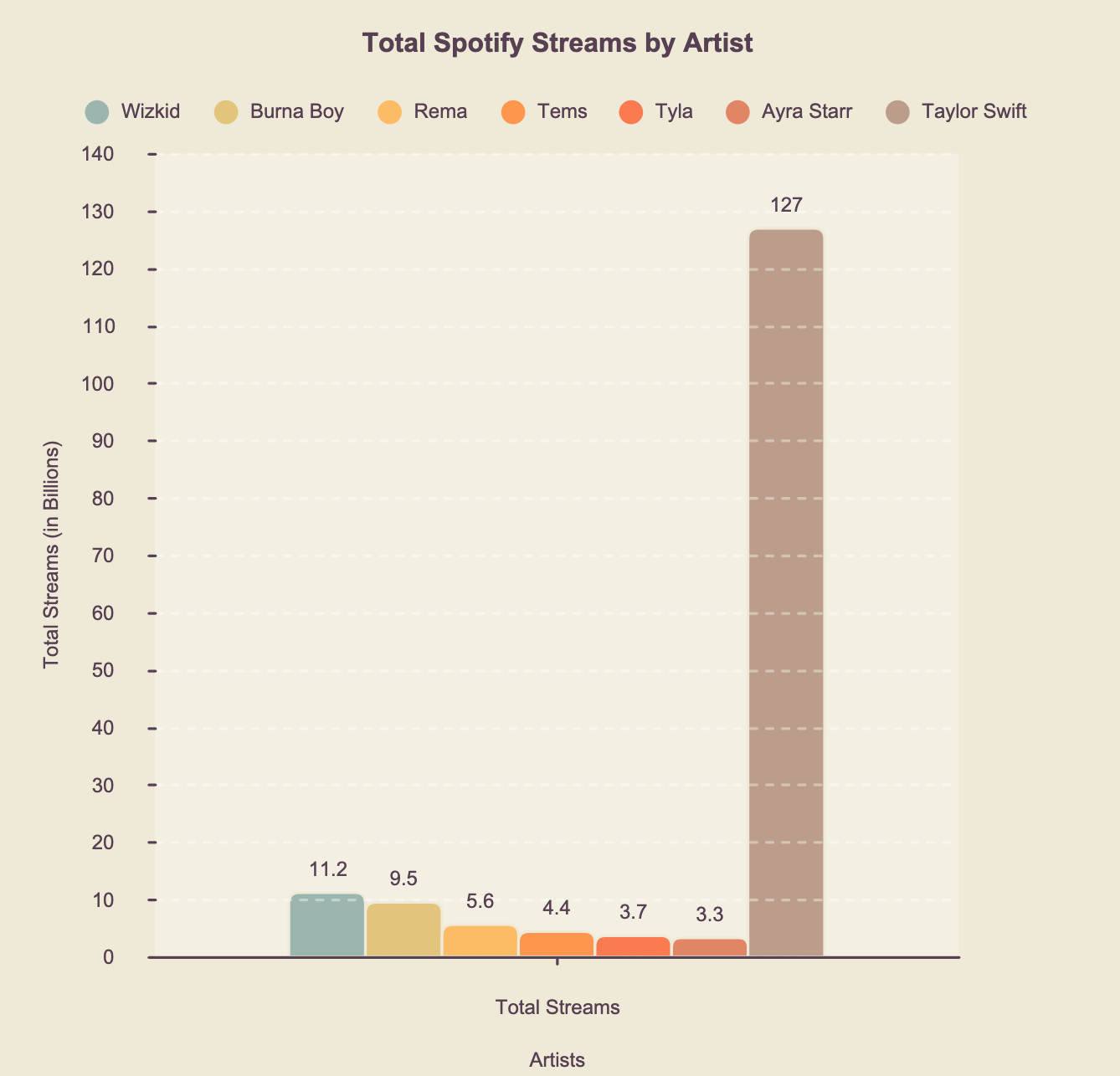
The numbers show both the growth of African music on Spotify and the uneven pace of that growth. Wizkid leads in total streams, while Burna Boy has the continent’s largest monthly listener base, with about 46.84 million monthly listeners.
For context, Taylor Swift has roughly 127 billion streams globally. This highlights the gap between African artists and the world’s biggest streaming acts, while also showing how quickly African music is growing on its own.
Streaming numbers tell only part of the story when royalties are considered. Spotify’s estimated payout per stream varies by market, with streams from African markets generally earning less than those from the US.
| Market | Estimated payout per stream | Per 1M streams |
| US | $0.0033–$0.005 | $3,300–$5,000 |
| Africa | $0.0003–$0.0015 | $300–$1,500 |
That makes the geography of the streams almost as important as the headline figure. Wizkid’s more than 11 billion streams show the size of his audience, but without knowing where those streams came from and which subscription tiers they came from, it is difficult to estimate how much they earned.
Premium subscriptions in wealthier markets generate more royalties per listener than free, ad-supported accounts or the discounted plans available in many African markets.
Spotify has more than 300 million Premium subscribers worldwide, but it does not disclose how many are in Africa. Instead, it groups the continent under the broader “Rest of World” category.
African users account for about 2% of Spotify’s global monthly active users. That is a relatively small share, despite the growing influence of African music on the platform’s editorial direction and cultural campaigns.
Where the Audience is Heading
Culture Club is trying to find out who is really driving the growth of African music. Data Spotify has released elsewhere offers part of the answer.
Nairobi now has the highest share of Gen Z streaming activity on the continent, with listeners aged 18 to 24 accounting for 53.7% of all streams in the city. This compares with 44.4% in Lagos and 29.9% in Johannesburg.
Among young Kenyan listeners, dancehall streams grew 95% year-on-year, while gospel and other local genres also recorded steady growth. Listening patterns across Kenya, Tanzania, Uganda, and Rwanda also show the emergence of a distinct East African sound.
READ: Spotify Streams in Kenya Hit 203 Million Hours in 2025
The show’s narrative and the numbers point to the same trend: young Africans are driving music discovery, both at home and increasingly abroad. But that leaves out an important question: who benefits financially from this growth?
More African music is being played by people outside the continent than ever before. However, a growing global audience does not necessarily mean artists are earning more from each stream.
What This Could Become
Culture Club has the potential to become more than a showcase for Afrobeats’ biggest names. Its strongest episodes so far have focused on artists and scenes that are still building an audience, from Lekompo and East Africa’s new wave to the women pushing Amapiano forward.
If Spotify leans further into this approach and gives more attention to underappreciated artists instead of names already dominating global charts, the show could become a real discovery platform rather than a highlight reel for artists who need little introduction.
READ: Spotify Rolls Out AI Persona Labels to Separate Real Artists From AI Ones
What the series has not addressed, and probably will not address on its platform, is the payout gap behind all that streaming growth. That is a deeper conversation about subscriber transparency and regional royalty rates, rather than culture and sound.
It does not take away from what Culture Club does well. It simply shows the limits of what a Spotify-backed podcast was ever likely to cover.