





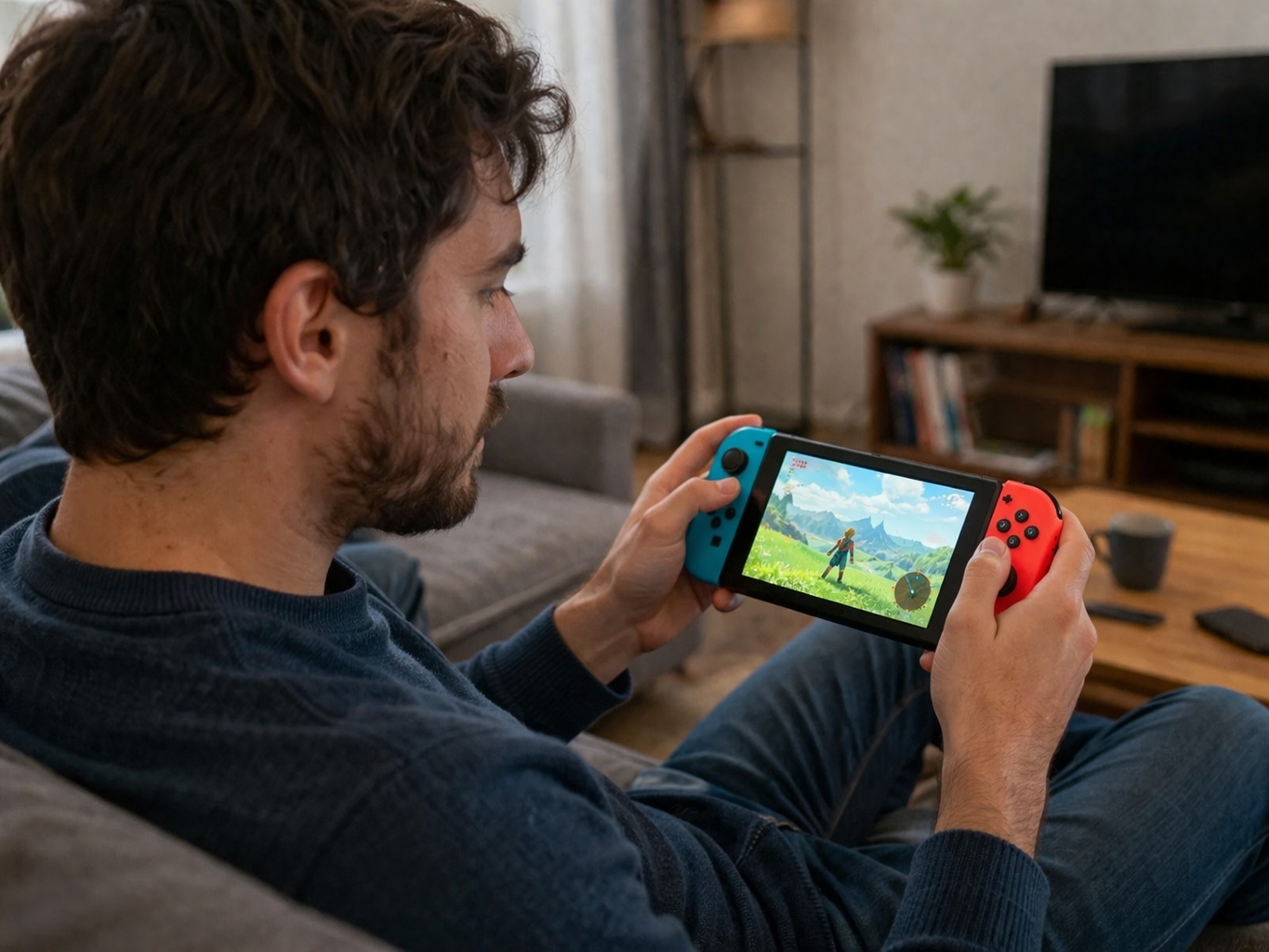
You buy a box. There’s a cartridge inside. You slot it into your Switch 2 and nothing happens until you download the entire game over the internet. The cartridge itself is empty. It acts as a physical key that must stay inserted while you play, but the game lives on your console’s internal storage or a microSD Express card. That’s what Nintendo calls a Game-Key Card, and it’s been one of the most divisive decisions the company has made since pricing the Switch 2 at $450. If you spend screen time between console gaming and spinning slots on a phone during loading screens, the distinction between owning a game on a cartridge and owning a license to download one probably feels academic. Collectors see it differently, and they’re furious.
Why Publishers Went This Direction
Making a Switch 2 cartridge costs Nintendo and its partners more than Sony or Microsoft spend pressing a Blu-ray disc, and that gap has only gotten worse as NAND flash prices climbed through 2025. Analysts expect another 20-30% hike through 2026, which makes the higher-capacity 64 GB cards brutally expensive for anyone trying to ship a big game at a reasonable price point.
So publishers found a shortcut. The Game-Key Card barely holds any data, which is the whole point. Cheap to make, still looks like a physical product on the shelf. Square Enix went this route for their Switch 2 lineup. Bandai Namco, SEGA, and Capcom did the same. Nintendo’s own titles came on full cartridges, but Mario Kart World landed at $80, and that number drew plenty of its own complaints.
Nintendo Just Made the Price Gap Official
Nintendo made the quiet part loud on March 25, 2026. First-party Switch 2 exclusives would carry different prices depending on format, starting in May. Yoshi and the Mysterious Book showed up in pre-order listings at $59.99 digital and $69.99 physical. Ten dollars more for the cartridge version, and Nintendo didn’t pretend it was anything other than a cost decision.
The company said the split “reflects the different costs associated with producing and distributing each format.” Their digital sales were already climbing, up 14.7% year over year in the most recent quarterly report. Formalizing cheaper digital pricing gives budget-conscious buyers a reason to skip physical entirely, and it gives Nintendo a way to push more revenue through the eShop where margins are higher. The broader pattern across digital entertainment, from gaming to sports wagering to streaming, has been training users to pay for access rather than ownership for years now.
What Collectors Are Losing
The original Switch had a different problem. Some physical boxes contained nothing but a download code printed on a card, which meant you couldn’t resell or lend the game once it was redeemed. Game-Key Cards at least improve on that.
- Selling or lending the cartridge works, and the next person downloads the game fresh on their own console
- To play, the card must be inserted, so it functions as a physical license rather than a one-time code
- Problem is, no game data lives on the cart, which means if Nintendo’s servers go offline in ten years the card authenticates nothing
- Full cartridges still work forever without an internet connection, and that gap keeps widening as more titles go Game-Key
Pokémon Pokopia’s confirmation as a Game-Key Card release in early 2026 crossed a line for many fans because it signaled that even first-party titles were no longer safe from the format. Boycott calls popped up on social media almost immediately, though how many people follow through on those is another question entirely. The irony is that mobile gaming and betting apps went fully digital years ago and nobody blinks, but the moment a console game arrives without data on the cartridge, it feels like something has been taken away.
Chip Shortages Keep Pushing the Trend
Chip supply hasn’t been cooperating. By late 2025, Nintendo had reportedly started producing smaller-capacity game cards because there simply weren’t enough components to go around. And the pricing on those components? Getting worse, not better. People inside the production chain have said pretty bluntly that Game-Key Cards aren’t going anywhere because the economics don’t allow it. Publishers who’d already rebuilt their distribution pipelines around the format weren’t about to reverse course. Why would they.
The Switch 2 keeps selling. Backlash over Game-Key Cards hasn’t slowed the hardware numbers down, and the new pricing split gives digital buyers a discount that makes the whole physical-vs-digital argument feel more like a collector’s grievance than a mainstream concern. Similar to how the shift from physical betting shops to mobile apps felt overblown at the time but turned out to be permanent.