




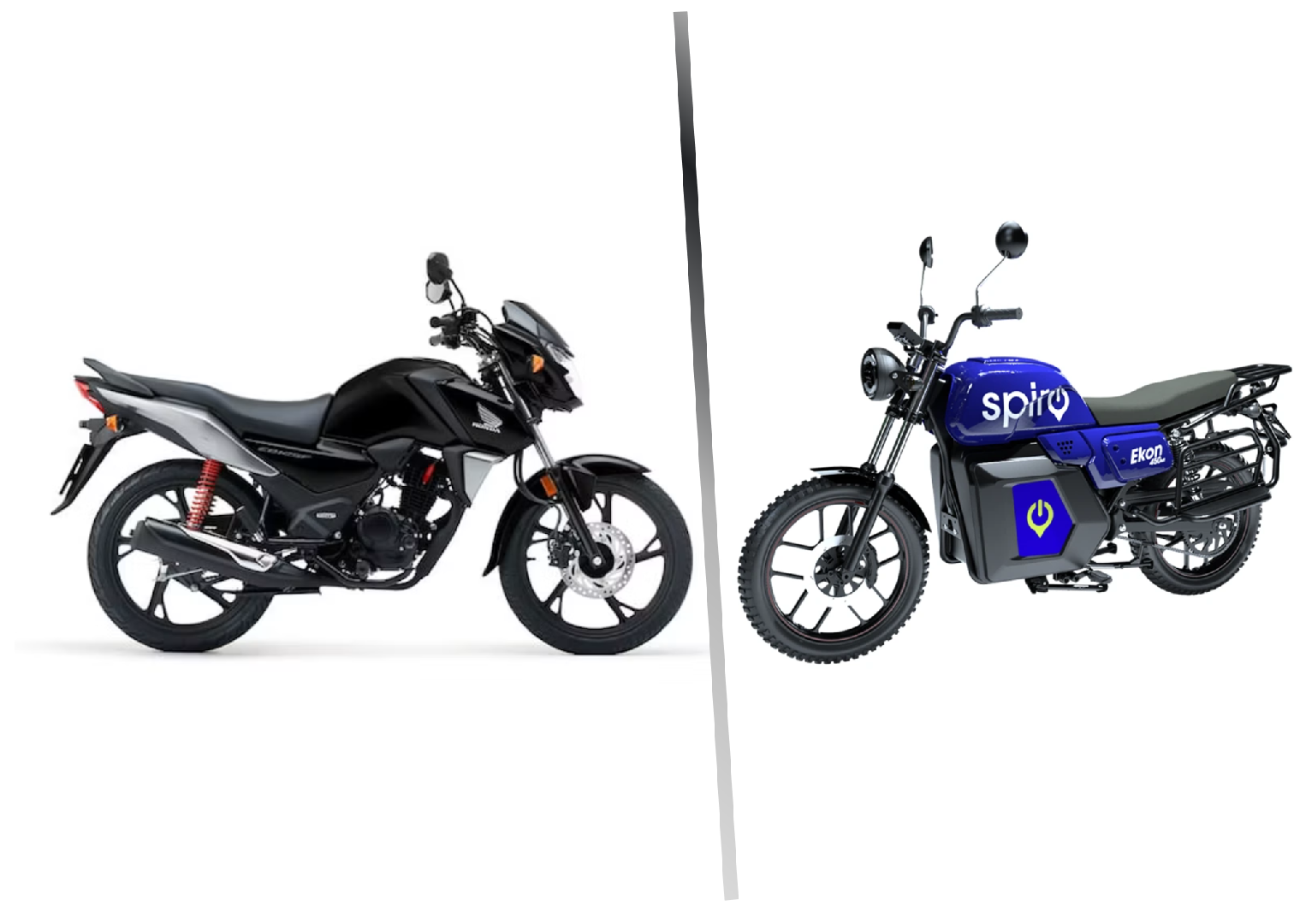
Kisumu Governor Anyang’ Nyong’o has proposed legislation to phase out petrol-powered motorcycles in Kenyan cities, eventually extending the shift to electric bikes across the country.
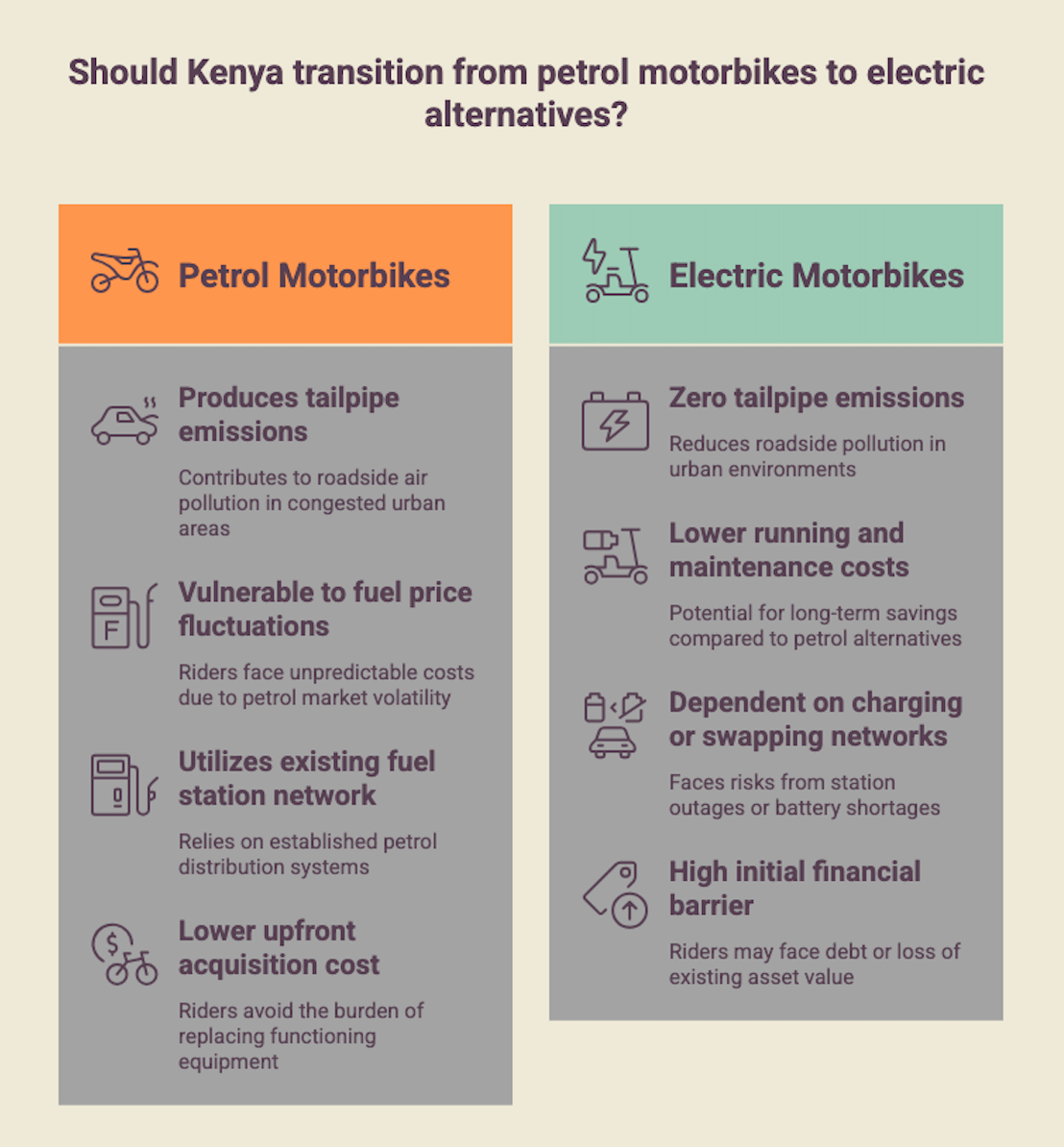
The proposal has a clear environmental case. Petrol motorcycles produce exhaust emissions and noise in densely populated areas, while electric motorcycles offer lower operating costs and no tailpipe emissions.
However, moving from a growing electric bike market to a policy that restricts petrol bikes would be a much bigger and bolder step.
The proposal is not yet law. Its scope, implementation timeline and whether it would cover commercial boda bodas, private motorcycles or rural areas remain unclear.
The National Electric Mobility Policy targets having all bikes electric by 2050 and aims for electric two- and three-wheelers to account for at least 30% of motorcycles by 2027.
The policy also recognizes that charging and battery-swapping infrastructure, standards and grid capacity must develop alongside adoption. That makes a phased urban transition more realistic than an immediate ban.
Where the Proposal Makes Sense
| Potential Benefit | Why It Matters |
| Less air pollution | Electric motorcycles have no tailpipe emissions, potentially reducing roadside pollution in congested urban areas. |
| Less noise | Electric bikes are quieter, improving conditions for riders, pedestrians and businesses along busy roads. |
| Lower running costs | Electricity and maintenance can cost less than petrol, although the savings need independent testing across different operating conditions. |
| Less exposure to fuel prices | Riders could become less vulnerable to petrol price increases and fluctuations. |
| Growth of e-mobility | A clear policy direction could encourage investment in local assembly, battery services, maintenance, financing and charging infrastructure. |
The case is particularly strong for commercial motorcycles because they are used intensively and can benefit from battery swapping, letting a rider replace a depleted battery instead of waiting for a recharge.
ARC Ride‘s Joseph Hurst-Croft has described a model in which a rider swaps batteries two or three times over a 150-kilometer working day, paying for the energy actually consumed rather than for each individual swap.
Hurst-Croft has also been direct about what the economics actually require:
“The real advantage is the price difference between the cost per kilometer of electric versus petrol. That’s the primary decision-maker when we enter a market. Can we really be 30% cheaper for the rider?”
The idea is that cheaper running costs have to translate into a meaningful financial benefit for riders. That is what makes the cost per kilometer, rather than the technology itself, central to the viability of electric motorcycles.
Where the Ban Gets Complicated
| Potential Drawback | What Could Go Wrong |
| Upfront cost | Riders may have to replace functioning motorcycles or take on new debt before recovering the value of their existing bikes. |
| Limited infrastructure | A ban could leave riders without reliable charging or battery-swapping options in parts of a city. |
| Battery-network dependence | A station outage, battery shortage or failure of an infrastructure provider could disrupt large numbers of riders. |
| Technology lock-in | Without common standards, riders could become dependent on one manufacturer or battery network. |
| Enforcement | Fines or confiscation would be difficult to justify if electric alternatives are unavailable or unaffordable. |
| Rural impact | Areas without reliable electricity, financing or charging infrastructure cannot necessarily follow the same timetable as major cities. |
The primary issue is therefore not whether electric motorcycles work. It is whether Kenya can make them accessible enough to replace petrol motorcycles without hurting the livelihoods of riders.
A workable transition could require low-interest financing, trade-ins, battery leasing, affordable insurance, and protections for riders during the changeover on top of tax incentives from the government.
How a Phased Approach Could Work
The first phase could focus on new commercial motorcycles rather than forcing riders who already own petrol bikes to replace them immediately. This would give riders and businesses time to make the switch.
Riders would need enough charging and battery-swapping stations, affordable prices and reliable access to charged batteries. The government would also need to make sure different electric motorcycles can use the same infrastructure where possible.
Starting small would also give Kenya a chance to see what happens in practice. It could track whether riders actually save money, whether fares change, whether enough bikes are available and whether the switch makes a noticeable difference to pollution.
Kenya can move towards phasing out petrol motorcycles in cities, but an immediate ban would be difficult. The electric alternatives need to be in place first, and riders need enough time and support to make the switch.