




For an electric motorcycle company, selling more motorcycles is only part of the problem. The harder question is what happens after the sale, especially when the customer is a boda boda rider whose income depends on keeping the bike moving.
That is where ARC Ride is putting most of its money.
The Nairobi-based company, founded in 2019 and now one of the more visible names pushing East Africa’s boda boda riders off petrol, says roughly 70% of its newly announced $33.3 million (about KES 4.3 billion) funding round is going toward battery-swapping infrastructure.
The remaining 30% is earmarked for building more electric motorcycles.
That split puts infrastructure ahead of fleet growth, and it reflects a simple framing from CEO Joseph Hurst-Croft, who told Techweez that electric motorcycles only become commercially useful at scale once riders can reliably find a charged battery nearby.
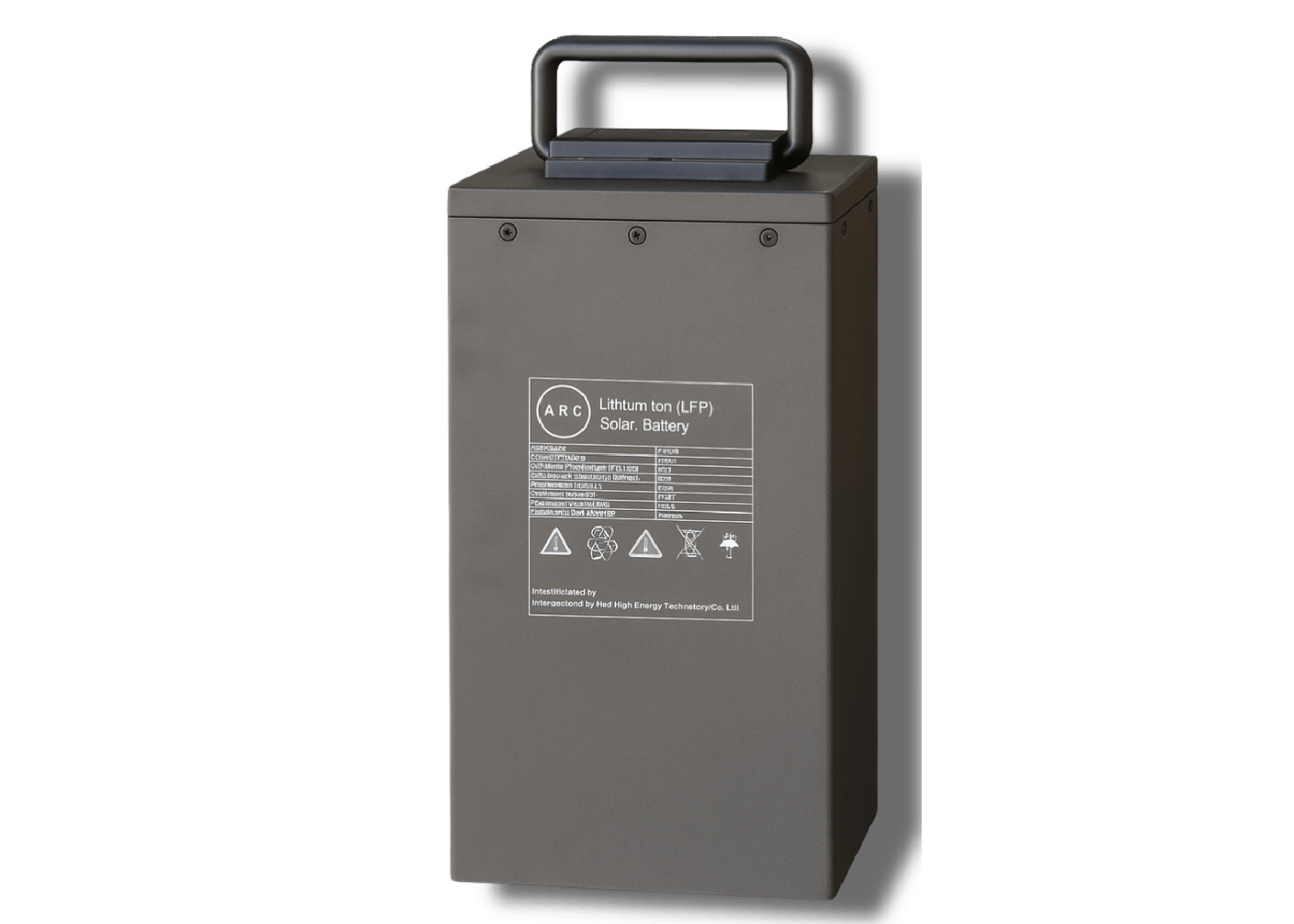
ARC Ride leases batteries to riders rather than selling them, letting riders swap a depleted unit for a charged one at stations across the city instead of waiting for a charge. It is a model built for a market where time on the road matters as much as the cost of energy.
Betting That Infrastructure Matters More Than Motorcycles
Hurst-Croft describes motorcycle manufacturing as relatively straightforward compared with building a network of battery-swapping stations.
“Vehicle financing is very much like commodity trading; you buy the parts, you put them together, and then you resell it.”
Infrastructure, in his view, needs capital that can take years to generate returns, which is why the round leaned so heavily on development finance institutions rather than pure venture money.
Business Daily has reported that the IFC proposed up to $5 million (~ KES 646 million) in equity for ARC Ride’s Series A, while British International Investment invested another $5 million (~ KES 646 million).
Mirova provided $10 million (~ KES 1.3 billion) in five-year senior secured debt for more than 600 battery-swapping cabinets and 25,000 batteries.
Those disclosures support the larger picture of an infrastructure-heavy financing strategy.
Kenya Is Giving Electric Motorcycles a Favorable Opening
The International Energy Agency’s Global EV Outlook 2025 identifies two- and three-wheelers as the most electrified segment of road transport worldwide, with electric models making up roughly 15% of global two- and three-wheeler sales in 2024, around 10 million vehicles.
Kenya has several characteristics that make the transition particularly relevant. Boda bodas operate intensively for passenger transport and deliveries; therefore, fuel costs weigh heavily on riders, and the country’s electricity supply already leans heavily toward renewable.
The government’s own figures point to a market moving quickly. During the official launch of the National Electric Mobility Policy, Kenya’s transport ministry said in February 2026 that cumulative EV registrations had reached 39,324 by the end of 2025, up from 1,378 in 2022, with electric motorcycles recording the largest percentage increase of any category.
The government has also introduced zero-rated VAT and zero excise duty on electric bicycles, motorcycles, and lithium-ion batteries, while acknowledging that charging infrastructure remains concentrated in Nairobi.
That creates an obvious opening for companies building alternative energy infrastructure, including battery swapping.
The Cost Advantage for Commercial Riders
Ultimately, ARC Ride’s proposition is based on the economic benefits it offers to riders. Hurst-Croft says the company’s motorcycles can be 30% to 40% cheaper per kilometer than petrol alternatives, once energy and maintenance costs are factored in.
The claim is plausible, given fuel prices and the upkeep combustion engines demand, but plausibility is not verification.
A 2025 Nairobi study tracked 120 petrol motorcycles against nine electric ones, and a peer-reviewed analysis of that same field data found operating patterns held steady after the switch, while energy cost per kilometer fell substantially.
That finding sits squarely behind Hurst-Croft’s 30% to 40% savings assertions.
Battery Swapping Changes the Charging Equation
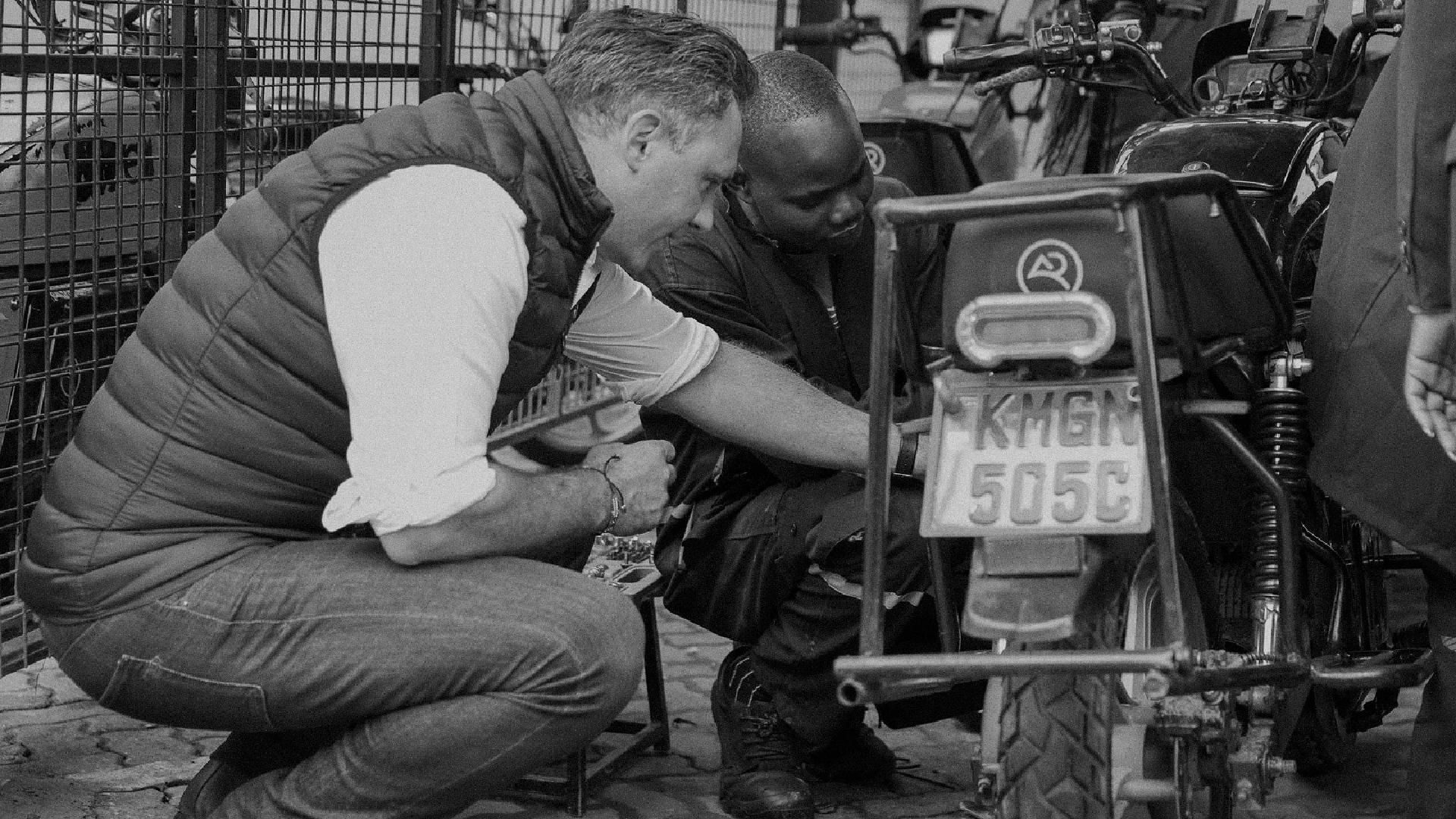
For a boda boda rider, charging time is not simply an inconvenience; it means time away from work.
Battery swapping addresses that problem by allowing a rider to exchange a depleted battery for a charged one instead of waiting for the original battery to recharge. The IEA identifies this as one reason swapping is particularly suited to commercial fleets, taxis, and delivery vehicles.
The economics get harder as the network grows. Hurst-Croft admits that ARC Ride needs several thousand motorcycles operating in a city, with 10,000 as a longer-term target, before a swapping network’s economics begin to work.
READ: Kenya Power Earns KES 191 Million From EV Charging as Demand Jumps 188%
A station costs money whether one rider uses it or hundreds do, so the network only improves its returns once enough motorcycles are regularly passing through it.
ARC Ride is yet to publicly disclose the operational details, station utilization, swaps per station, battery downtime, or how long a new market actually takes to reach profitability.
The disclosed financing for 25,000 batteries and more than 600 cabinets gives a sense of the infrastructure required, but not necessarily of how quickly it pays for itself.
Push for Battery Interoperability
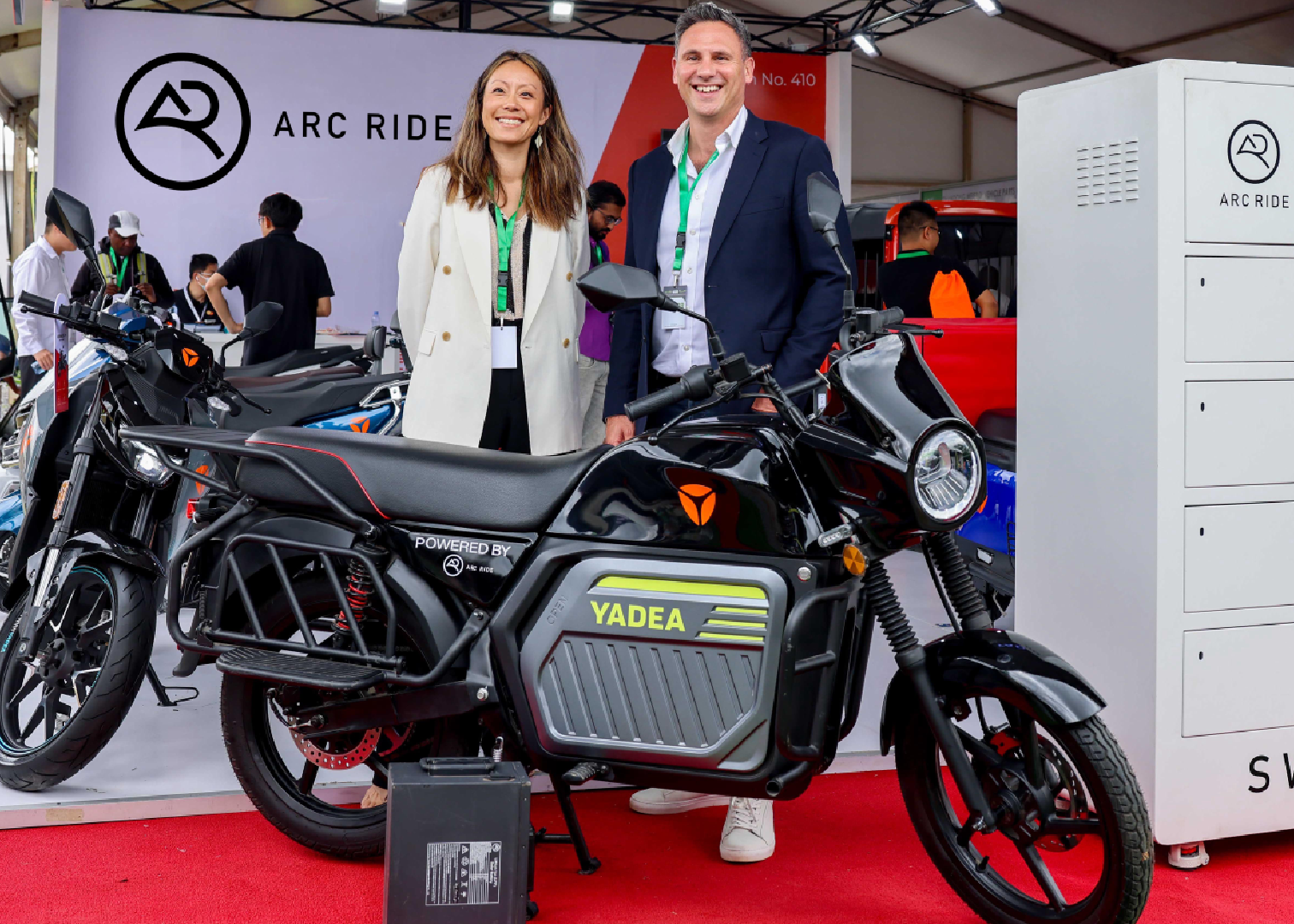
ARC Ride’s plans go beyond its own fleet. The company says its battery design could be used by other manufacturers, including Yadea. This could allow its battery-swapping network to support a wider electric motorcycle market instead of being limited to ARC Ride’s own bikes.
There is real momentum behind that kind of thinking industry wide. The Swappable Batteries Motorcycle Consortium is developing common specifications covering voltage, connectors, and vehicle interfaces, aimed at letting batteries move across brands.
However, an individual company’s proprietary system is not the same thing as an adopted industry standard. Certification, safety sign-off, software integration, and manufacturer buy-in all have to line up first.
The company is betting on a direction the industry is already leaning toward even though it’s still ahead of what has been demonstrated publicly.
ARC Ride Expands Into New Markets
ARC Ride is now taking the model beyond Nairobi. The company is launching in Kisumu in the coming weeks, its first real push into Western Kenya, following earlier entries into South Africa and Ghana. Uganda is expected to follow later this year, with Tanzania penciled in for next.
Each market comes with its own challenges. In South Africa, for example, electric vehicles must meet stricter safety requirements.
Hurst-Croft says meeting these standards helps raise safety levels across ARC Ride’s operations, although stricter regulations can also slow approvals and increase costs.
More importantly, the new cities will reveal whether the Nairobi model travels. ARC Ride needs enough riders to justify its infrastructure investment, enough batteries to keep those riders moving, and enough utilization to make each swapping site commercially viable.
Expansion, in that sense, is less a geographic exercise than a test of whether the economics survive outside the company’s strongest existing market.
The Next Test Is Scale
Kenya’s electric motorcycle market is growing, government policy is becoming more supportive, and battery swapping addresses a genuine problem for riders who cannot afford long charging stops.
Putting more capital into infrastructure rather than simply producing more motorcycles is a defensible choice.
The most important numbers in ARC Ride’s story still come from ARC Ride itself. Scale is still the open question, and Hurst-Croft was candid about where that line actually sits.
“If we only sell a few hundred bikes, we’ll lose money, because we need infrastructure that can operate across an entire city; you need swapping stations spread out, since one rider is going from A to B and another from B to F. We generally look to have at least a few thousand bikes in a city before we consider it worth operating in, and ideally we’re targeting 10,000 bikes per city. After a few thousand bikes, we start to see real commercial returns.”
For now, ARC Ride has a coherent thesis and a market that appears increasingly receptive to it. The next phase will decide whether the company’s own numbers can carry that thesis once the batteries, riders, and swapping stations have to pay for themselves.