




• Latest
  • All
  • How To
Hackers Use Weaponized PDFs

The Weaponization of PDFs: How Cybercriminals Are Exploiting a Trusted Format

April 7, 2025
CA Launches Post4Health To Turn Struggling Post Office Into a Cold-Chain Medical Delivery Arm

CA Launches Post4Health To Turn Struggling Post Office Into a Cold-Chain Medical Delivery Arm

November 2, 2026
Anthropic is Bringing Text Watermarking to More Claude Models

Anthropic is Bringing Text Watermarking to More Claude Models

November 2, 2026
Why KRA Proposed a 25% Tax on Phones When They First Connect

Why KRA Proposed a 25% Tax on Phones When They First Connect

November 2, 2026
Zoho Expands Ask Zia With AI Agents for Business Intelligence

Zoho Expands Ask Zia With AI Agents for Business Intelligence

November 2, 2026
DHgate Tablet Cases deals
Overseas Jobs

DCI Arrests Recruitment Agency Director Over KES 15 Million Jobs Scam

November 2, 2026
How to Stop X Links From Revealing Whether You Use an iPhone or Android

How to Stop X Links From Revealing Whether You Use an iPhone or Android

November 2, 2026
ThingsBook Turns Social Media Into a Museum of Your Own Life

ThingsBook Turns Social Media Into a Museum of Your Own Life

October 30, 2026
US Says Its Hunt for Kenya-Linked Student Aid Fraudsters Has Only Just Begun

US Says Its Hunt for Kenya-Linked Student Aid Fraudsters Has Only Just Begun

October 30, 2026
Binance’s $6.3 Billion Hack. What We Know So Far

Binance’s $6.3 Billion Hack. What We Know So Far

October 30, 2026
Kenya Weighs Fuel Efficiency Rules for Imported Cars as Pump Prices Bite

Kenya Weighs Fuel Efficiency Rules for Imported Cars as Pump Prices Bite

October 30, 2026
Binance

Binance Freezes Withdrawals As It Faces Potential $5.8 Billion Crypto Theft

October 30, 2026
Google

Google Loses $460 Billion in Market Value as AI Spending Rattles Investors

October 29, 2026
Techweez | Tech News, Reviews, Deals, Tips and How To
  • News
  • Entertainment
  • Reviews
  • Features
  • Editorial
No Result
View All Result
Techweez | Tech News, Reviews, Deals, Tips and How To
  • News
  • Entertainment
  • Reviews
  • Features
  • Editorial
No Result
View All Result
Techweez | Tech News, Reviews, Deals, Tips and How To
No Result
View All Result

The Weaponization of PDFs: How Cybercriminals Are Exploiting a Trusted Format

Dennis Waweru by Dennis Waweru
April 7, 2025
in Editorial
Reading Time: 7 mins read
350
0
Hackers Use Weaponized PDFs

Cybersecurity threats keep evolving, and now, PDFs have emerged as a surprisingly effective weapon for cybercriminals. With 68% of cyberattacks beginning in inboxes, and 22% of malicious email attachments being PDF-based, the increasing use of this ubiquitous file format has made it a prime target for attackers.

The Prevalence of PDFs in Business and Cybersecurity Threats

Over 400 billion PDFs were opened last year, and 16 billion documents were edited using Adobe Acrobat. Additionally, 87% of organizations rely on PDFs as a standard file format for business communication.

This widespread usage makes PDFs an attractive vehicle for cybercriminals looking to infiltrate organizations through phishing and malicious code.

While PDFs are traditionally viewed as safe and reliable, their increasing exploitation by threat actors has changed the game. Attackers have developed sophisticated techniques to embed malicious content within these files, allowing them to slip past conventional security measures.

Security researchers at Check Point Research have observed that many of these attacks evade traditional security vendors entirely, with zero detections in VirusTotal over the past year.

In this article, we’ll explain why PDFs are such a prime target, how cybercriminals exploit them, and the countermeasures organizations can implement to mitigate risk.

Why PDFs Are a Prime Target for Cybercriminals

PDFs are inherently complex. The PDF specification, ISO 32000, spans nearly 1,000 pages, providing a rich set of features that attackers can exploit.

While users see PDFs as simple, static documents, security tools often struggle to detect malicious activity within them. This complexity allows PDFs to act as a digital “Trojan horse,” appearing harmless while concealing harmful content.

In the past, attackers relied on vulnerabilities in PDF readers (Common Vulnerabilities and Exposures – CVEs) to exploit flaws in software. However, as PDF readers have improved their security—particularly browsers that now open PDFs by default—this method has become less effective.

Consequently, cybercriminals have shifted tactics to rely more on social engineering and hidden malicious links, making it even harder to detect these attacks.

The Anatomy of a PDF-Based Cyberattack

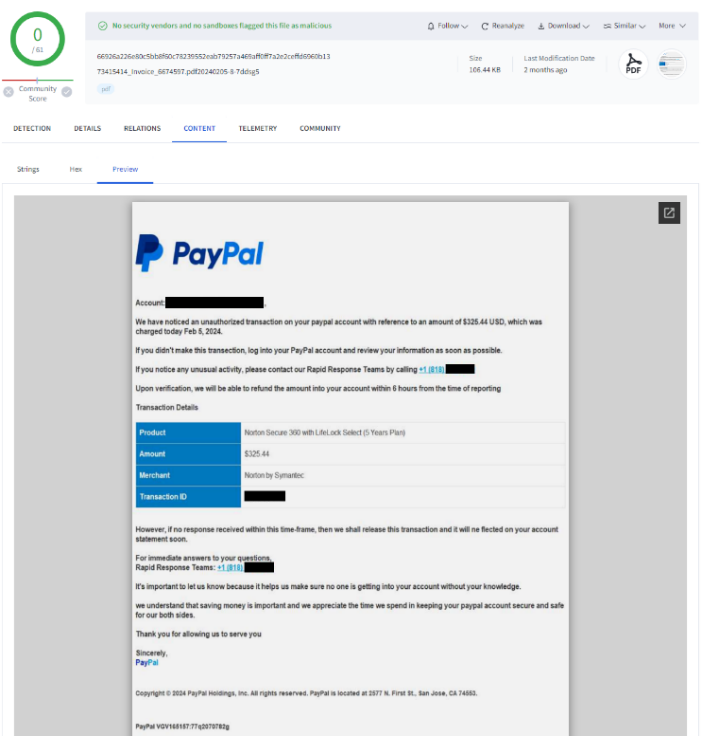
One of the most common cybersecurity attack methods involves embedding malicious links within PDFs. These files often mimic trusted documents from well-known brands such as Amazon, DocuSign, or Acrobat Reader.

When recipients click the links, they are redirected to phishing sites or malware-laden downloads.

Unlike traditional exploits that rely on vulnerabilities in software, link-based PDF attacks are highly effective because they require human interaction. This makes them harder to detect with automated security solutions, which struggle to interpret links in the same way a human would.

Threat actors frequently change the links, images, and content inside PDFs to evade detection from security tools that rely on static signatures or URL reputation databases.

Advanced Evasion Techniques Used by Cybercriminals

To ensure their malicious PDFs bypass security filters, cybercriminals employ sophisticated evasion techniques, including:

1. URL Evasion Techniques

  • Using benign redirect services: Attackers mask malicious destinations using trusted platforms like LinkedIn, Bing, or Google AMP to avoid URL blacklisting.
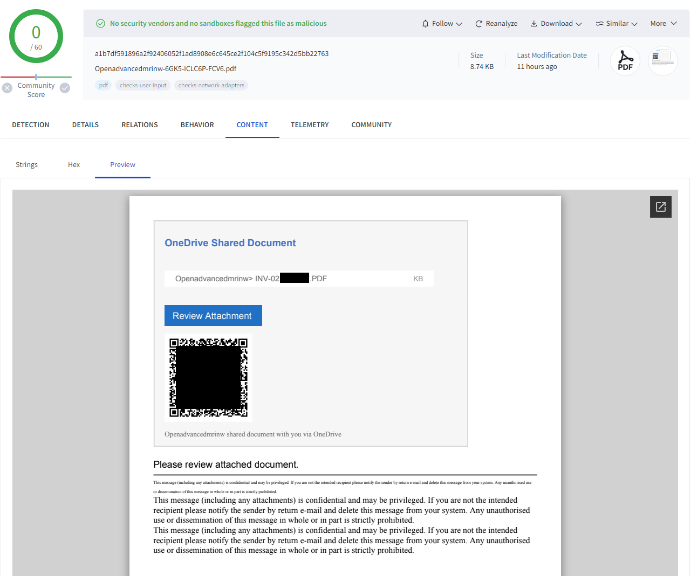
  • QR code-based attacks: Instead of clickable links, attackers embed QR codes that victims scan with their phones, bypassing security filters entirely.
  • Phone-based scams: Some PDFs instruct users to call a fake support number, leading to social engineering attacks that extract sensitive information.
2. Static Analysis Evasion

  • Obfuscation techniques: PDF annotations can be encoded in ways that evade static analysis tools, making it difficult for security solutions to recognize threats.
  • Reader-specific exploitation: Since different PDF readers interpret files differently, attackers craft PDFs that exploit reader-specific behaviors, making detection inconsistent.

3. File Obscurement

  • Encryption and indirect objects: Attackers use encryption and hidden objects within PDFs to conceal malicious code, making it difficult for scanners to analyze the file’s true contents.

4. Machine Learning Evasion

  • Image-based text attacks: By embedding key text inside images, attackers evade text-based security scanners, requiring Optical Character Recognition (OCR) to detect threats.
  • Manipulated invisible text: Attackers insert small or invisible text to confuse Natural Language Processing (NLP) models, making automated detection less reliable.

How to Stay Safe from PDF-Based Cyberattacks

While attackers continue to refine their techniques, organizations and individuals can take proactive measures to mitigate risk.

Check Point’s Threat Emulation and Harmony Endpoint solutions offer real-time, zero-day protection against PDF-based attacks, but additional best practices can further enhance security:

1. Verify the Sender

  • Always double-check the sender’s email address, especially when receiving unexpected PDFs. Attackers often spoof well-known brands or colleagues.

2. Be Cautious with Attachments

  • If a PDF asks you to click a link, scan a QR code, or call a number, treat it as suspicious. When in doubt, avoid interacting with the file.

3. Hover Before Clicking

  • Before clicking any link inside a PDF, hover over it to reveal the full URL. Watch out for shortened links or those using redirect services like Bing or Google AMP.

4. Use a Secure PDF Viewer

  • Modern browsers and PDF readers have built-in security features. Keep them updated and avoid using outdated or obscure PDF software.

5. Disable JavaScript in PDF Readers

  • JavaScript-based attacks are still prevalent. Disable JavaScript in your PDF reader unless absolutely necessary to reduce risk.

6. Keep Security Tools Updated

  • Regularly update your operating system, browser, and security software to protect against emerging threats.

7. Trust Your Instincts

  • If a PDF looks unusual, contains typos, or asks for sensitive credentials, it’s likely a scam.

PDFs are no longer just harmless document files; they have become a battleground for cybercriminals exploiting their ubiquity and trustworthiness.

By leveraging advanced cybersecurity evasion tactics and social engineering, attackers have turned PDFs into one of the most effective delivery mechanisms for phishing and malware.

Understanding how these attacks work and implementing proactive security measures can significantly reduce the risk of falling victim to PDF-based threats.

Organizations should adopt advanced threat detection solutions like Check Point’s Threat Emulation and Harmony Endpoint to ensure real-time protection against evolving threats.


Tags: CybercrimeCybersecurityMalwarePhishing
SendShare198Tweet124
Dennis Waweru

Dennis Waweru

I don't like coffee or writing my bio Contact: [email protected]

Related Posts

Binance

Binance Freezes Withdrawals As It Faces Potential $5.8 Billion Crypto Theft

October 30, 2026
Safaricom CEO Peter Ndegwa

Safaricom Detected 1.25 Billion Cyberattack Attempts in 2026

October 29, 2026
CA Confirms Government Cyber Breach Without Naming Agency

CA Confirms Government Cyber Breach Without Naming Agency

October 26, 2026
Cybersecurity

Kenya Records 2.7 Billion Cyber Threat Events in Three Months

October 26, 2026
ICT Ministry Orders Government Agencies to Secure PHP Systems Over Critical Flaws

ICT Ministry Orders Government Agencies to Secure PHP Systems Over Critical Flaws

October 22, 2026
PHP

PHP Fixes Critical Security Flaws That Put Millions of Websites at Risk

October 21, 2026

Latest

CA Launches Post4Health To Turn Struggling Post Office Into a Cold-Chain Medical Delivery Arm

CA Launches Post4Health To Turn Struggling Post Office Into a Cold-Chain Medical Delivery Arm

November 2, 2026
Anthropic is Bringing Text Watermarking to More Claude Models

Anthropic is Bringing Text Watermarking to More Claude Models

November 2, 2026
Why KRA Proposed a 25% Tax on Phones When They First Connect

Why KRA Proposed a 25% Tax on Phones When They First Connect

November 2, 2026
Zoho Expands Ask Zia With AI Agents for Business Intelligence

Zoho Expands Ask Zia With AI Agents for Business Intelligence

November 2, 2026
Overseas Jobs

DCI Arrests Recruitment Agency Director Over KES 15 Million Jobs Scam

November 2, 2026
How to Stop X Links From Revealing Whether You Use an iPhone or Android

How to Stop X Links From Revealing Whether You Use an iPhone or Android

November 2, 2026

Top stories

Copia Global

Copia Kenya Ordered Into Liquidation After Two-Year Rescue Effort

September 30, 2026

CBK Licenses 29 New Digital Lenders, Bringing Total to 281

September 30, 2026

New Bill Could Let M-Pesa and Airtel Money Invest Customer Funds

September 30, 2026

Kenya Has 22,000 Digital Services but Still Face a Manual Backend

September 23, 2026

WSO2 Says Kenyan Businesses Must Make Systems Ready for AI Agents

September 23, 2026

New Payment Bill Wants to Force Banks and M-PESA to Open Up Their Data

September 22, 2026

Techweez is where tomorrow’s tech stories break today, thanks to intelligent analysis, real-world insight, and visionary storytelling.

Follow Us

Editorials

ThingsBook Turns Social Media Into a Museum of Your Own Life

Meet Pressed Petals: A Botanical Journal App

Sofa Time Lets You Track Movies and Shows Across Streaming Services

Albo: The App That Turns Saved Social Media Posts Into a Library

ADaM: The Outbreak Tracking Tool That Could Help Contain Ebola in Kenya

The World May Not Be Desperate for AI Agents, Yet

More News

ThingsBook Turns Social Media Into a Museum of Your Own Life

US Says Its Hunt for Kenya-Linked Student Aid Fraudsters Has Only Just Begun

Binance’s $6.3 Billion Hack. What We Know So Far

Kenya Weighs Fuel Efficiency Rules for Imported Cars as Pump Prices Bite

Binance Freezes Withdrawals As It Faces Potential $5.8 Billion Crypto Theft

Google Loses $460 Billion in Market Value as AI Spending Rattles Investors

  • Terms Of Use
  • Techweez Brand
  • Privacy & Policy
  • Contact Us

© 2024 Techweez - Palahala Media Group may earn a commission when you buy through links on our sites.
A Palahala Media Group Brand. All rights reserved.
.

Welcome Back!

Login to your account below

Forgotten Password?

Retrieve your password

Please enter your username or email address to reset your password.

Log In

Add New Playlist

Techweez | Tech News, Reviews, Deals, Tips and How To
Crunchy Cookies 🍪 Ahead!

Hey there! Just a heads-up: we're big fans of cookies - both the digital and edible kind! 🍪 We use our cookies and some from third parties to ensure your browsing experience on our site is smooth sailing and secure.


But wait, there's more! We also use cookies to gather stats and insights on how you navigate our site. It's like getting a behind-the-scenes peek at your digital adventures!


Don't worry, you're in control. You can adjust your cookie settings anytime to suit your preferences. Feeling curious? Dive into our Privacy Policy for all the juicy details. Happy browsing! 🚀

Functional Always active
Listen, this legal stuff is about as exciting as watching paint dry. But it basically says we only use your stuff for what you asked us to do, and nobody else gets to peek!
Preferences
The technical storage or access is necessary for the legitimate purpose of storing preferences that are not requested by the subscriber or user.
Statistics
It's those sneaky cookie crumbs websites leave behind to count visitors, like counting ants at a picnic! Totally harmless, just for fun facts. The technical storage or access that is used exclusively for anonymous statistical purposes. Without a subpoena, voluntary compliance on the part of your Internet Service Provider, or additional records from a third party, information stored or retrieved for this purpose alone cannot usually be used to identify you.
Marketing
Hey there! Just letting you know we use some fancy gizmos to remember your preferences. This way, we can show you ads that are, well, not completely bananas.
Manage options Manage services Manage {vendor_count} vendors Read more about these purposes
Make cookies
{title} {title} {title}
Techweez | Tech News, Reviews, Deals, Tips and How To
Crunchy Cookies 🍪 Ahead!
To provide the best experiences, we use technologies like cookies to store and/or access device information. Consenting to these technologies will allow us to process data such as browsing behavior or unique IDs on this site. Not consenting or withdrawing consent, may adversely affect certain features and functions.
Functional Always active
Listen, this legal stuff is about as exciting as watching paint dry. But it basically says we only use your stuff for what you asked us to do, and nobody else gets to peek!
Preferences
The technical storage or access is necessary for the legitimate purpose of storing preferences that are not requested by the subscriber or user.
Statistics
It's those sneaky cookie crumbs websites leave behind to count visitors, like counting ants at a picnic! Totally harmless, just for fun facts. The technical storage or access that is used exclusively for anonymous statistical purposes. Without a subpoena, voluntary compliance on the part of your Internet Service Provider, or additional records from a third party, information stored or retrieved for this purpose alone cannot usually be used to identify you.
Marketing
Hey there! Just letting you know we use some fancy gizmos to remember your preferences. This way, we can show you ads that are, well, not completely bananas.
Manage options Manage services Manage {vendor_count} vendors Read more about these purposes
Make cookies
{title} {title} {title}
No Result
View All Result
  • News
  • Reviews
  • Features
  • Editorial
  • Automotive
  • Entertainment

© 2024 Techweez - Palahala Media Group may earn a commission when you buy through links on our sites.
A Palahala Media Group Brand. All rights reserved.
.