




Amazon has a problem: people are expensive. The solution, according to leaked internal documents, is to replace them with robots on a scale that would make even the most cynical sci-fi writer shocked.
The company’s automation team wants to avoid hiring more than 600,000 workers in the US by 2033, even as Amazon expects to sell roughly twice as many products during that period. The math here is basically more sales, fewer humans.
By 2027, Amazon plans to eliminate the need for 160,000 jobs that would otherwise exist. Each avoided worker saves the company about 30 cents per item shipped, adding up to $12.6 billion in savings between 2025 and 2027. The ultimate goal is to automate 75% of the entire operation.
There’s a Template in Existence Already
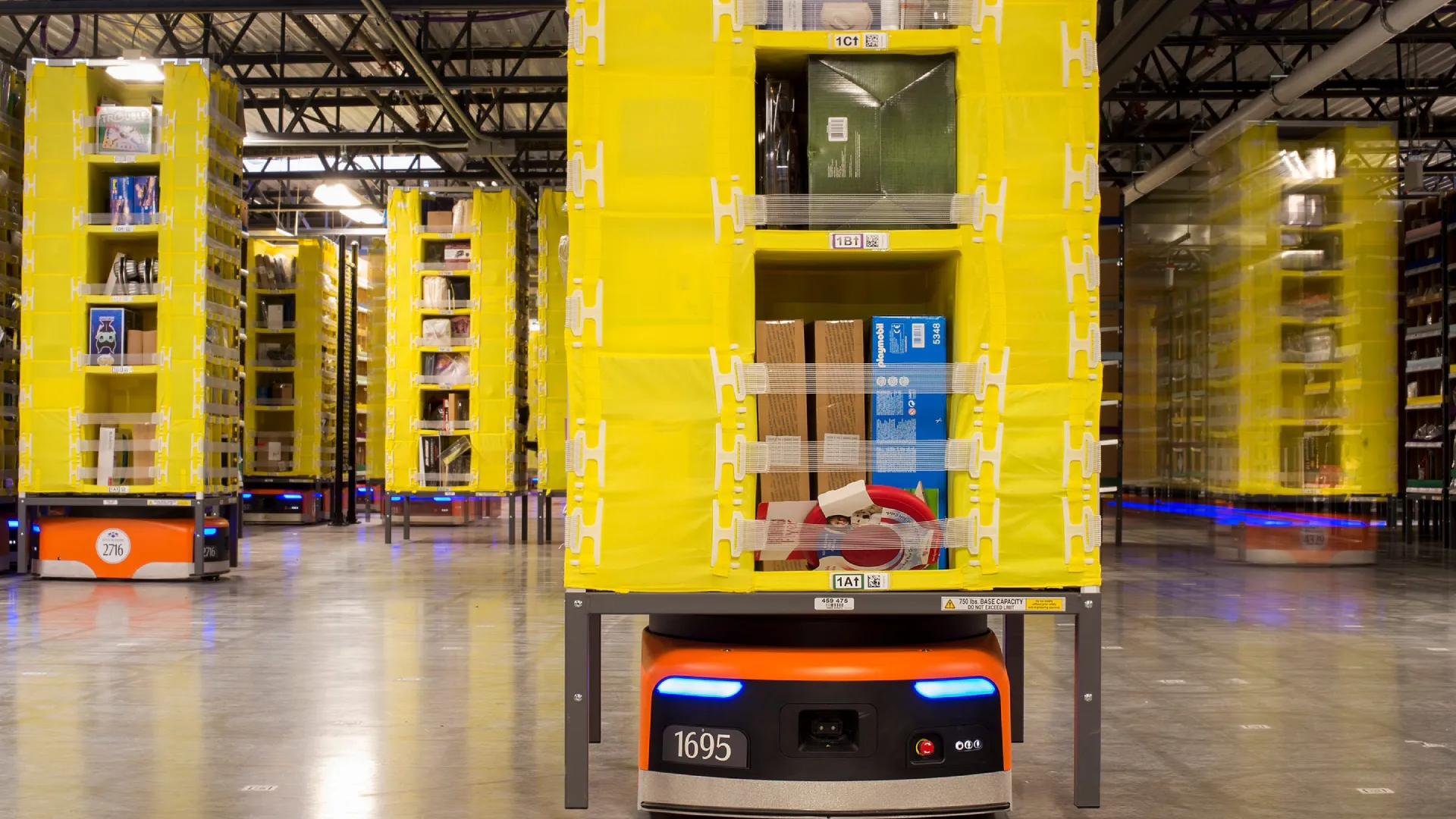
In Shreveport, Louisiana, Amazon has built what amounts to a blueprint for the future. The facility runs with about 1,000 robots and employed a quarter fewer workers last year than it would have needed without automation. This year, as more robots arrive, that number drops to roughly half.
Once a package is sealed in Shreveport, human hands barely touch it again. Amazon plans to replicate this design in about 40 facilities by the end of 2027, starting with a massive warehouse in Virginia Beach.
Older facilities are getting retrofitted too. The Stone Mountain warehouse near Atlanta currently employs around 4,000 people. After the robotic overhaul, it will process 10% more items while potentially shedding 1,200 employees.
The company plans to rely more heavily on temporary workers than full-time staff at these upgraded locations.
Controlling the Narrative
Amazon knows this looks bad. The leaked documents reveal that the company has been strategizing about how to soften the blow. They’ve considered positioning themselves as a good corporate citizen through participation in community parades and Toys for Tots drives.
The language matters too, as internal discussions explored avoiding words like “automation” and “AI” in favor of softer terms like “advanced technology.” Instead of “robots,” they considered saying “cobots,” which sounds collaborative rather than replacing.
Some employees working on the Stone Mountain transition have discussed ways to control the narrative in Georgia by emphasizing new technician jobs and framing the changes as innovation that should make local officials proud.
Amazon spokesperson Kelly Nantel pushed back hard, saying the leaked documents reflect just one team’s perspective and don’t represent the company’s overall hiring strategy.
She pointed out that Amazon recently announced plans to hire 250,000 workers for the holiday season, though the company wouldn’t say how many of those jobs would be permanent.
Amazon also stated that executives aren’t being told to avoid certain terms and that community involvement has nothing to do with automation plans.
The Ripple Effect
Daron Acemoglu, who won last year’s Nobel Prize in economic science, sees Amazon as a bellwether. No company has the same incentive to crack the automation code, he notes, and once Amazon figures out how to do this profitably, other companies will follow.
One of America’s biggest employers could flip from job creator to job destroyer.
Walmart, UPS, and countless other companies are watching closely. Amazon didn’t just create demand for warehouse and delivery jobs over the past two decades; it transformed how Americans work. Now it’s on track to transform those same jobs out of existence.
The new jobs that remain will look different. At Shreveport, more than 160 people work as robotics technicians, making at least $24.45 an hour, compared to regular warehouse workers starting at $19.50.
These positions require understanding engineering and robotics. Amazon has put about 5,000 people through its mechatronics apprenticeship program since 2019, but that’s a drop in the bucket compared to the scale of displacement they’re planning.
Amazon’s vision of the future is one where a million robots work around the globe, tended by a much smaller workforce of technicians who understand how to keep the machines running. It’s efficient, profitable, and for hundreds of thousands of workers, it’s the end of the line.