




It’s a safe assumption that any laws being quietly legislated regarding social media bans, restrictions, or controls have one target on the calendar, and that’s the 2027 General Elections.
The recent push to regulate platforms like TikTok, presented as a way to protect minors and cultural values, appears to take on a different meaning when viewed in the context of an approaching electoral cycle.
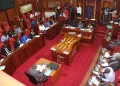
Kenyan MPs have been increasingly vocal about TikTok, and the pressure for tighter controls is growing with each passing day. Leading the charge are MPs Eric Muchangi Karemba of Manyatta and Tom Joseph Kajwang’ of Ruaraka.
Their stated concerns cover several issues, with the platform’s impact on young people at the center. The MPs have pointed to rising social isolation among teenagers and a broader mental health strain they believe is partly linked to how TikTok is designed and used.
Then there is the content issue, including late-night livestreams that lawmakers say cross the line on Kenya’s cultural and religious values, adding to calls for stronger accountability over what is broadcast on TikTok.
However, the most telling issue is timing. With the 2027 general elections approaching, parliament’s increasing focus on TikTok and its role in spreading disinformation and hate speech makes the push for regulation feel less like routine oversight and more like political positioning.
Make no mistake, this is no coincidence. Historically, social media has been the “wild west” of Kenyan politics, serving as both a tool for grassroots mobilization, as seen in the Gen Z-led protests of 2024-2025, and a breeding ground for coordinated disinformation.
By tightening the leash now, the political class is ensuring that the digital space of 2027 is far more controlled than that of 2022.
Much of the urgency behind the current regulatory push stems from the “weaponization” of these platforms for disinformation and the fear that the next election cycle could be decided as much online as at the ballot box.
The threats are evolving as well. AI-driven disinformation poses a serious risk to the integrity of elections because it is harder to detect, spreads faster, and is far more difficult to counter than the propaganda seen in previous election cycles.
Alongside this, coordinated online campaigns are becoming an increasingly common feature of Kenya’s political playbook, with networks of accounts working in sync to shape narratives and drown out opposing voices.
Any tool powerful enough to suppress disinformation is powerful enough to suppress dissent. For the Kenyan voter, the real task isn’t to accept these regulations at face value but to ask the harder questions.
Who’s writing these laws, who benefits from them, and who gets to define what “harmful content” looks like when campaigns are in full swing? Until there are honest answers, healthy skepticism isn’t an overreaction. It’s a necessity.