





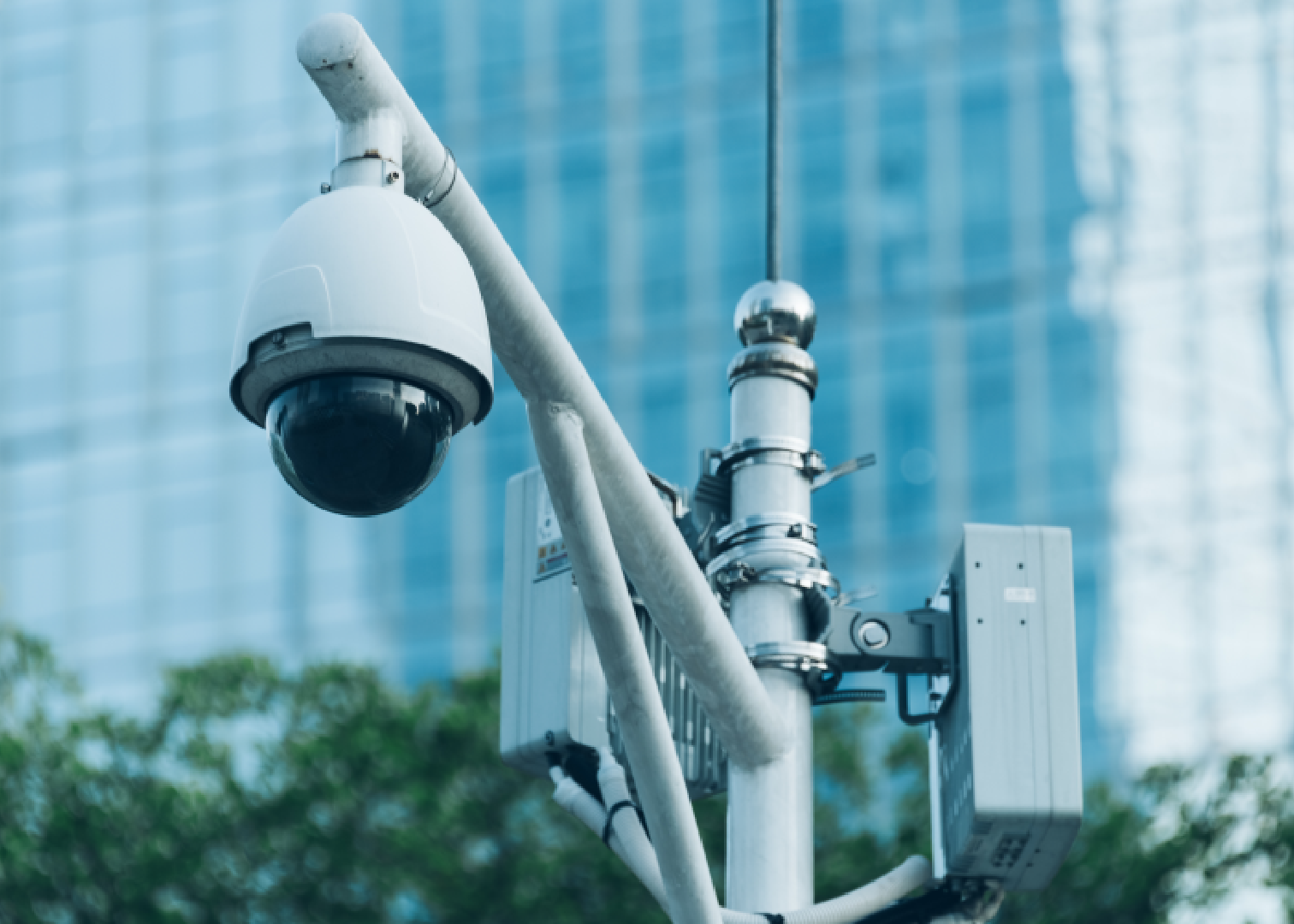
The Kenyan government plans to install CCTV surveillance cameras in Nairobi and five other towns: Mombasa, Nakuru, Nyeri, Kisumu, and Eldoret. The cameras will be connected to command centers for real-time monitoring.
Ministry of Interior CS Kipchumba Murkomen made the announcement on Sunday, citing rising petty crime in the capital, including pick-pocketing, theft, and the emergence of juvenile gangs in the CBD, as the immediate trigger.
Kenya is far from the first country down this road. George Orwell wrote about exactly this in 1984, where a government watched its citizens to mainly control rather than protect.
London and Beijing have been living that question for years, and their experiences offer two very different lessons.
The London Model
London is one of the most surveilled cities in the world, with an estimated 600,000 cameras covering its streets, transport network, and public spaces. The system has a credible track record.
After the 2005 bombings, CCTV footage was instrumental in identifying the attackers. More recently, the Metropolitan Police has integrated facial recognition technology into parts of the network, which has led to dozens of arrests but also drawn sustained legal challenges over accuracy, racial bias, and consent.
The key thing about London is that its camera network sits within a functioning legal framework. The UK’s Surveillance Camera Commissioner, data protection laws, and an active civil society mean the system is subject to scrutiny, however imperfect.
Cameras are used to deter and detect criminal activity; they do not routinely cause people to disappear.
The Beijing Model
China’s approach is a different proposition entirely. Beijing operates what is widely regarded as the most extensive urban surveillance system in the world, combining CCTV with facial recognition, gait analysis, and integration with national identity databases.
Crime rates in surveilled areas have dropped, and the system is undeniably efficient, but efficiency in service of what?
The same infrastructure used to catch a pickpocket is the same infrastructure used to track political dissidents, monitor ethnic minorities, and enforce social compliance.
When the technology and the state have no independent oversight between them, the camera becomes something other than a security tool.
Kenya in Context
Kenya sits somewhere in the middle, and that is precisely what makes this moment consequential. The country has the Office of the Data Protection Commissioner and a constitutional right to privacy, but enforcement capacity remains thin.
The ODPC has issued rulings, but large-scale state surveillance of this nature has not been tested against those frameworks.
There are real benefits to what Murkomen has proposed, and one is that Nairobi’s CBD has a real crime problem. Improved surveillance, tied to responsive policing and prosecution, can reduce certain categories of offending and help investigators reconstruct incidents after the fact.
The planned command centers could also improve emergency response coordination across agencies.
The risks are also equally real with surveillance systems procured quickly, without published technical standards or independent oversight mechanisms, which have a tendency to expand well beyond their original mandate.
Questions such as who holds the footage, for how long, who can access it, and with what authorization? Also can the data be shared with foreign governments or private entities? These could be the difference between a public safety tool and a public control tool.
There is also the infrastructure gap, as cameras require maintenance, trained operators, reliable power, and functioning data management systems. Cities that have deployed CCTV without these foundations often end up with expensive hardware producing little usable footage.
Kenya is deciding what kind of city it wants to build. Technology itself is neutral, but the institutions that manage it are not.