





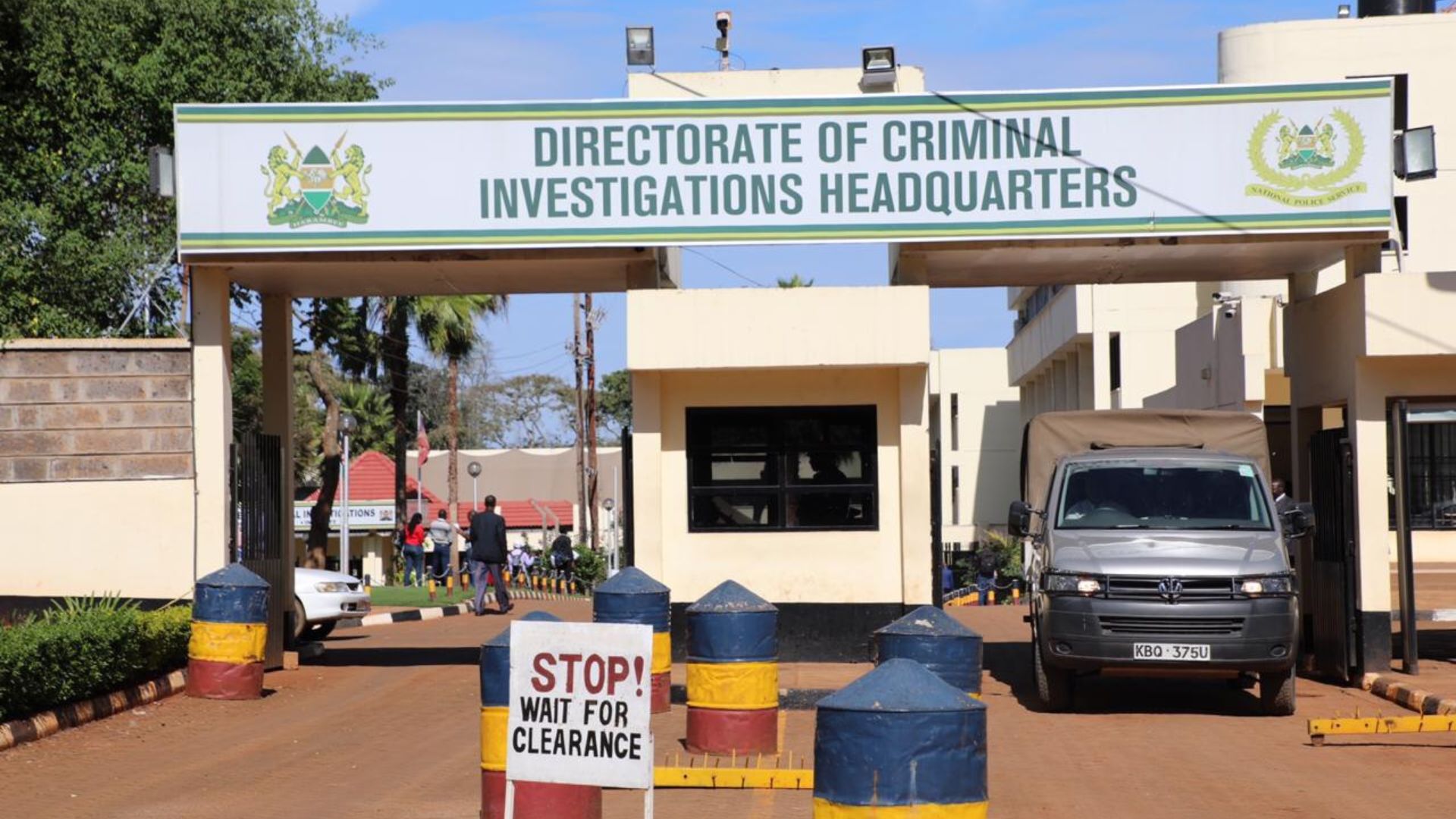
Interior Cabinet Secretary Kipchumba Murkomen has announced two developments that push Kenya’s criminal justice system closer to global standards.
The Directorate of Criminal Investigations (DCI) received an ANSI National Accreditation Board (ANAB) certificate for its Forensic Evidence Management Unit, and it launched a new identification platform called MBIS-ABIS Version 5.
Together, these changes touch everything from how murder trials hold up in court to how long it takes an ordinary Kenyan to get a police clearance certificate.
Why the ANAB Certificate Is Important
ANAB is a US-based accreditation body, a subsidiary of the American National Standards Institute, that certifies organizations across sectors, including criminal justice and forensics.
Getting accredited is not a formality. It means DCI’s Forensic Evidence Management Unit has proven it can store, handle, and preserve evidence in a way that meets internationally recognized standards, with competent staff and documented processes for catching and correcting mistakes.
For everyday policing, this means that evidence collected at a crime scene now carries more weight in court, both in Kenya and internationally, because it passed through a system built to prevent contamination or loss.
It also gives the public a stronger reason to trust that convictions rest on evidence that was properly handled from the moment it was collected to the day it was presented in court.
What MBIS-ABIS Version 5 Actually Does
The second announcement is more technical but arguably touches more people directly. It involves the Multi-Biometric Identification System (MBIS) and the Automated Biometric Identification System (ABIS).
Version 5 can match palm prints and facial images, giving investigators more than one way to confirm a person’s identity instead of relying on a single method.
READ: New Proposal to Give DCI KES 150M to Track Social Media Users
The most visible effect will be on Certificates of Good Conduct, the police clearance documents that Kenyans need for jobs, travel, and various official processes. These certificates have long been notorious for slow turnaround times.
DCI says the new system significantly speeds up backend verification, reducing the waiting time applicants have become used to. The application process remains largely the same. People will still apply through eCitizen and have their fingerprints taken at Huduma Centers or DCI offices.
What changes is what happens after that, where the heavier biometric matching now runs faster and checks more data points at once.
The announcements are part of a broader push to modernize the National Police Service, and they reinforce each other. Better evidence handling strengthens the cases that come out of investigations.
Faster, more accurate biometric matching strengthens the identification work that often starts those investigations in the first place. Combined, they suggest a DCI that is trying to close the gap between Kenya’s forensic capacity and the standards expected of modern law enforcement elsewhere.