





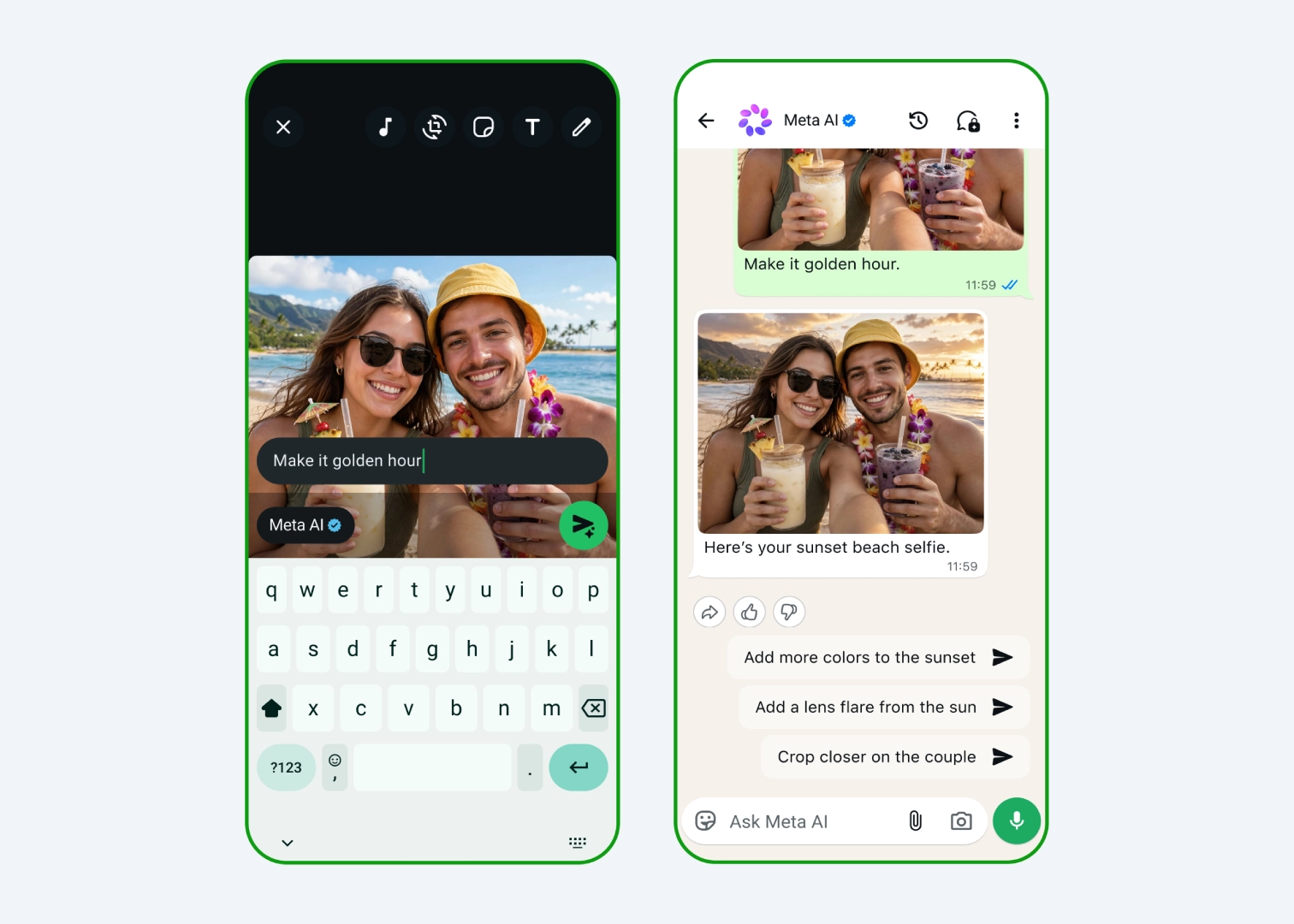
Meta has released Muse Image, the first image generation model built by Meta Superintelligence Labs, the AI division Mark Zuckerberg set up after the company fell behind competitors like Google, OpenAI, and Anthropic.
The tool is now live inside Meta AI and is rolling out across Instagram and WhatsApp, with Facebook and Messenger to follow.
Rather than launching a standalone app, Meta is building Muse Image directly into products that billions of people already use. On Instagram, it powers more than 30 new AI effects for Stories.
On WhatsApp, users in select countries can now generate images right inside their chats with Meta AI, with more regions expected to gain access soon.
How It Works
Muse Image responds to plain, conversational descriptions rather than requiring precise prompt engineering. People can describe a scene from scratch or hand it an existing photo to edit.
It can remove unwanted people or objects from a picture, generate accurate-looking infographics with readable text, and even build functional QR codes from a description.
Behind the scenes, the model works alongside Muse Spark, Meta’s earlier reasoning model, to plan out an image before generating it. That includes pulling in real-time information from the web and combining multiple photos or references into one coherent result, such as blending a selfie with a vacation photo or dropping a pet into a famous painting.
One notable feature lets users tag Instagram accounts by username, pulling in someone’s public photos to help build things like invitations or personalized graphics. Meta says account holders can turn this off if they don’t want their photos used this way.
There’s also a markup tool that lets people sketch or circle directly on an image to request changes, with Meta AI keeping track of the full editing conversation so users can keep refining a result without starting over.
READ: After the Metaverse, Meta Is Now Going Deep Into AI With Muse Spark
Meta says Muse Image can edit specific parts of an image without regenerating the whole thing, which makes tasks like swapping a background or changing a style faster than older approaches.
Where It Stands Against Competitors
Meta claims Muse Image beats Google‘s Nano Banana 2 on a number of image generation and editing benchmarks, though it says the model still trails OpenAI’s latest image tool in overall quality.
That puts Meta in a competitive but not leading position among the major AI labs building image tools.
The launch also marks the end of the road for Meta’s partnership with Midjourney, whose technology previously powered image generation inside the Meta AI app.
Business and Advertising Plans
Meta plans to open Muse Image up to advertisers and agencies in the coming weeks through its Advantage+ ad tools, letting businesses generate marketing images and produce multiple ad variations faster.
Given that advertising is Meta’s main source of revenue, faster and cheaper visual content production is a direct business incentive behind the release.
Muse Image is free for general use, with expanded access included in Meta’s paid subscription plans.
The release fits into a much larger spending push. Meta plans to invest up to $145 billion in AI this year as it tries to reposition itself as an AI-first company, even as it lays off staff elsewhere and pushes remaining employees to use AI tools in their own work.

The company’s flagship chatbot model, Muse Spark, launched in April and is still considered behind rival models from other labs.
Meta also confirmed that a video generation model, Muse Video, is already in development and expected to reach the public within months, extending the same underlying AI system from text and images into video.
The rollout isn’t without baggage. Last month, a flaw in Meta’s AI-powered customer service software allowed hackers to compromise more than 34,000 Instagram accounts, a reminder of the risks that come with rapidly deploying AI across such a large platform.
Meta’s chief AI officer, Alexandr Wang, has also said the company is preparing to release a new flagship model internally called Watermelon in the coming months, which he claims will match the performance of OpenAI‘s latest model.
Whether that holds up will be one of the clearer tests of how much ground Meta has actually closed in the AI race.