




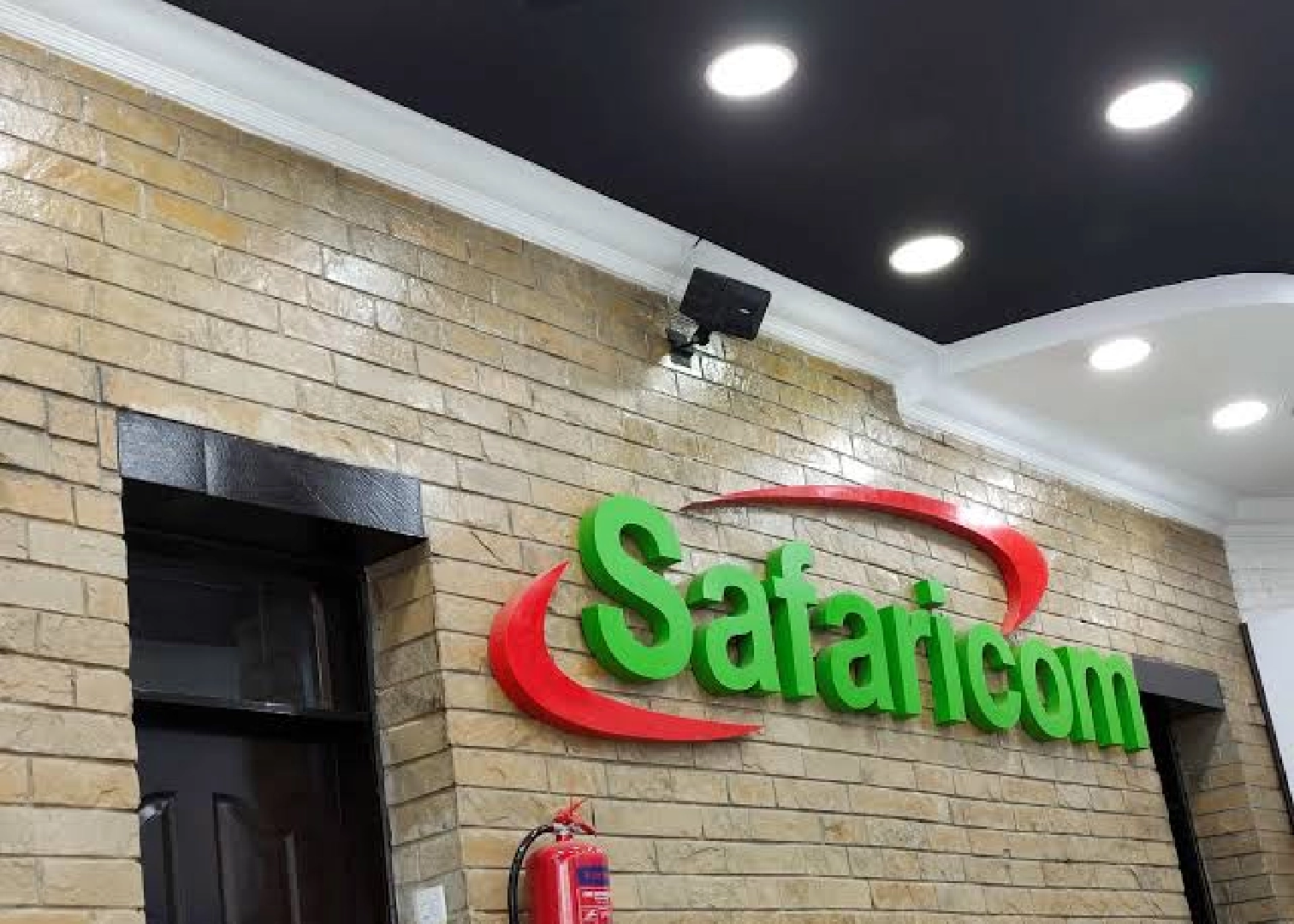
Safaricom shareholders will vote on fourteen special resolutions at the company’s Annual General Meeting on July 31, 2026. The changes rewrite the Articles of Association to match a new ownership reality.
Vodafone Kenya Limited, the holding company through which Vodacom Group now sits, completed its purchase of a 15% stake from the Government of Kenya on June 30, pushing its shareholding to 55%.
The Government’s stake fell to 20%, and public investors kept their 25%, following the CMA exemption that cleared the deal. The resolutions on the AGM agenda translate that stake into formal control.
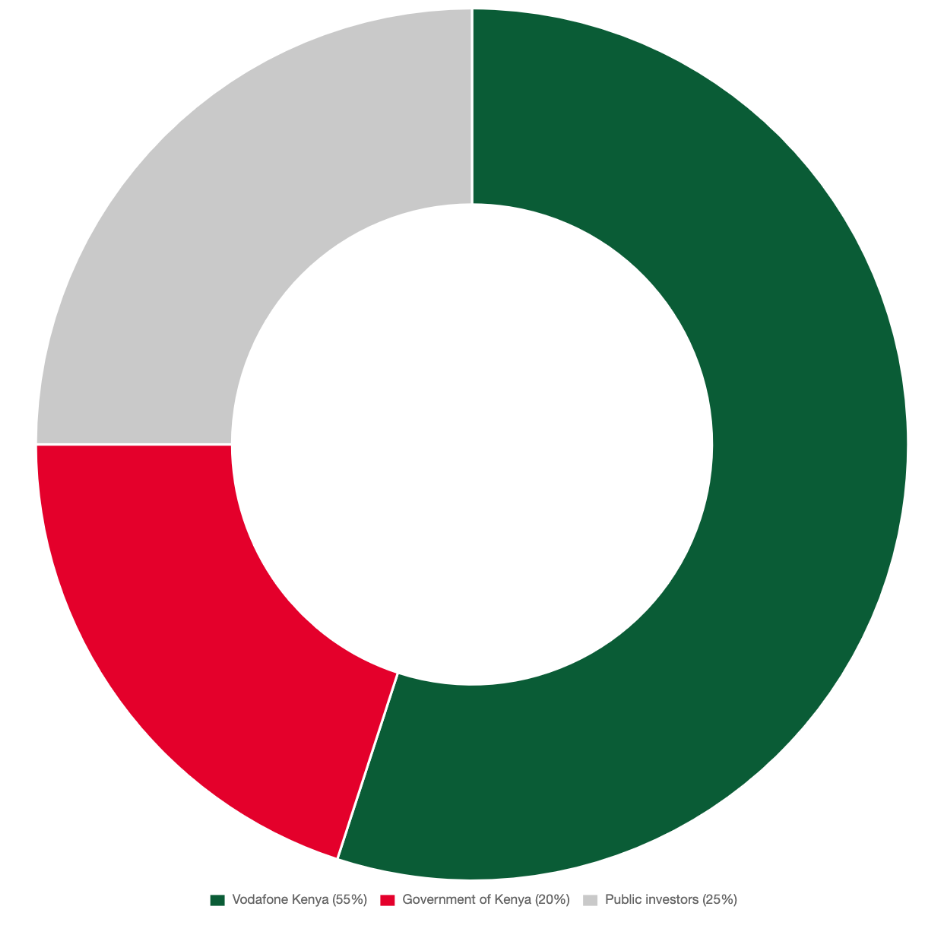
| Shareholder | Stake |
| Vodafone Kenya Limited (VKL) | 55% |
| Government of Kenya | 20% |
| Public investors | 25% |
Who Runs the Safaricom Boardroom Now
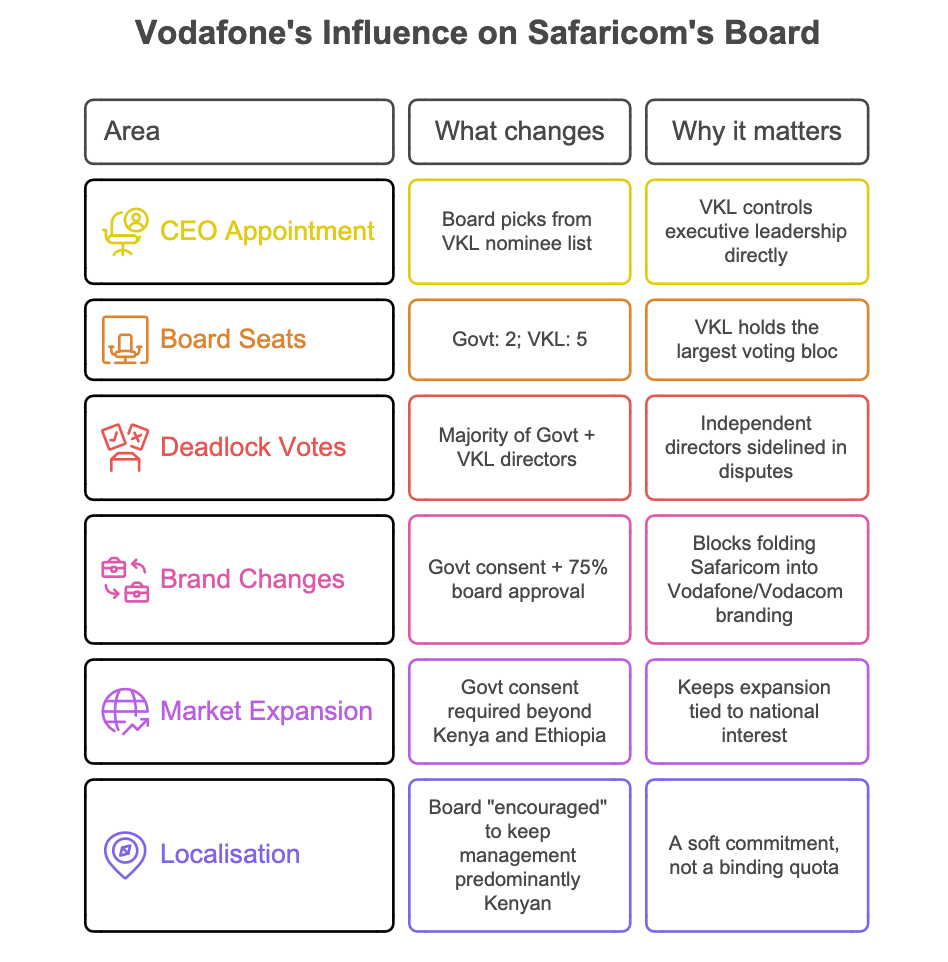
Article 89(b) grants VKL the right to appoint one director for every complete 10% it holds, which works out to five nominees based on current shareholding.
Article 89(c) gives the Cabinet Secretary for the National Treasury, acting for the Government, the same formula on its own stake, plus the appointment of two directors specifically.
A new Article 97A locks in a further layer of control: for as long as VKL holds more than half the company, the Chief Financial Officer automatically becomes the CEO’s alternate director.
Article 103 goes further still, restricting the CEO role itself to nominees VKL puts forward, a shift from the negotiated appointments of the past.
None of this hands VKL a blank check, though. Article 89(a) still requires a board of at least seven directors, a majority of them Kenyan citizens, with independent non-executive directors in the mix.
This frame appears to have built majority control and local representation into the same document rather than choosing between them.
The Golden Share Still Means Something
The Government’s 20% stake carries outsized weight through Article 102, which was deleted and rewritten specifically to protect the Safaricom brand and its geographic footprint.
Any rebrand needs both Government sign-off and a 75% board supermajority, a bar high enough that VKL cannot push it through even with five directors of its own.
The same article requires Government consent before Safaricom enters any market beyond Kenya and Ethiopia, which keeps the company’s East African footprint a matter of state interest rather than pure shareholder economics.
READ: Safaricom Ethiopia M-PESA Revenue Plunges 64% Despite Customer Growth
Taken together, the resolutions describe a company built for dual control. VKL gets the operational authority that comes with owning the majority of the shares, including the CEO pipeline and the deciding vote in most disputes.
The Government keeps a veto over the two things that touch Safaricom’s national character most directly, including the name on the building and where the company can expand.
For M-Pesa’s roughly 30 million users, the practical experience of the platform is unlikely to shift on July 31. What shifts is who the next CEO of Safaricom answers to first.