




The Capital Markets Authority has exempted Vodafone Kenya Limited from making a mandatory takeover offer for Safaricom PLC.
On paper, this transaction should have required Vodafone Kenya to make an offer for every remaining Safaricom share on the market.
Kenya’s Capital Markets (Takeovers and Mergers) Regulations, 2002, require any company that crosses certain ownership and control thresholds to make a mandatory offer to all shareholders.
The rule is meant to protect minority investors by giving them the option to sell their shares when control of a company changes hands.
Vodafone Kenya’s purchase of the government’s 15% stake takes its effective holding well past that threshold, which is precisely why the company applied for relief under Regulation 5(1) rather than risk being compelled into a full buyout it never intended to make.
The Authority approved the application after VKL and Vodacom met all the required conditions. This means Safaricom will remain listed and continue trading on the Nairobi Securities Exchange, with its public shareholding unchanged.
What the Exemption Covers
The first is the deal Safaricom announced in December 2025. Vodafone Kenya will buy 6,009,814,200 ordinary shares, representing a 15% stake in Safaricom, directly from the Government of Kenya.
The shares will be purchased at KES 34 each, about 20% higher than Safaricom’s closing share price before the announcement. This values the transaction at around KES 204.3 billion (USD 1.6 billion).
The second transaction is an internal restructuring within the Vodafone and Vodacom group. Vodacom Group will buy Vodafone International Holdings B.V.’s remaining 12.5% stake in Vodafone Kenya, increasing its ownership from 87.5% to 100%.
This transaction does not directly affect Safaricom shareholders. Instead, it simplifies the ownership structure above Safaricom’s largest shareholder.
Since 2017, Vodafone and Vodacom have shared ownership of Vodafone Kenya after Vodafone transferred its 35% Safaricom stake into Vodacom.
In simple terms, Vodacom is buying Vodafone’s remaining stake in Vodafone Kenya so it becomes the sole owner of the company that holds the Safaricom shares.
READ: The Safaricom Sale: What’s Really Happening Behind Kenya’s Biggest Privatization Deal
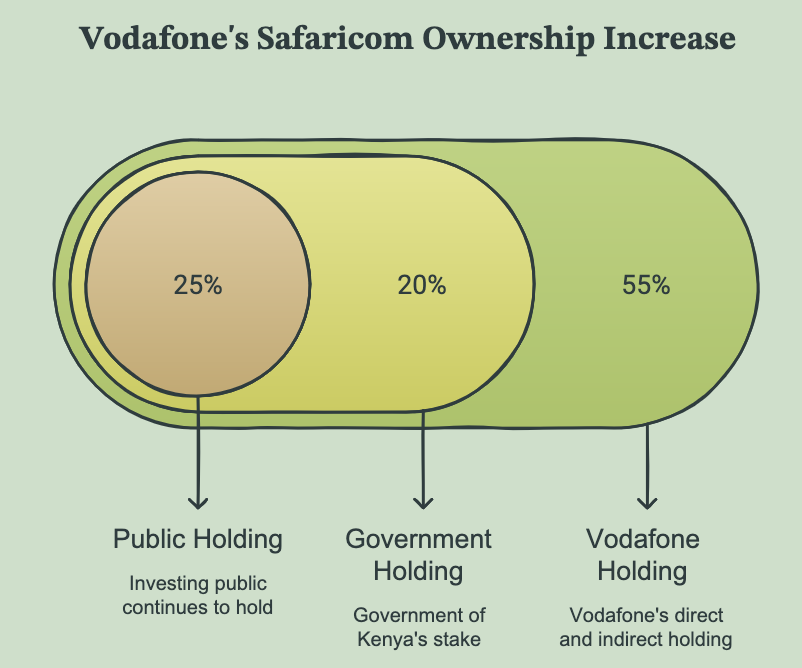
Once both transactions are completed, Vodafone Kenya’s direct and indirect stake in Safaricom will increase to 55%. The Government of Kenya’s stake will decrease from 35% to 20%, while public investors will continue to own the remaining 25%.
Why No Takeover Offer Is Coming
For Safaricom’s hundreds of thousands of retail and institutional shareholders, the CMA’s decision changes nothing. Shareholders will not receive an offer to sell their shares because of this transaction, and they do not need to take any action.
That was the plan from the beginning. When Safaricom announced Vodafone Kenya’s intentions in December 2025, the company made it clear that it had no plans to delist Kenya’s most valuable listed company or buy out the remaining publicly held shares.
The CMA’s exemption now makes that position legally binding rather than simply a company statement. It also comes after months of approvals from the Cabinet, the National Assembly, the Communications Authority, the Central Bank of Kenya, the COMESA Competition Commission, and the East African Community Competition Authority.
Those approvals were required before the CMA could make a final decision on whether a mandatory takeover offer was necessary.
What Changes, and What Doesn’t
The CMA’s approval may seem like a regulatory formality, but it is an important step because it removes one of the last major hurdles before the deal can be completed.
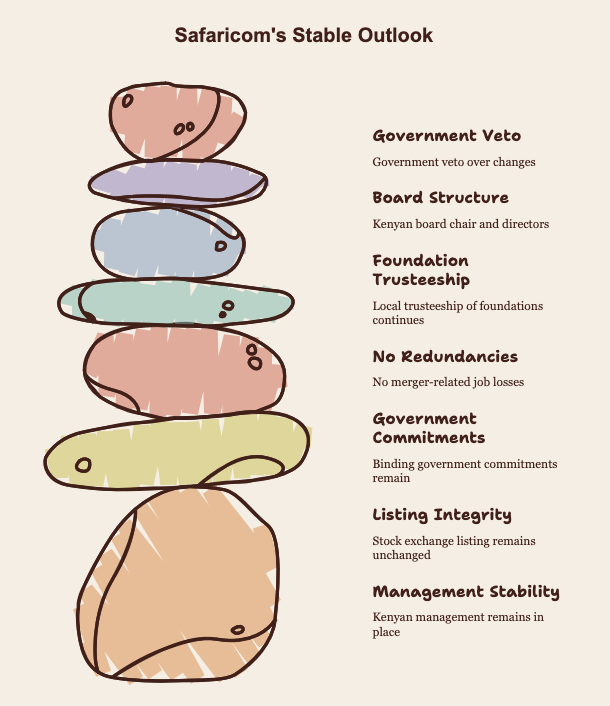
For Safaricom, little changes in the short term. Its day-to-day operations will continue to be managed in Kenya, and the company will remain listed on the stock exchange.
The commitments made to the Kenyan government during negotiations also remain in place, including no job cuts related to the merger, continued local management of the Safaricom and M-Pesa Foundations, a Kenyan board chair, independent directors, and the government’s right to block any changes to these commitments, regardless of who owns the controlling stake.
In practical terms, the deal changes who has the final say at Safaricom. Vodacom will move from being the largest shareholder without full control to owning a majority stake.
That gives it greater control over major decisions, including how capital is invested, dividend payments, and the company’s regional expansion plans, such as its business in Ethiopia, without needing the government’s support.
READ: Safaricom Ethiopia M-PESA Revenue Plunges 64% Despite Customer Growth
The Kenyan government, meanwhile, will reduce its stake to 20% and keep two board seats. It will remain an important shareholder but will have less influence over company decisions. In return, the Treasury is expected to receive about KES 244.5 billion from the overall transaction.
Now that the takeover exemption has been approved, only routine regulatory and administrative steps remain before the deal is completed.
Once finalized, it will become the second-largest transaction in the history of the Nairobi Securities Exchange by value, behind only the Diageo-Asahi deal involving East African Breweries.
It will also mark the biggest change in ownership at Safaricom, Kenya’s most valuable listed company, in nearly a decade.