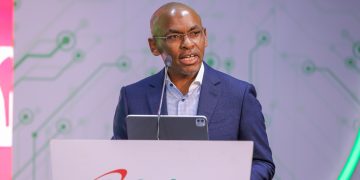





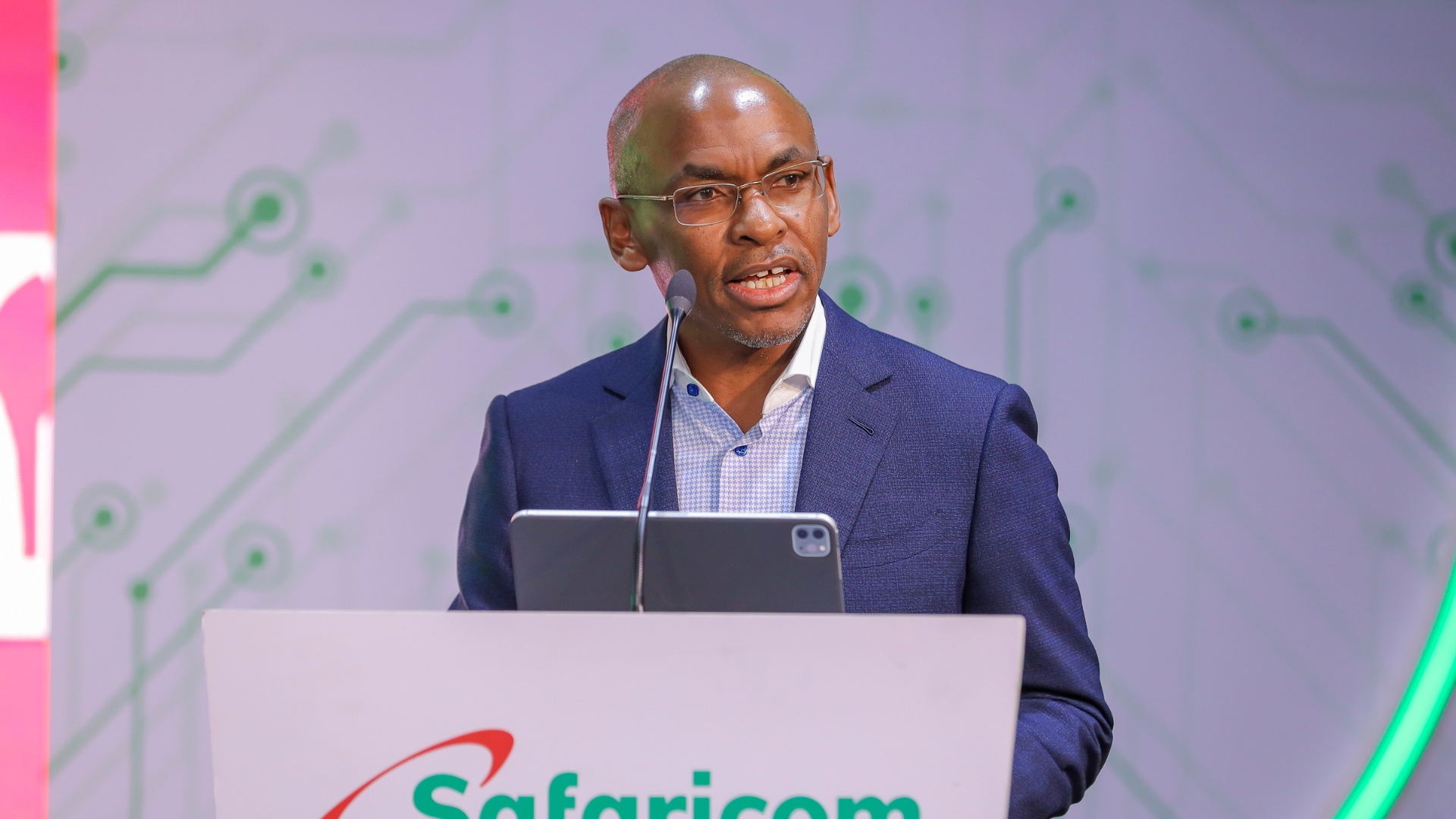
Safaricom CEO Peter Ndegwa spent Monday trying to convince MPs that the telecom giant isn’t about to become less Kenyan just because the government wants to sell some of its shares.
The government plans to drop its stake in Safaricom from 35% to 20%, selling off 15% to Vodacom. Naturally, people are worried about what happens when the government owns less of one of Kenya’s most profitable companies.
Ndegwa has, however, reiterated the stance that nothing will change. Safaricom will still answer to Kenyan regulators like the Communications Authority, the Central Bank, the Capital Markets Authority, and the Competition Authority.
It stays listed on the Nairobi Securities Exchange. The board stays the same. Management stays the same. The company still operates under Kenyan law.
“There is no transfer of operational control, no dilution of regulatory authority, and no weakening of governance standards arising from this transaction,” Ndegwa told the joint parliamentary committees reviewing the divestiture plan.
READ: The Safaricom Sale: What’s Really Happening Behind Kenya’s Biggest Privatization Deal
He also pointed out that Safaricom isn’t actually involved in the deal. This is a shareholder-to-shareholder transaction between the government and Vodacom.
The company itself isn’t selling shares or setting prices. It’s just sitting there while two of its major shareholders swap ownership percentages.
Professional accountants and technology experts have questioned the proposed sale, under which Vodacom would pay KES 34 per share for 6 billion government-owned shares.
They note that this price is far lower than Safaricom’s all-time high of KES 44.7 in 2021, raising concerns that the company may be undervalued.
As for Vodacom getting a bigger piece of the pie, Ndegwa reminded everyone that Vodacom isn’t some random new investor showing up with a checkbook.
The company has been a Safaricom shareholder since day one and has had people on the board for over 20 years. Vodacom also helped Safaricom expand into Ethiopia, bringing technical expertise and experience from other markets.
The company now serves over 60 million customers across Kenya and Ethiopia. The government selling down its stake might raise eyebrows, but according to Ndegwa, the day-to-day reality for those customers won’t change at all.