




Safaricom has landed a contract to supply fiber internet to homes built under Kenya’s Affordable Housing Program, putting the telco in a strong position as thousands of new low-cost units come online across the country.
The first rollout has already happened at the Mukuru Affordable Housing project in Nairobi, launched in May. All 14,000 units there will have internet installed before residents even move in.
Safaricom says it plans to repeat this setup at other affordable housing sites currently under construction nationwide.
READ: The Housing Levy Was Never Really About Housing Now That It’s a Permanent Deduction
News of the deal came out through Vodacom Group, Safaricom’s parent company based in South Africa, which mentioned the arrangement in its investor disclosures.
“In Kenya, we are extending fiber to low-cost government housing developments,” Vodacom said. A Safaricom spokesperson confirmed to Business Daily that the company intends to bring the same setup to other housing projects around the country.
This is a smart move on Safaricom’s part. Instead of competing for new homeowners after they’ve settled in and gone shopping for an internet provider, the company gets to build connectivity into the housing from day one.
By the time anyone moves in, the choice has already been made for them.
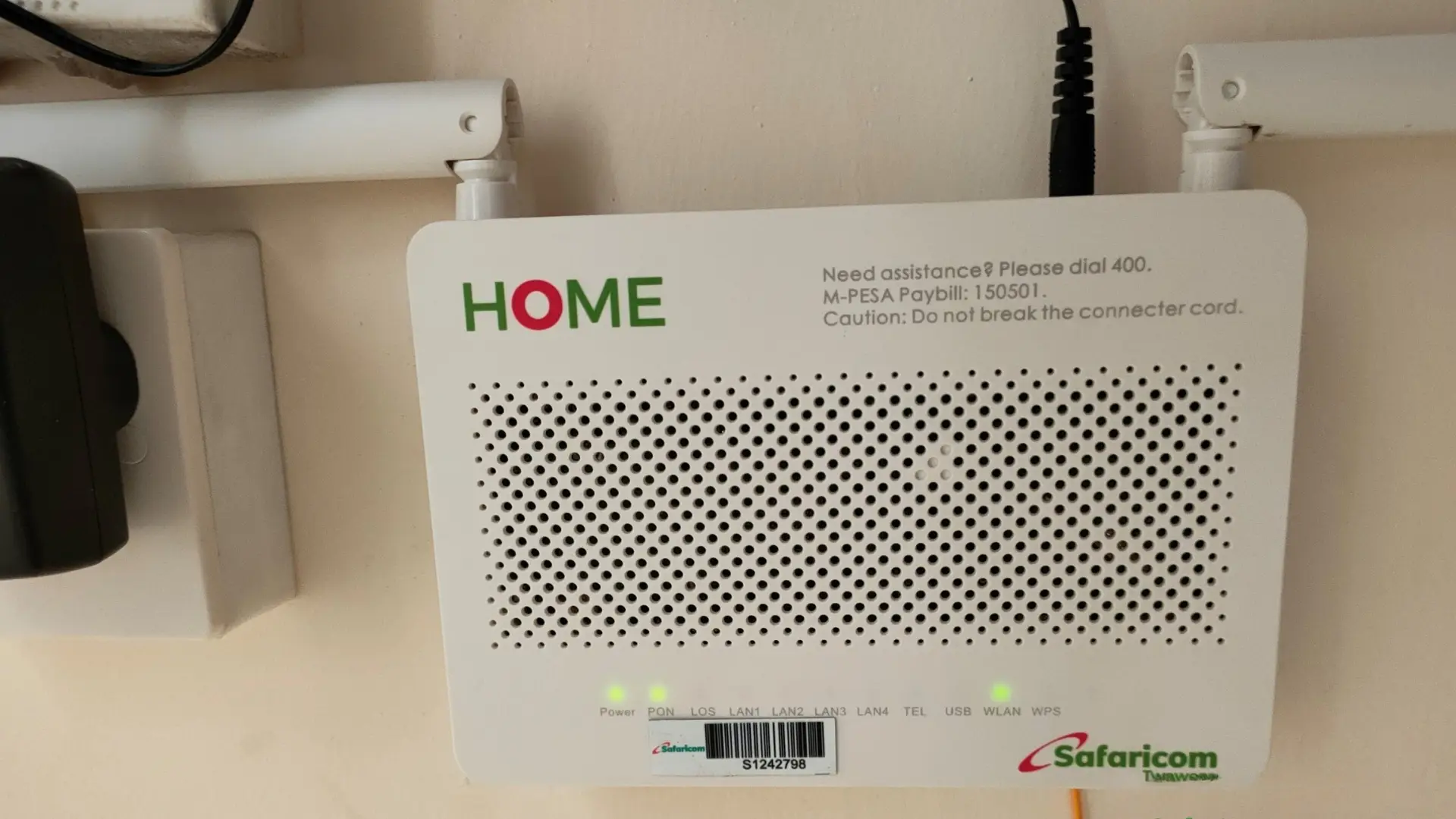
The service being used is called Wi-Fi Bamba, a tokenized fiber broadband product built for households that don’t want or can’t commit to a full monthly subscription. It costs KES 800 and delivers speeds up to 15 Mbps, enough to run three devices at once.
Regular fiber installation involves splicing cables together at each connection point, which takes time and money. Wi-Fi Bamba skips that entirely with a single plug-and-play cable, which is a big part of why it makes sense for large housing projects on tight budgets and tight timelines.
For comparison, Safaricom’s standard Home Fiber packages start at KES 2,999 a month for 40 Mbps and climb up to KES 20,000 for 1 Gbps. Wi-Fi Bamba is aimed squarely at people with irregular income who need something more flexible.
Safaricom is also planning to introduce tokenized Wi-Fi with hourly, daily, and weekly payment options later this year, in both Kenya and Ethiopia. The idea mirrors how Kenyans already buy mobile data in small, pay-as-you-go bundles rather than fixed monthly plans.
Although Safaricom holds 35.4% of Kenya’s fixed internet market with 941,501 subscriptions, its growth hasn’t gone uncontested.
Airtel Kenya entered the home and business fiber market earlier this year, joining Zuku and Faiba as established players chasing the same residential customers.
Safaricom has responded by expanding its fiber network, investing in fixed wireless access built on 4G and 5G, refreshing its Home Fiber packages with faster speeds, and pushing further into retail distribution for home internet.
Landing the affordable housing contract adds to a growing list of public sector projects Safaricom has taken on, including the digitization of the Social Health Authority and work on the National Surveillance, Communication and Control System.
It’s worth keeping in mind that the government holds a 20% stake in Safaricom and retains meaningful influence over the company, which is relevant context given how often the telco keeps winning state-linked contracts.